Chios Guide: Mastic Villages, Nea Moni & Beaches

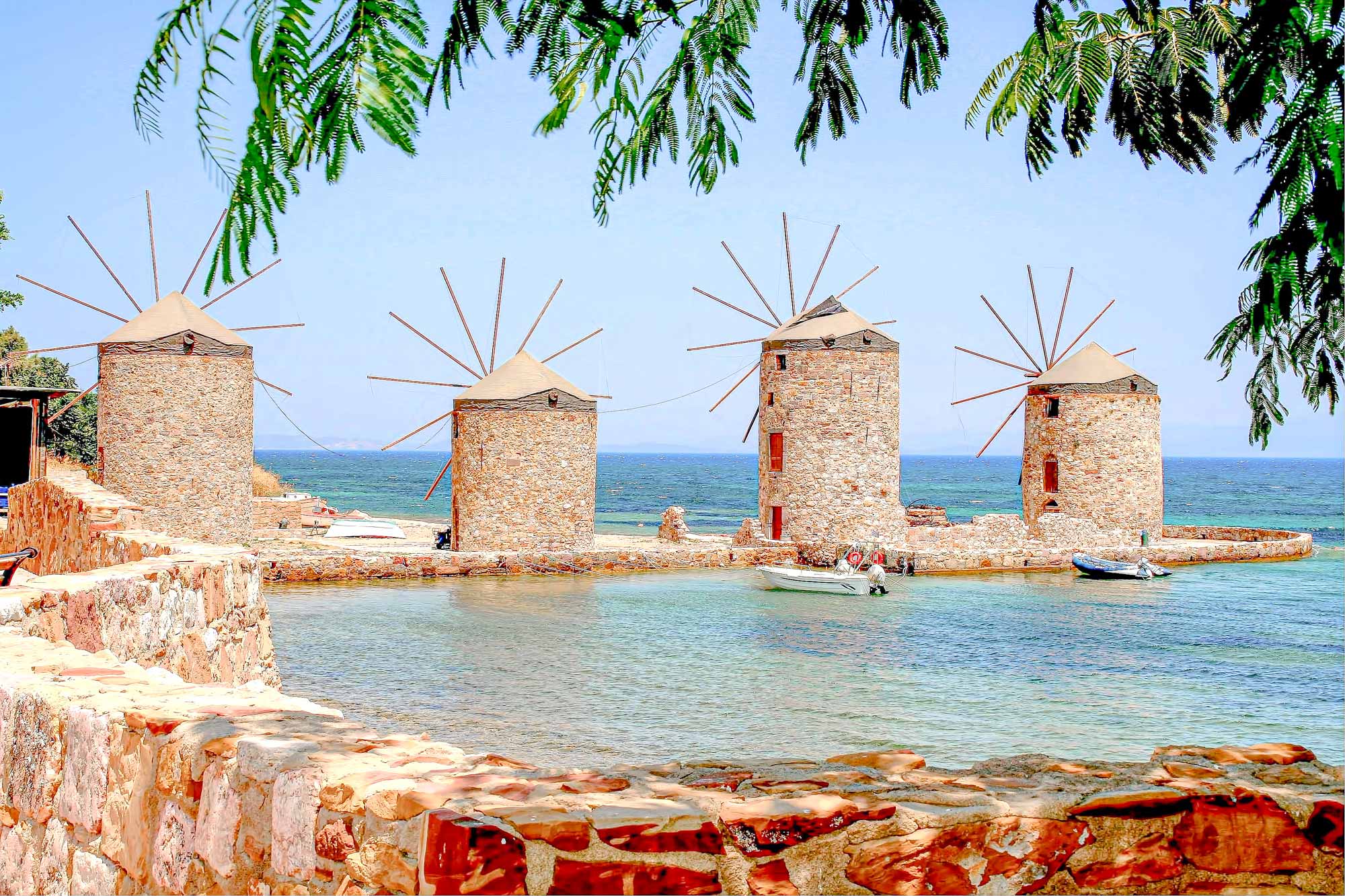
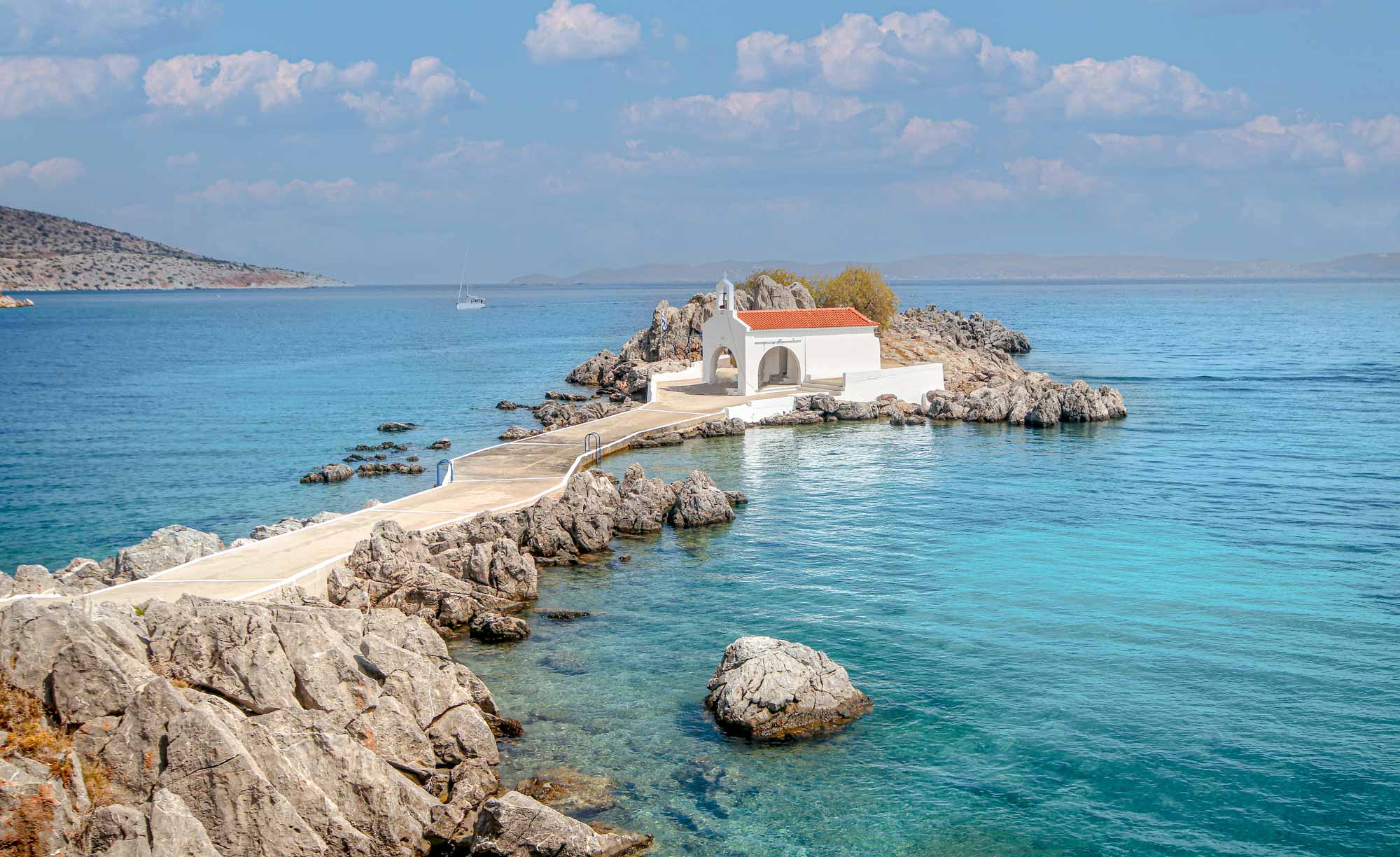
Chios sits close to the Turkish coast in the North Aegean, a large, mountainous, deeply self-possessed island that crowds rarely reach. It has no glossy caldera, no procession of cruise ships, and has largely swerved mass tourism. It is known for the mastic tree, whose resin grows nowhere else in the world, and a landscape shaped for centuries around protecting it. Genoese towers, fortified villages, citrus mansions behind high walls and a shipping fortune that spread Chian families across the globe are woven into Chios’s fabric.

Days here feel exploratory, with plenty to see and do without feeling like a tourist excursion. Mornings can be spent in fortified Pyrgi or lost in the medieval maze of Mesta; afternoons belong to the golden mosaics of Nea Moni, the shaded orchards of Kampos, or the black volcanic pebbles at Mavra Volia.
AN EVERGREEN SHRUB FOUND NOWHERE ELSE

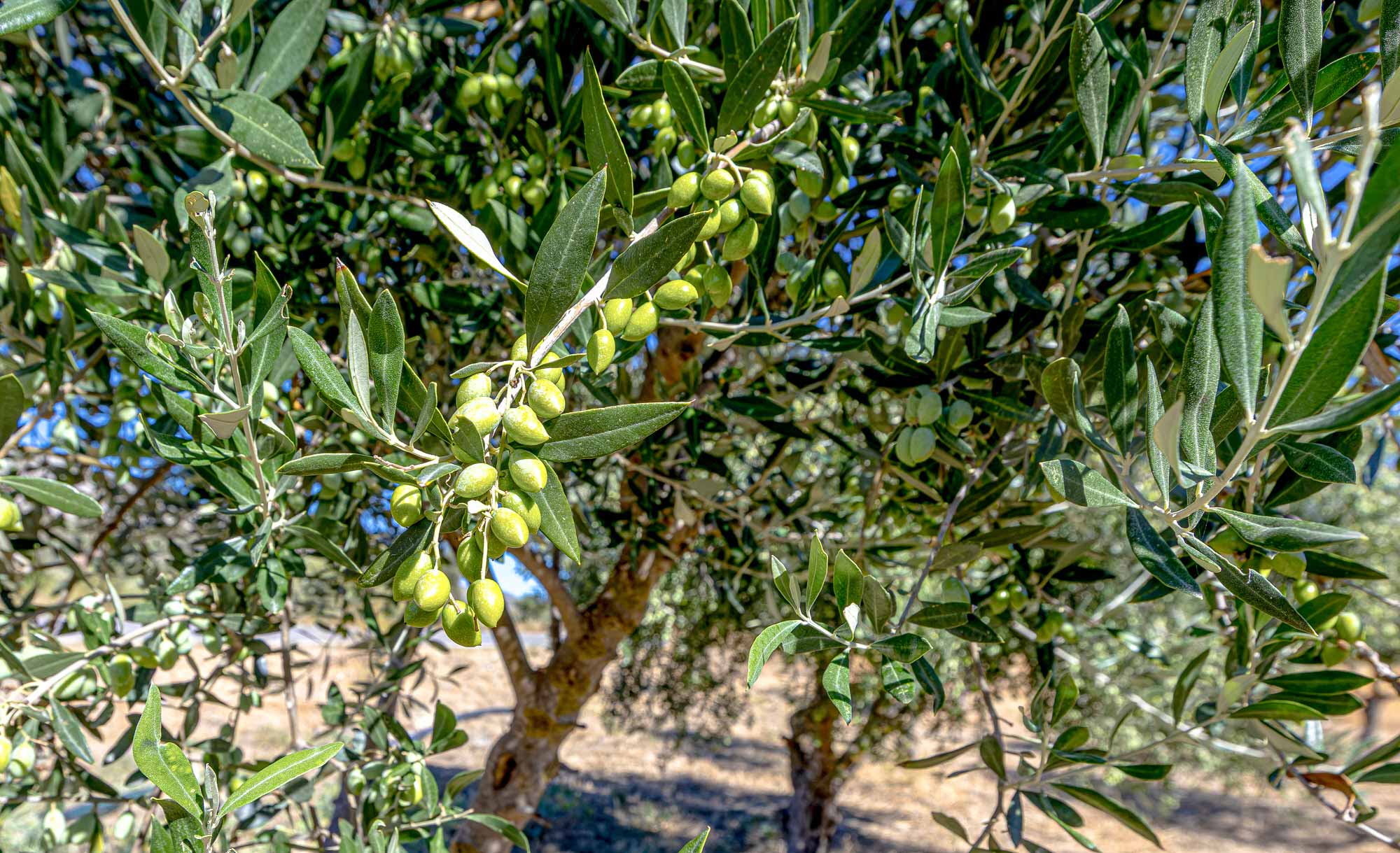
The mastic tree, a variety of the lentisk that will grow across the Mediterranean but yields its prized resin only here, is cultivated across the fertile south of the island. Growers score the bark by hand in late summer; the sap bleeds out, hardens into translucent crystals on the swept ground beneath, and is gathered, cleaned and sorted, drop by drop, through the autumn. This is the only place in the world where it happens, and it has been happening for well over 2,000 years. The resin is used in traditional Greek recipes and has a variety of uses across industries from health to cosmetics.

The resin trade gave rise to the mastichochoria, the mastic villages: a cluster of fortified medieval settlements built inland and out of sight of the sea to guard a commodity once worth its weight in gold. Under the Genoese, who held Chios from 1346 to 1566, mastic was a monopoly worth defending; when the Ottomans took the island, they prized it so highly that they granted the villages special privileges. To understand Chios, begin in the low stone villages where the trees still yield resin each August.

PYRGI, MESTA AND THE FORTIFIED SOUTH

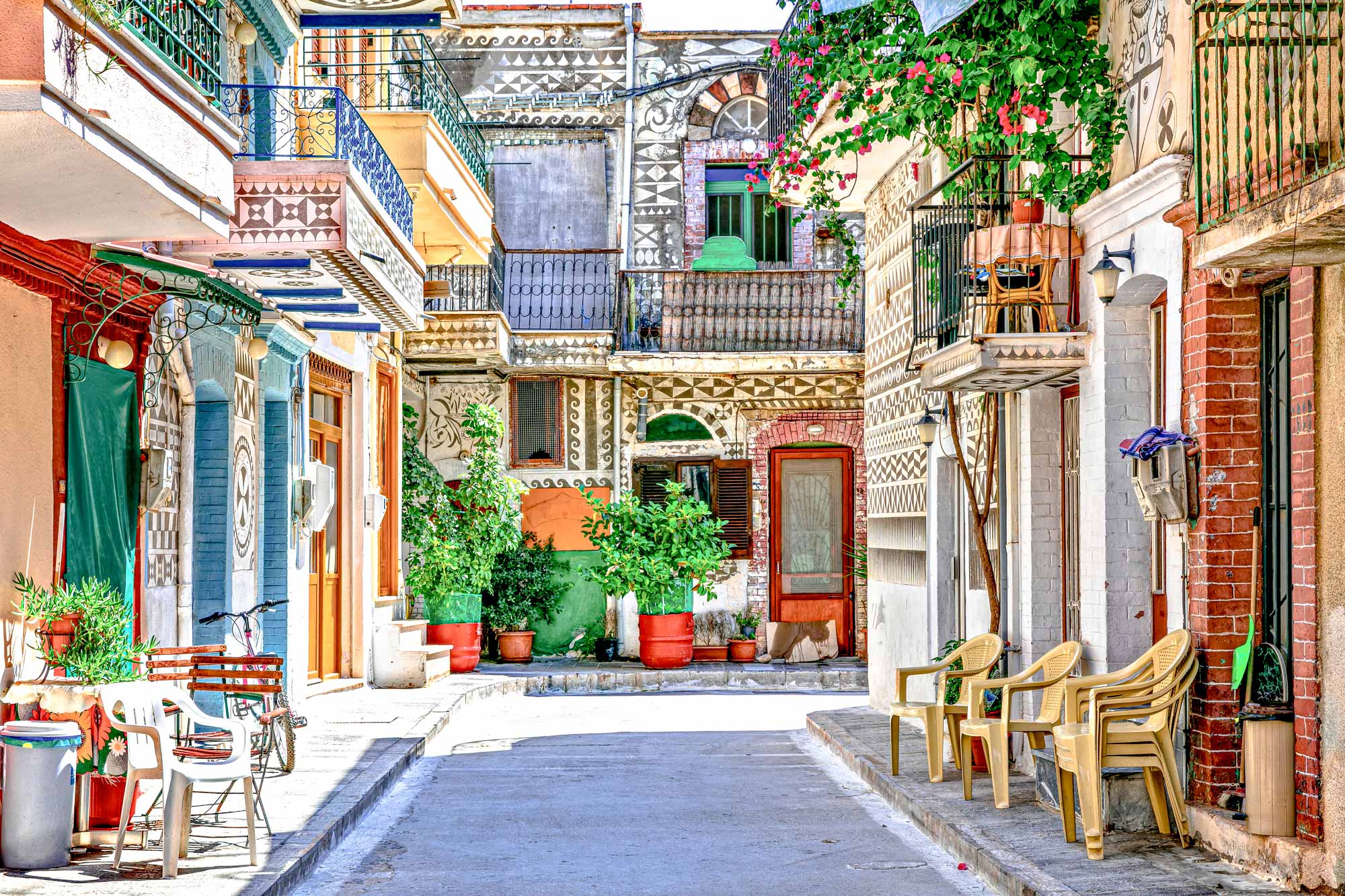
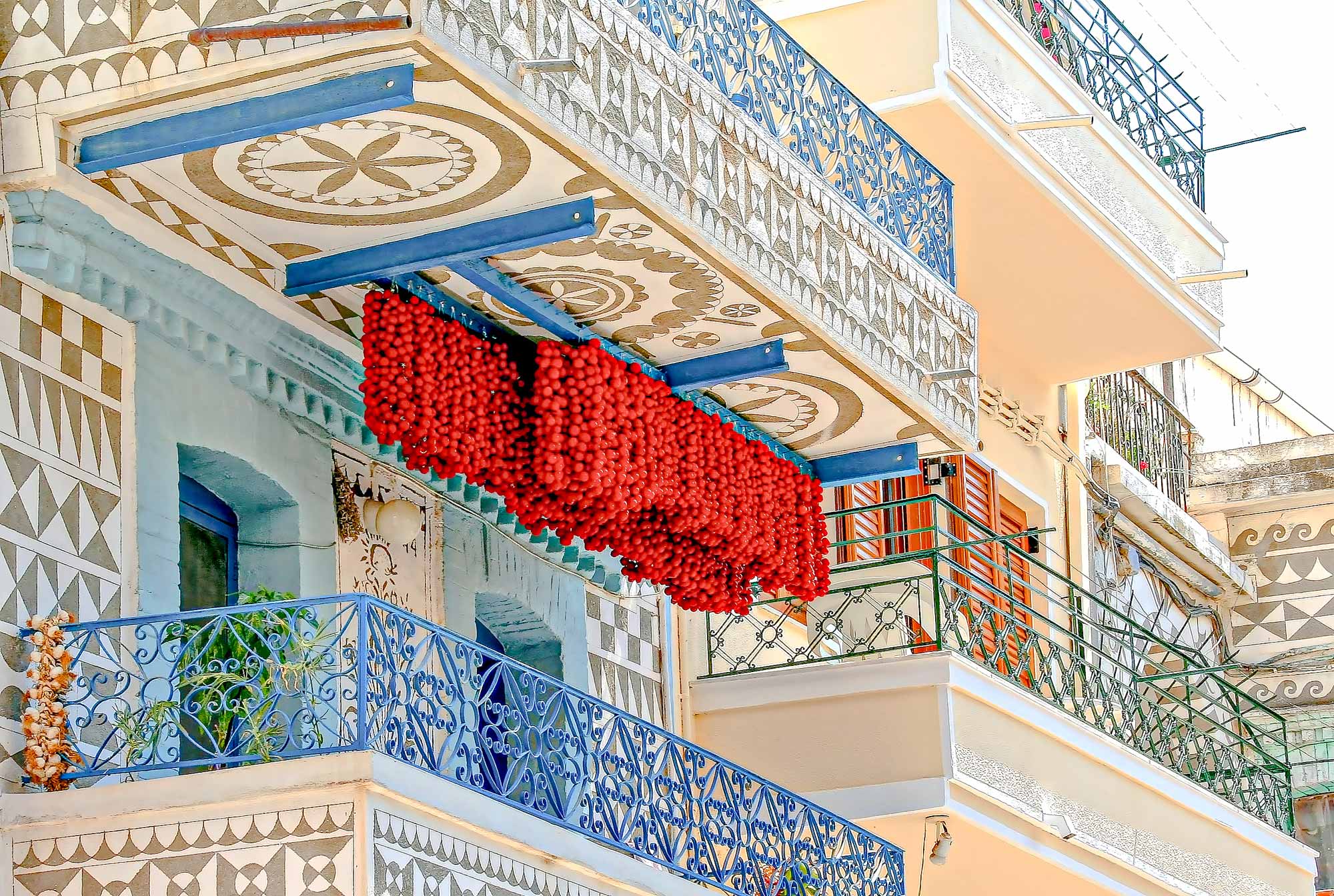
The most famous of the mastic villages is Pyrgi, known across Greece as the painted village. Almost every facade is covered in xysta, a black-and-white geometric decoration made by laying a dark undercoat, washing it with white lime, then scratching the top layer away with a fork, a compass and a ruler to reveal the pattern beneath. Triangles, diamonds, suns and rosettes climb the walls from doorway to eaves, house after house.

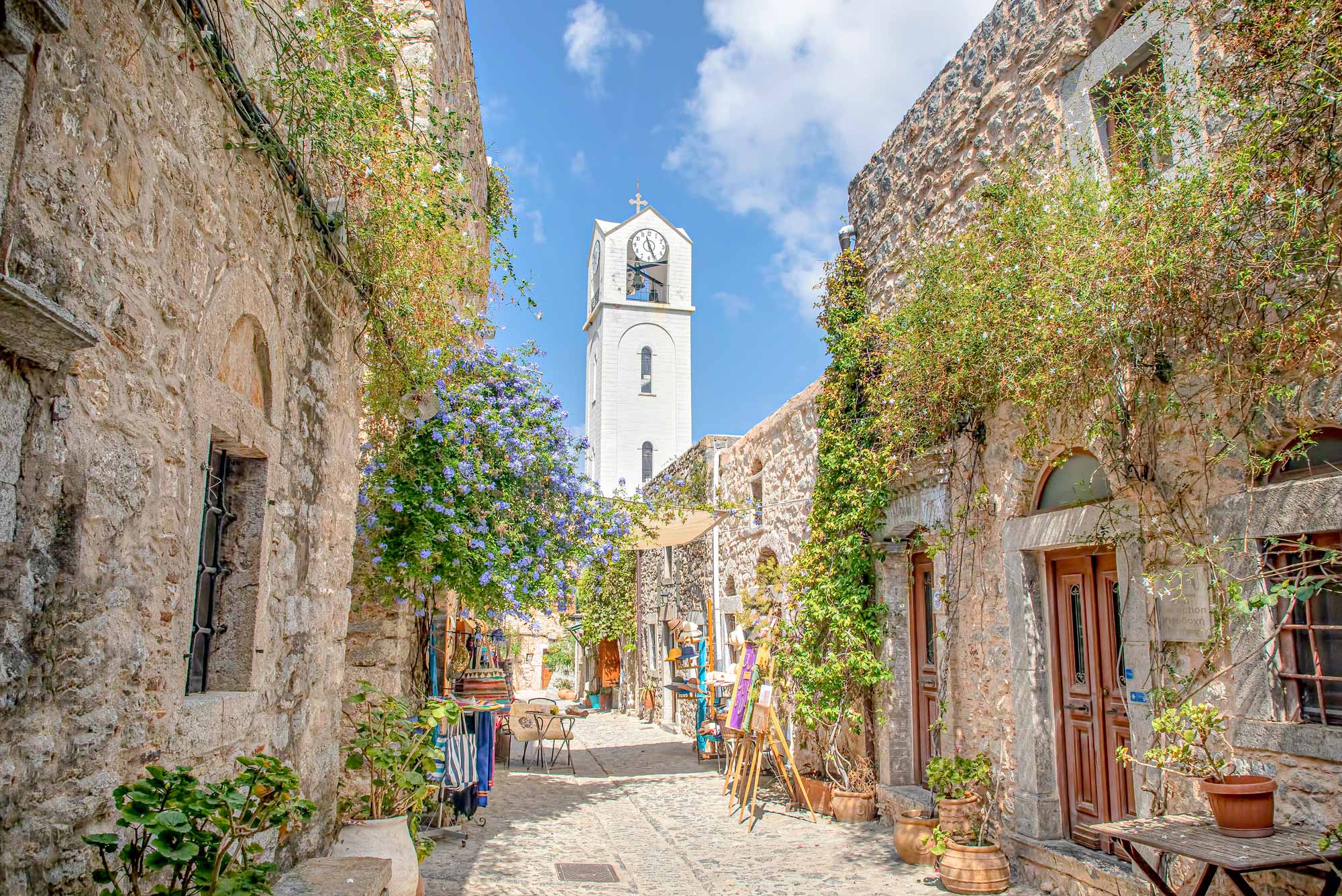
Mesta, a short drive west, was built as a closed defensive block, and its streets fold inward into a deliberately confusing labyrinth of vaulted passages and low stone arches designed to trap and disorient raiders. Walk it slowly: the village is entered through a handful of gates, wraps around the church at its centre, and has changed remarkably little in 600 years. Between the two lie Olympi, Kalamoti and other villages that survived the great earthquake of 1881, each a variation on the same medieval theme.

NEA MONI AND THE GHOST OF ANAVATOS

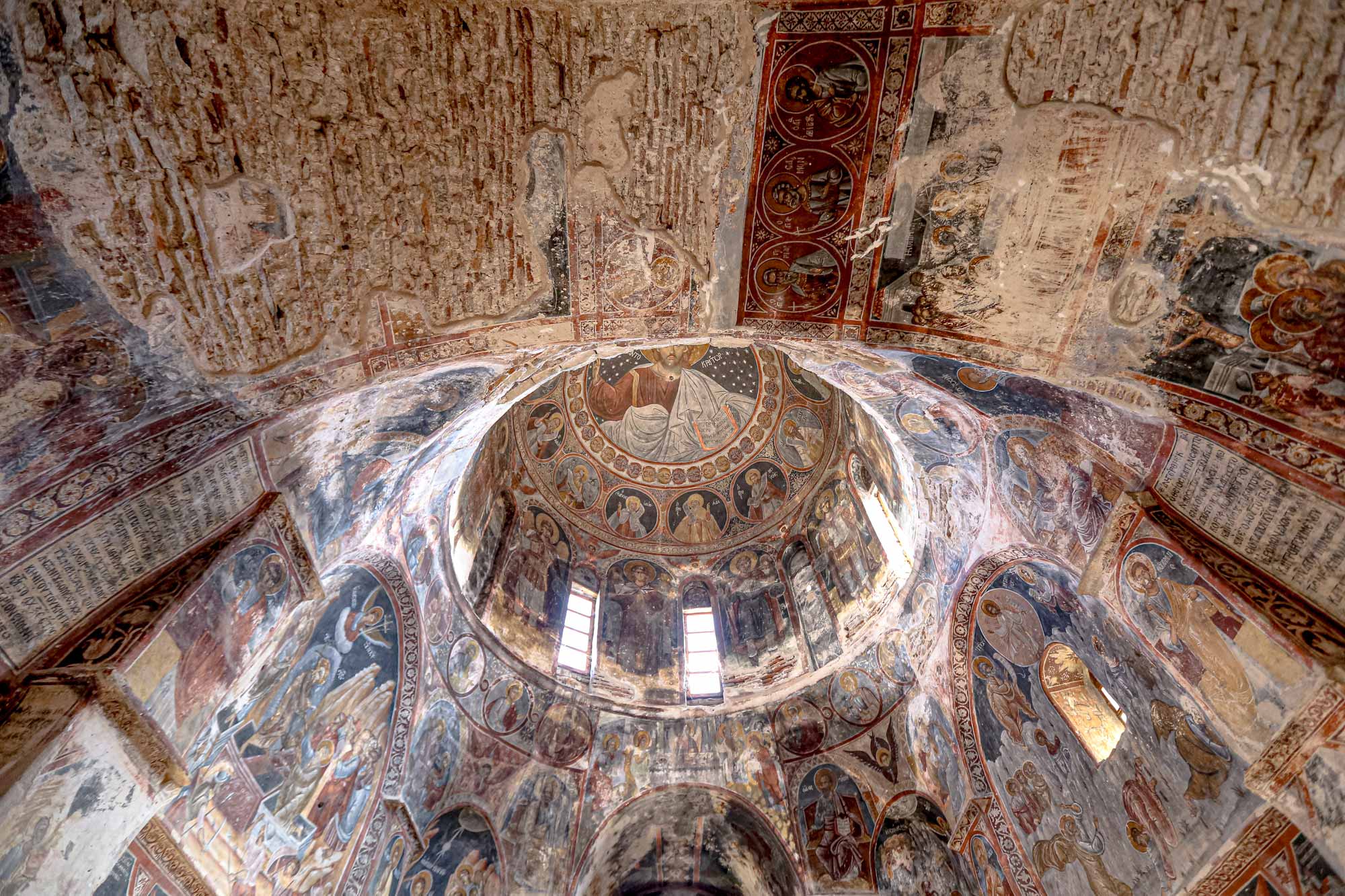
In the mountains at the centre of the island stands Nea Moni, one of the great monuments of the Byzantine world and a UNESCO World Heritage Site. Founded in the 11th century by the Emperor Constantine the Ninth Monomachos, its katholikon holds a cycle of gold-ground mosaics that rank among the finest surviving anywhere, executed by craftsmen sent from Constantinople itself.

Higher still is Anavatos, a village abandoned to time. Built of the same grey stone as the mountain it clings to and all but invisible from below, it climbs a sheer granite spur to a ruined citadel at the summit, its empty houses stacked one above another like the steps of an amphitheatre. Often called the Mystras of the Aegean, it was emptied by the same catastrophe of 1822 and never truly recovered. Today only a handful of residents remain; you climb through silent lanes to the top and look out over an island that seems, for a moment, to hold its breath.

THE CITRUS MANSIONS

Just south of the main town lies Kampos, a wide, walled plain of orchards. Here, from the Genoese period onward, the island’s aristocracy and merchant families built grand country estates among the citrus trees: substantial stone mansions of ochre and rose, set behind high walls of the local sandstone, with arched gateways, pebble-mosaic courtyards, private chapels and deep wells worked by waterwheels to irrigate the groves. Oranges, lemons and mandarins were grown here for export and for pleasure, and the scent of citrus in blossom still hangs over the lanes in spring.

Much of Kampos was damaged in the 1881 earthquake, and more has been lost to time, but a great deal survives, and a good number of the old estates have been restored and quietly opened to visitors and guests. To wander or cycle its walled lanes, catching glimpses of shaded gardens through ornate gates, is to step into a private, patrician Chios that the rest of the Mediterranean has largely forgotten. The larger and more elaborate the gate, the islanders will tell you, the wealthier the family behind the wall.

CHIOS TOWN AND THE SHIPPING DYNASTIES

The island’s capital, Chios Town, or Chora, is a working port. Behind the busy waterfront sits the old Genoese Kastro, a walled quarter of narrow lanes, a small Byzantine museum housed in a former mosque, and, in the surrounding streets, the neoclassical mansions of the families who made their fortunes at sea. For Chios is, above all, a maritime island: for generations it has produced shipowning dynasties such as the Livanos and Chandris families, whose fleets came to command a remarkable share of Greek and world shipping.

That heritage runs deep and dark. The wealth of Chios made it a target, and in 1822, during the Greek War of Independence, the island suffered one of the worst atrocities of the age: tens of thousands were killed or enslaved in the Chios Massacre, an event that scattered surviving Chian families to Syros, Piraeus, Marseille, London and beyond, where many rebuilt their fortunes and their fleets. The Maritime Museum, set in a handsome neoclassical mansion in the town, tells this story of loss, diaspora and extraordinary seafaring endurance better than anywhere else.

THE BEACHES

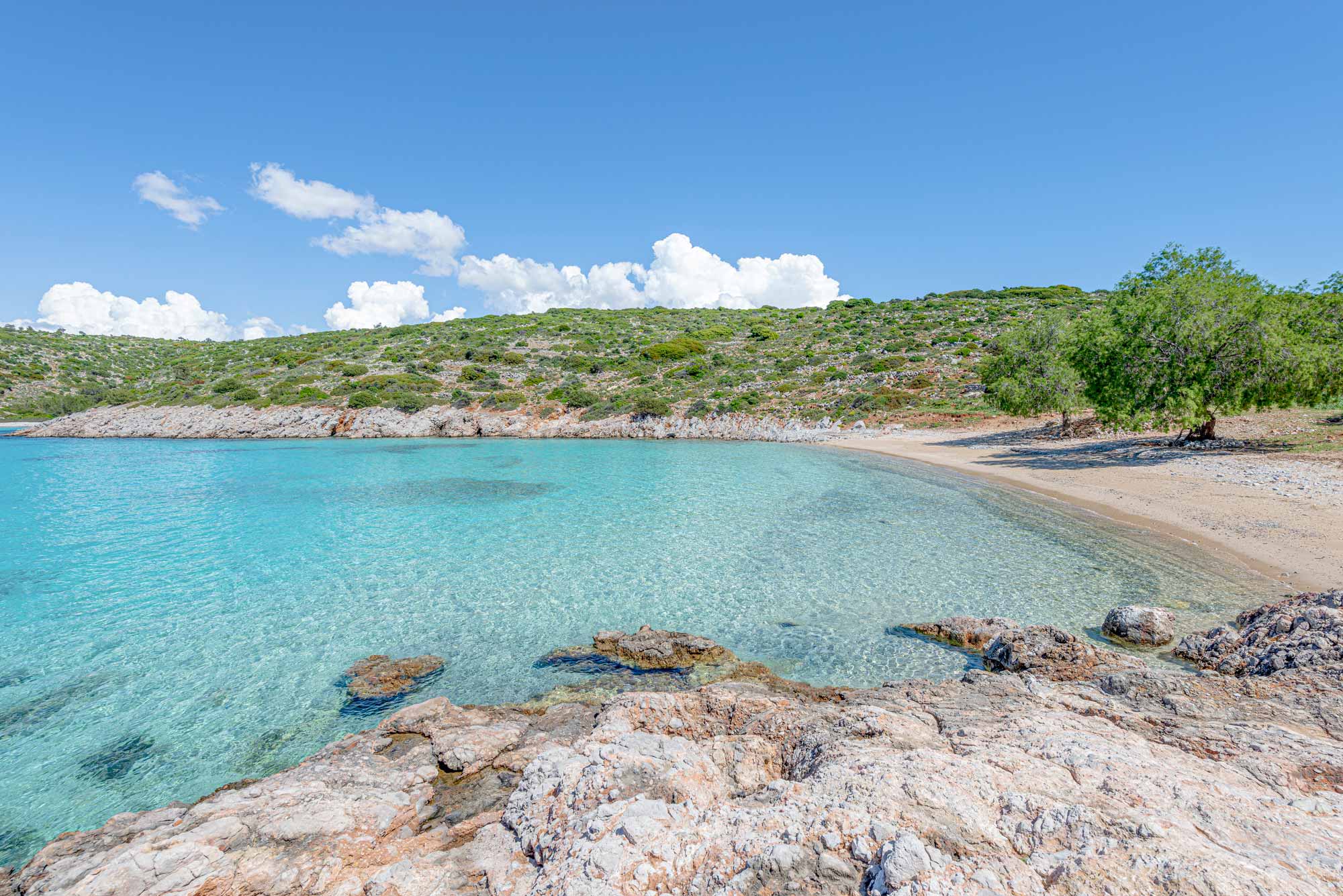
The most famous beach lies at the far south, below the village of Emporios: Mavra Volia, whose name means black pebbles, a run of three coves paved in large, glossy, dark volcanic stones left by an ancient eruption. Backed by rust-red cliffs and washed by deep, startlingly clear water that stays cool even in high summer, it offers the island’s most dramatic swim. Nearby Komi offers a long, easy stretch of golden sand for families who prefer their beaches soft underfoot.

On the east coast, Agia Fotia is a pretty pebble bay a short way south of town, backed by tavernas and cypress, while the sandy sweeps of Karfas nearby are the most developed on the island. Northward, the coast turns wilder and emptier, a string of coves and fishing hamlets reached by winding roads.

WHEN TO VISIT

Chios is at its best from May to October. Spring, from April into early June, is arguably the loveliest stretch: the Kampos orchards are in blossom, the hills are green and wild with flowers, and the days are warm without the peak-summer heat. July and August bring the strongest sun, the warmest sea and the island’s own returning diaspora, who come home for the holidays and fill the village squares; it is lively rather than overrun, and never approaches the crush of the Cyclades. September and October are golden and quiet, and late August into September is when the mastic harvest begins across the southern villages, a working season worth timing a visit around.

GETTING HERE

Chios sits off the Turkish coast in the North Aegean. Chios Island National Airport, named Omiros after the poet Homer, whom the island claims as a native son, lies around four kilometres south of the town and handles domestic flights only. Athens is roughly fifty minutes away by air, with daily services year-round and more in summer, and there are seasonal connections to Thessaloniki and a scattering of other Greek airports. Most international visitors fly into Athens and continue from there.

By sea, ferries run from Piraeus to Chios Town year-round, an overnight or daytime crossing of roughly seven to nine hours depending on the vessel, often continuing on to neighbouring Lesbos. Chios also enjoys one connection few other Greek islands can offer: a short daily ferry, around forty-five minutes, across the strait to Cesme on the Turkish mainland, a cosmopolitan resort town near Izmir. For travellers combining Greece with Turkey, or simply wanting the road less taken, it is a rare and rewarding crossing.

CHIOS WITH VILLA COLLECTIVE

Our collection in Chios is growing, alongside renewed interest from travellers seeking more authentic islands. Restored citrus mansions are set behind the high stone walls of Kampos, while low stone houses sit within easy reach of the mastic villages of the south. To begin planning, speak to us about our villas on Chios or our wider portfolio across the islands of Greece.

EXPLORE THE JOURNAL

DISCOVER MORE

The taste of Greece Greek cuisine is rooted in hospitality, community and centuries of tradition. From simple taverna dishes and olive oil-rich cooking to contemporary island restaurants and a thriving wine culture, our guide explores the flavours, rituals and ingredients that shape Greece’s distinctive food scene.
Your 2027 Villa Holiday, Month by Month From the luminous warmth of the Kenyan coast in January to the last golden weeks of a Moroccan autumn, our Villa Collective calendar stays full all year.