Antiparos Guide: Beaches, Chora & the Quiet Cyclades

There is a particular pleasure in arriving somewhere by accident of geography. Antiparos sits just across a thin channel from Paros, a smaller, gentler sibling that most travellers reach almost as an afterthought on a short hop on a ferry from the little port at Pounta to a low whitewashed harbour rising out of the sea. For decades the island was a favourite of campers, sailors and a small Athenian intelligentsia. Then, slowly and without much announcement, a more international crowd began to follow: discreet villa owners, under-the-radar celebrities, an excellent generation of cooks and a handful of designers who restored old houses with feeling rather than fanfare. Antiparos changed, but only just; the trick of the place is that it absorbed all of it without losing its rhythm. 

What you find now is one of the most considered small islands in the Cyclades. There is one main village, a handful of beaches you can reach by car in fifteen minutes, an ancient cave whose inner column predates almost every story ever told about it, and an uninhabited islet just off the south-west coast where archaeologists are still pulling a sanctuary of Apollo from the earth. The pace is slow because the island is small; the style is low-key because Antiparos has never felt the need to be otherwise. From our experience, it rewards travellers who like their luxury understated and always in good taste. 
IN THE SHELTER OF PAROS

Antiparos lies in the heart of the Cyclades, tucked alongside Paros.  A narrow channel, barely more than a kilometre across at its narrowest, separates the two islands, and the easiest way to make the crossing is the small car ferry that runs every twenty or thirty minutes from the port of Pounta. There’s rarely a queue, and once on board, there’s time for a quick coffee before Antiparos slips into view. 

That brevity is part of the island’s character. Antiparos is small enough to know intimately within a week, twelve kilometres from north to south, with a single road running down its spine and a handful of side tracks branching off to the beaches. The light is the famous Cycladic light, but softened by the island’s flatter, lower-lying landscape: long pale sweeps of coast, a scrub-covered interior, and the constant pale presence of Paros across the water. 

THE RHYTHM OF ANTIPAROS’S CHORA

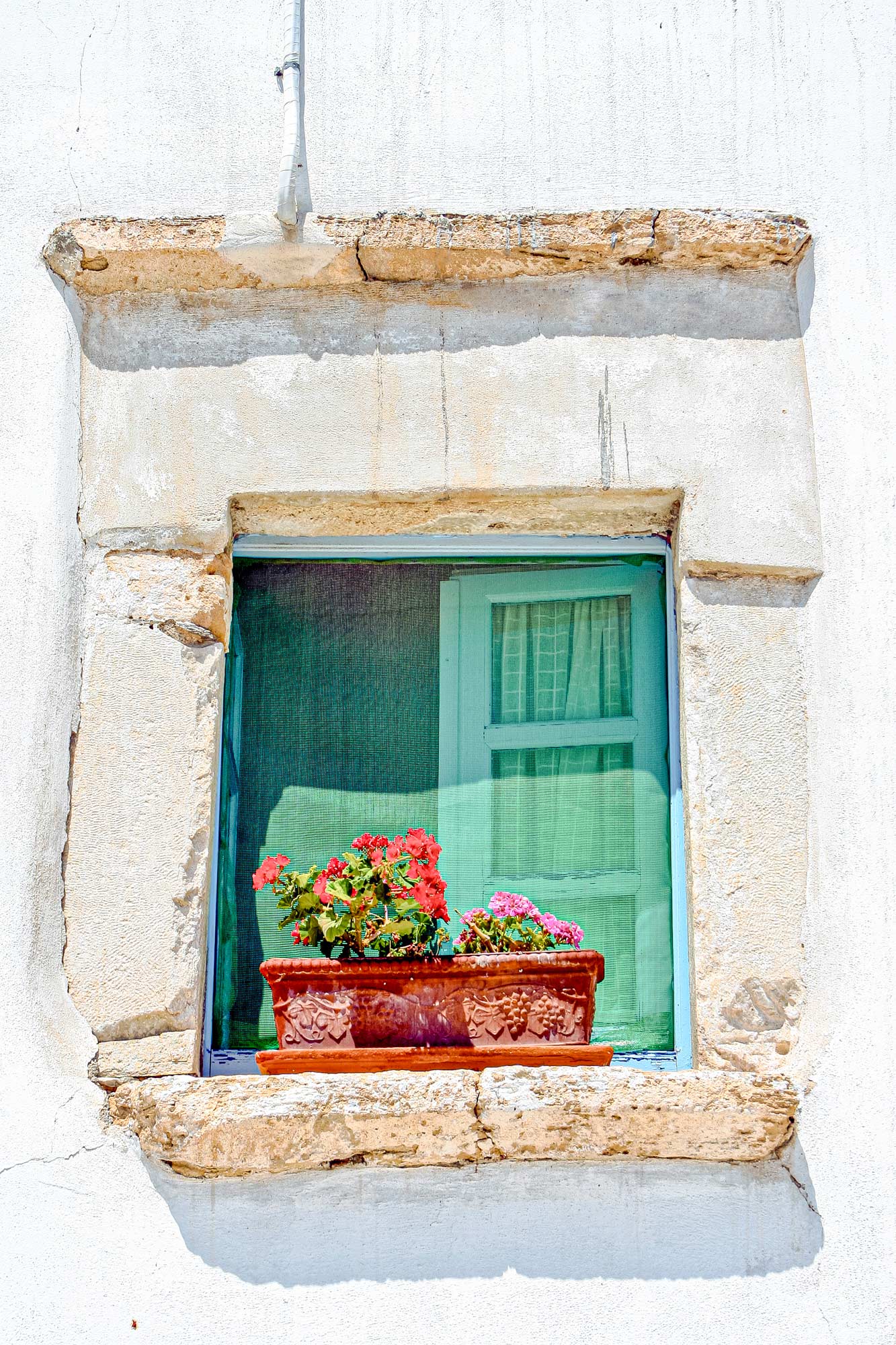
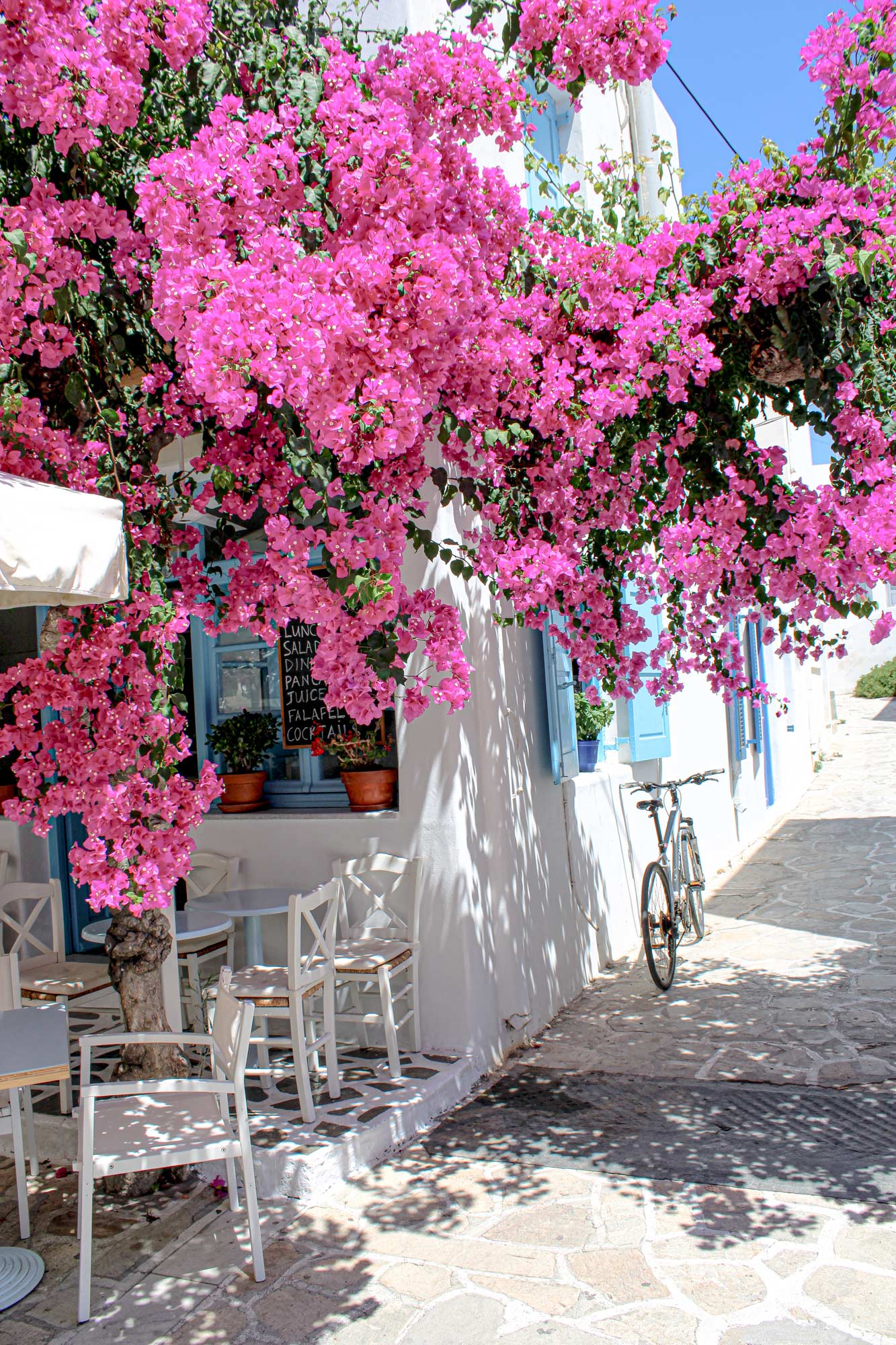
There is only one village on Antiparos worth the name, and it is universally referred to simply as Chora, the town. It begins where the ferry lands and unspools inland along a single street that runs from the harbour to the medieval core. It is one of the loveliest village walks in the Cyclades, bougainvillaea spilling over whitewashed walls, low-slung shops selling linen and ceramics, a row of cafés with cane chairs set out beneath tamarisk trees, and the slow drift of villagers and visitors. 

The evening rhythm here is an integral part of Antiparos’s rhythm. Around seven the main street begins to fill: families first, then a second wave for cocktails, then dinner, then a long unhurried tail of wine and conversation that runs well past midnight in high season. Café Margarita, a long-standing institution on the main street, all cane chairs and faded green shutters, is the prime people-watching perch from breakfast onwards; we particularly recommend the cocktails and wine by the glass. 

KASTRO AND THE HERITAGE HEART

At the inland end of the main street, the village folds in on itself towards Kastro, the fortified medieval heart, built in the 15th century by the Venetians as a refuge from the pirates who plagued the Aegean. The houses were arranged in a tight, defensive ring, the outer walls forming a continuous facade with no openings at ground level. Eight hundred years later, the structure is still legible: a square of tall, leaning houses around a central well, a small church at the heart, and the narrow stepped lanes that thread between them. 

It is a beautiful piece of accidental town planning, and a beautifully atmospheric place to wander in the cool of the morning or just before dinner. Look for the marble lintels above old doorways, the fragments of older buildings reused as cornerstones, and the way the church bells set the rhythm of the late afternoon. Kastro is also where the village’s small handful of upmarket bars and resto-bars have settled, chief among them Bardót, a candlelit courtyard hideaway where contemporary Greek cooking, Cycladic design and a serious cocktail list meet in equal measure. 

SAND, PEBBLES AND SLOW AFTERNOONS

Antiparos’s coastline is a string of small bays and long, open stretches, most of them within a fifteen-minute drive of Chora, and the water, clear, cool, faintly green where it shallows over the sand, is among the calmest in the Cyclades. There is no‘main’ beach; the pleasure of a week here is moving between them with the wind. 

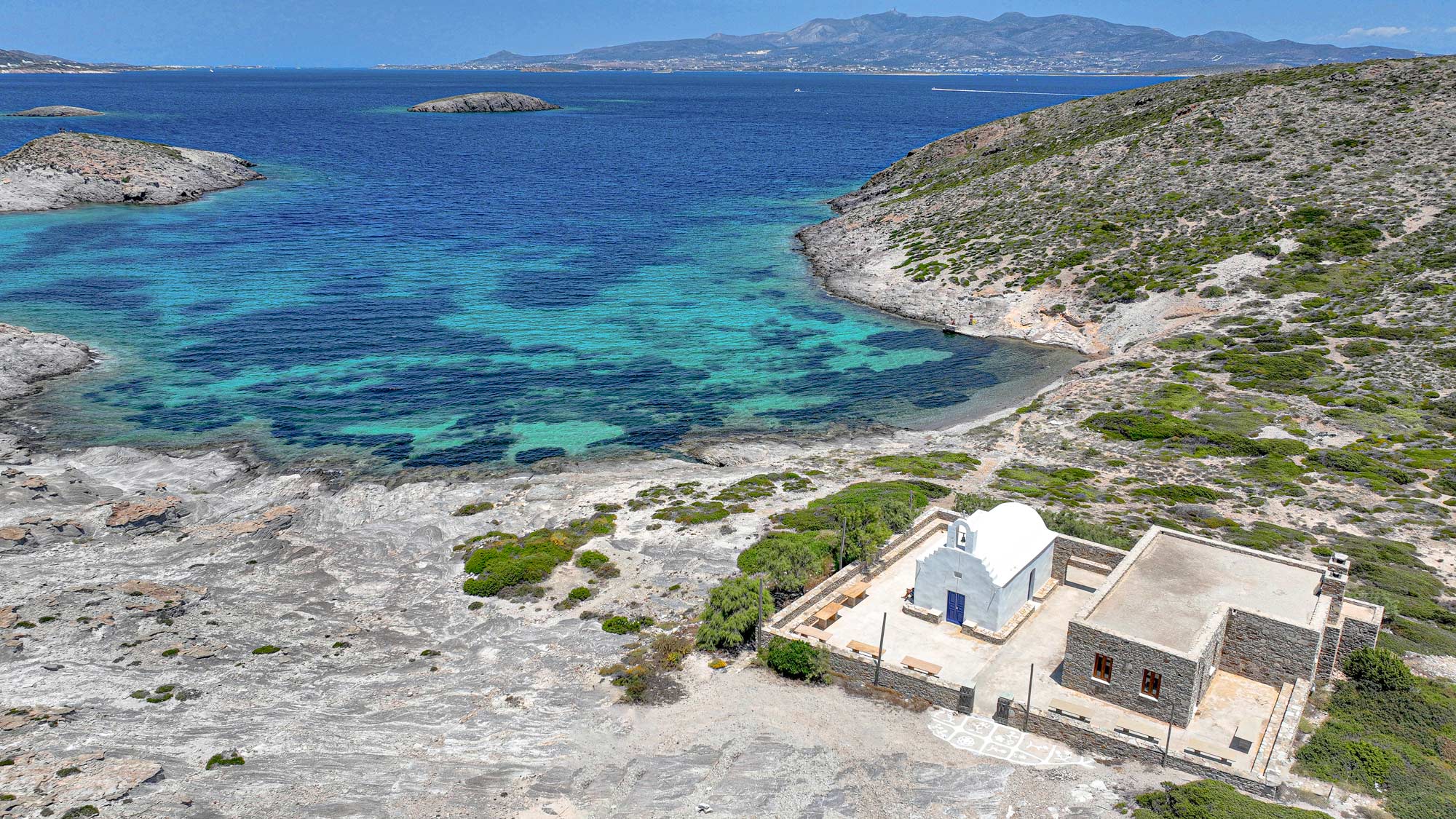
On the south coast, Soros is one of the most loved beaches: a long, gently curving bay of coarse golden sand and deep blue water, with a small string of tavernas behind and a handful of sunbeds set out at intervals. Nearby, Apantima is a smaller, pebblier cove with crystal water and a rocky seabed, sheltered from the summer wind and home to a stylish beach bar and restaurant. Faneromeni lies at the end of a long unpaved road in the deep south of the island, untouched with no sunbeds and no bar, a chapel above it, a wide pale beach below, and the kind of stillness that has all but disappeared elsewhere in the Cyclades. 

On the west coast, the mood is different. Livadia faces open Aegean and catches the meltemi when it blows; a wilder beach of sand and pebble, popular with windsurfers and walkers, and the setting for one of the island’s most singular hotels, The Rooster. Further north, Sostis and Glyfa offer long sweeps of pale sand and shallow water that warms early in the season. And just outside Chora, Antiparos Beach provides an easy win, a short stroll from the village, a row of tamarisks behind, and water that’s as clear as gin.  

DAYS SPENT ON THE WATER

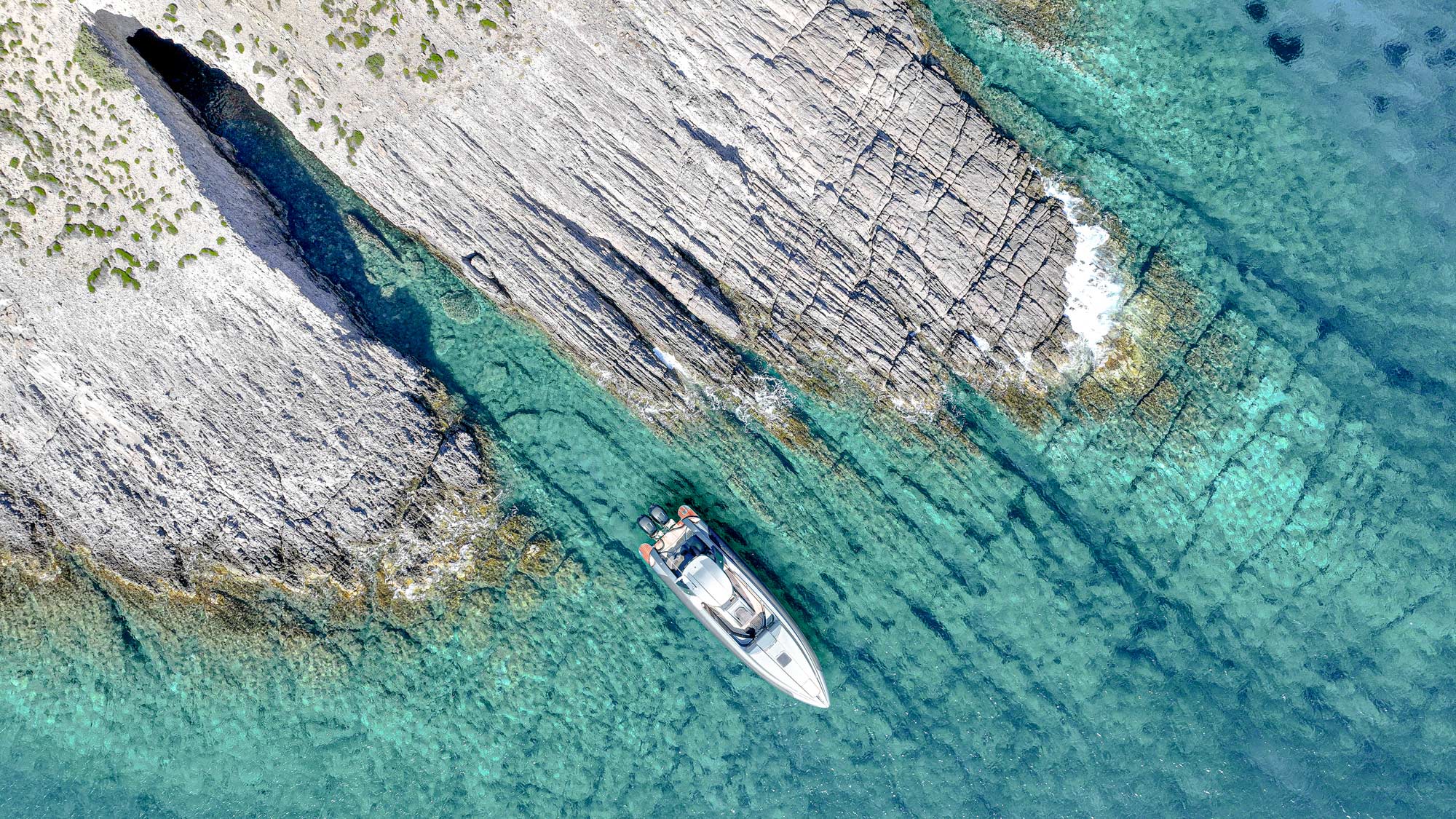
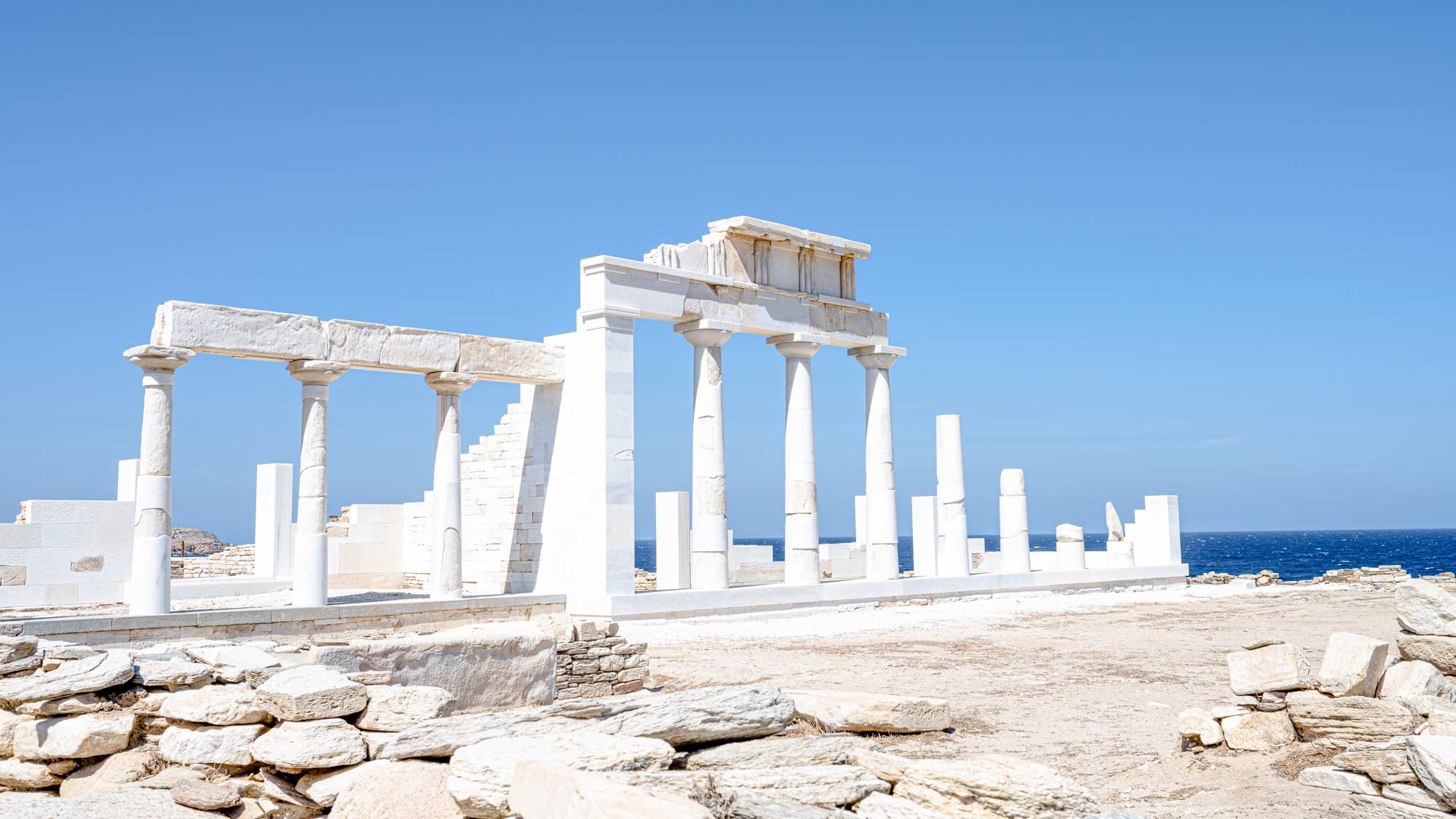
No week on Antiparos is quite complete without a day at sea. The most rewarding of the options is the short crossing to Despotiko, the uninhabited islet that lies just off the south-west coast, separated from Antiparos by a turquoise channel shallow enough to wade in places. Since the late 1990s, archaeologists have been steadily uncovering a major sanctuary of Apollo there, dating to the sixth century BC, with reconstructed columns and foundations now rising out of the scrub. The site is not formally open to the public, but boats from Agios Georgios, to the south-west of Antiparos, directly opposite Despotiko, sail through the day, and many visitors combine the crossing with a long swim in the channel and a slow lunch back on the Antiparos side. 

The seafront taverna at Agios Georgios, where most of these days begin and end, is Captain Pipinos: a no-reservations classic of paper tablecloths and grilled fish by the kilo, with the temple foundations of Despotiko visible across the bay as you eat. Other boat days run further afield to the Blue Lagoon on the east coast, to a string of small caves on the south, and on private charters to the quieter beaches of southern Paros. Antiparos rewards a day on the water more than most islands in the Cyclades, partly because so much of the best of it is offshore. 

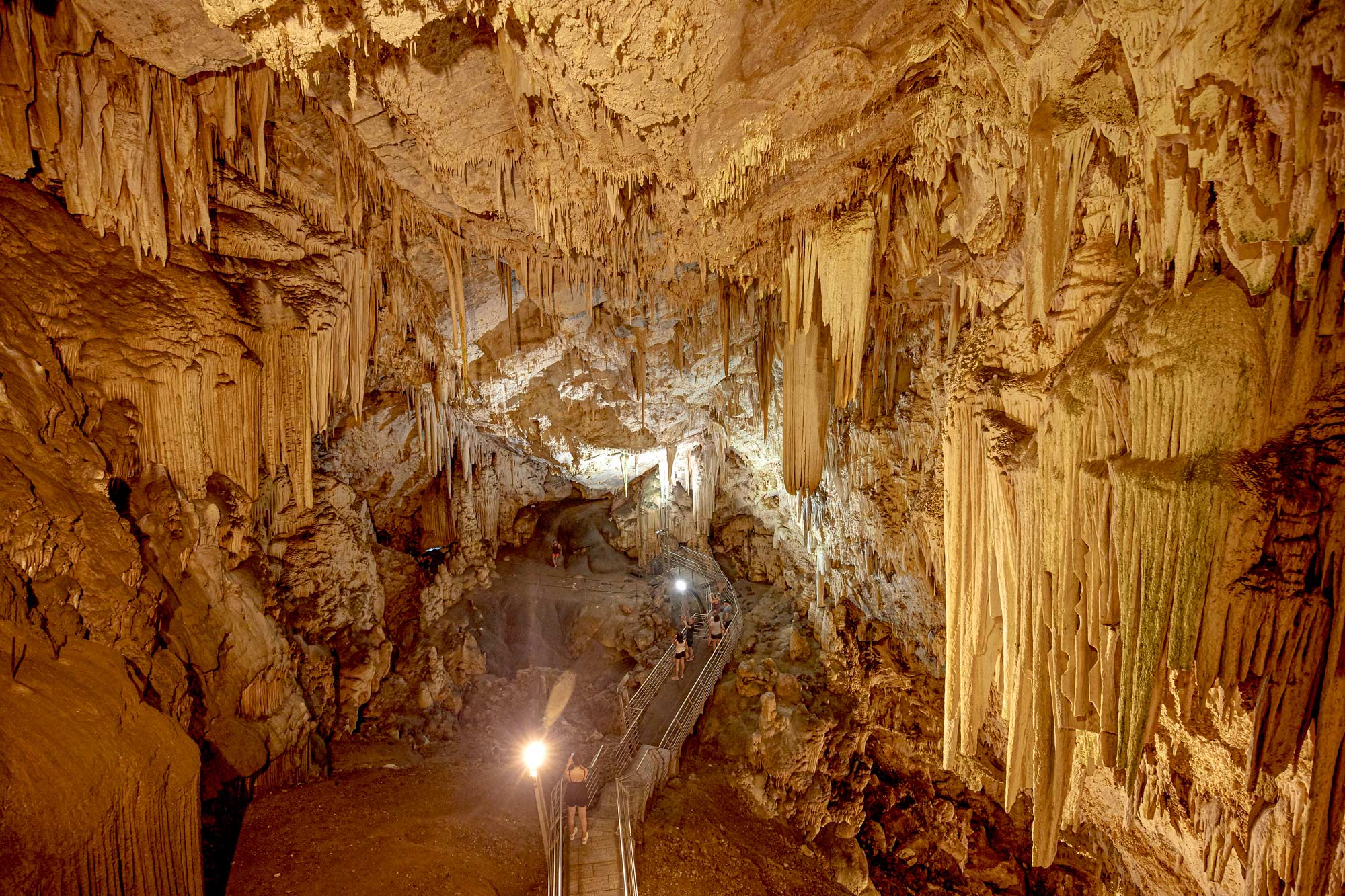
The Cave of Antiparos is part of Antiparos’s ancient story, a vast stalactite cavern in the south whose central column, the so-called Huge Central Column, is estimated to be some 45 million years old, the oldest stalagmite in Europe. The cave has been visited continuously since antiquity and is sometimes described as the oldest tourist cave in the world; inscriptions on its walls run from the Hellenistic period to the present day, and a French ambassador held a Christmas mass inside it in 1673. A stepped descent of around 300 metres brings you into a cool, echoing chamber and one that will connect you to Antiparos’s oldest story.   

CULINARY TRADITIONS AND THE NEW-WAVE KITCHENS

For an island of fewer than 2,000 year-round residents, Antiparos has a developed restaurant scene. Some of that is heritage: the traditional tavernas of Chora and Agios Georgios still set the daily rhythm of fish, Greek salad and slow cooking, and some of it is more recent: the arrival of a more international crowd over the last fifteen years has helped fund a generation of more ambitious openings. 

At the most considered end of the scale sits The Rooster, the small wellness-led hotel above Livadia beach whose open-air restaurant and bar have become one of the great sunset addresses in the Cyclades. The cooking leans into the island’s farm, the cocktails are built around herbs grown on site, and the long pale dining terrace catches the last hour of light over the open Aegean. In Chora, our recommendation is Bardót which offers a more urban, after-dark counterpoint, contemporary Greek dishes, signature drinks, a courtyard that fills slowly through the evening. Mostra, also in the village, is the quietly excellent option for a polished modern Cycladic dinner: small menu, careful sourcing, Cycladic wines by the glass. 

For the older Antiparos, the ritual remains unchanged. We like Captain Pipinos Seafood Taverna at Agios Georgios for grilled fish by the harbour and the view of Despotiko; Margarita on the main street for late breakfasts and relaxed coffees; and a scattering of small tavernas in the Chora’s back lanes and along the southern beaches where the menu is shorter, the wine is from a barrel and dinner stretches as long as you want it to. 

WHEN TO VISIT

Antiparos is at its most luminous between mid-May and the first week of October, with the warmest sea temperatures from late June through September. July and August are the busiest and windiest weeks, when the meltemi can blow for days at a time, though even in peak season the island absorbs its visitors easily. June and September are the loveliest months: warm settled weather, open restaurants, the island still half itself. May and early October are quieter again, ideal for travellers who want long walks, empty beaches and a softer pace. Outside of those months, a handful of tavernas and shops close, but the village never feels completely shut. 

GETTING HERE

Antiparos has no airport of its own; the route is always via Paros. Paros National Airport (PAS) is served by short hops from Athens through the summer months, and increasingly by direct seasonal flights from a handful of European cities. From the airport, it is a 30-minute drive across Paros to the small port of Pounta on the west coast, and from there the car ferry to Antiparos runs every 20 to 30 minutes throughout the day, a 7-minute crossing with tickets sold on board in cash. 

The alternative is the ferry from Athens. From Piraeus or Rafina, a high-speed vessel will land you in Parikia on Paros in around three hours; from there a short drive to Pounta and the same short hop across the channel. The island also pairs naturally for a longer Cycladic week with Sifnos to the west or Santorini to the south, both connected by regular summer ferries. 

ANTIPAROS WITH VILLA COLLECTIVE

We choose our villas on Antiparos with care and thought for both the island and your experience. An understated style, a sense of place that reflects the island and a setting that lets the days unspool gently are factors when sourcing the perfect villa. All our properties come with the support of the Villa Collective team who know the island intimately, who can book the best table at the best restaurant, arrange a private boat across to Despotiko with a guide who works on the dig, organise a long lunch at Captain Pipinos, or simply point you to the right unmarked beach for a slow afternoon. To begin planning, explore our collection of villas on Antiparos or our wider portfolio across the islands of Greece 

EXPLORE THE JOURNAL

DISCOVER MORE

A villa for every occasion Finding the perfect villa that suits a large group is the first step in making sure your celebration sings. We can match you with the ideal property for your party, plan all the big and little details ensuring your occasion rises far beyond expectations. Read our recommendations for big gatherings.
5 Reasons to Book Your 2027 Villa Holiday Now 2027 bookings with rates guaranteed at 2026 levels. Five reasons to plan your villa holiday early — from peak-date availability to the finest homes across the Mediterranean and beyond.
The taste of Greece Greek cuisine is rooted in hospitality, community and centuries of tradition. From simple taverna dishes and olive oil-rich cooking to contemporary island restaurants and a thriving wine culture, our guide explores the flavours, rituals and ingredients that shape Greece’s distinctive food scene.