Aquitaine Guide: Bordeaux, Arcachon & the Basque Coast

Where the Côte d’Azur glitters, Aquitaine is happily content in itself: a long, broad Atlantic shore lined with maritime pine, a wind that carries salt and resin in equal measure, and a culture built around oysters and wine. The light is softer here than in Provence, the colours cooler, the pace fundamentally less hurried. Coming to Aquitaine is a happy acceptance of oyster shacks over beach clubs, forest pathways instead of yacht-filled marinas and a glass of Pessac-Léognan by the sea over a glitzy aperitif scene.

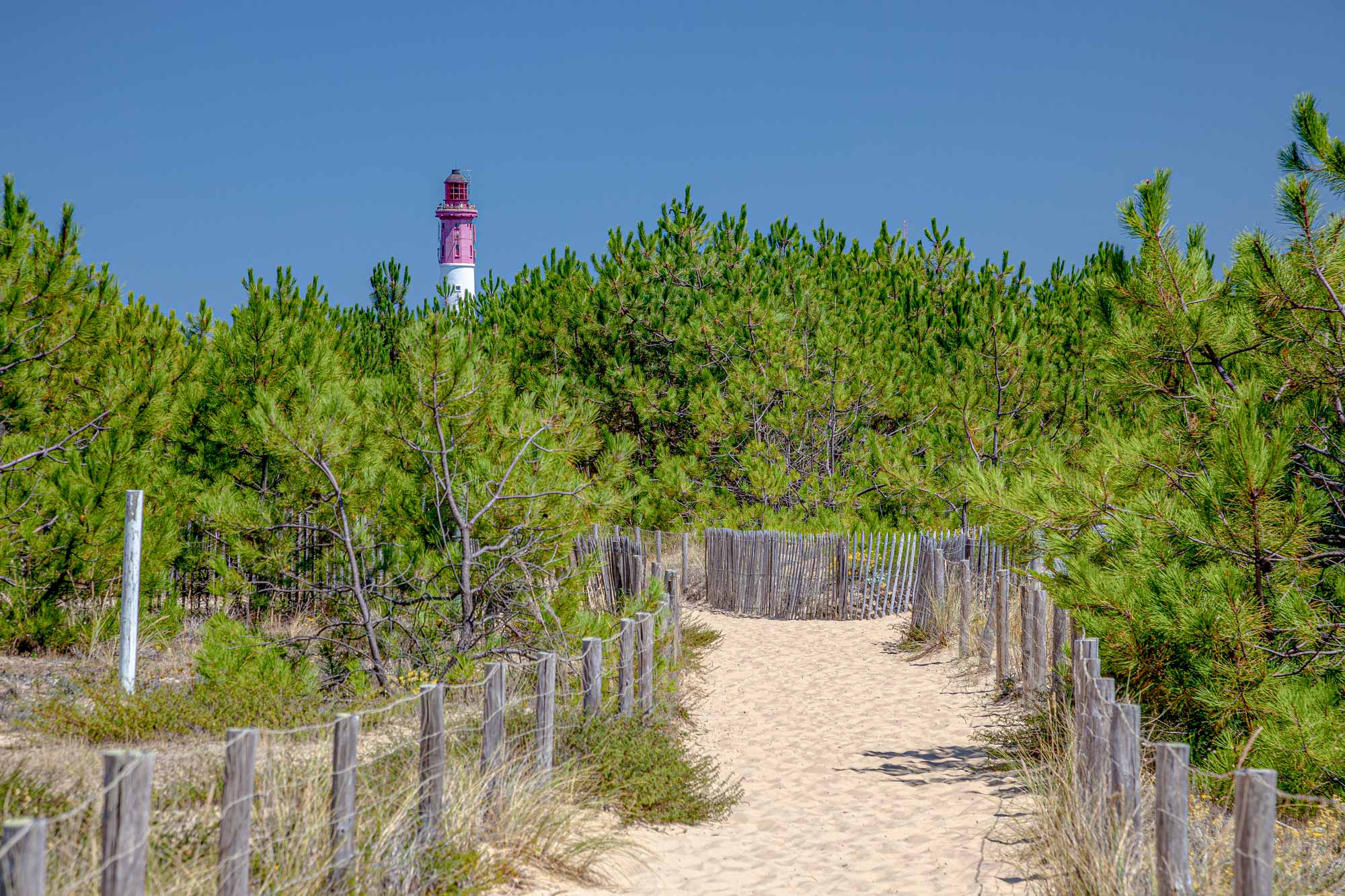
The best way to start the day in Aquitaine could be a swim at Cap Ferret before the wind picks up; afternoons are spent climbing the soaring Dune du Pilat or exploring châteaux on the Médoc’s narrow back roads. In the evening, we recommend sampling magret de canard with a robust Saint-Émilion.

PINE, SAND AND THE ATLANTIC SHORE

Aquitaine occupies the south-western corner of France, a long arc of coast running from the Gironde estuary down to the Spanish border at the foot of the Pyrenees. Inland from the shore lies Les Landes, a vast expanse of maritime pine first sown in the 19th century to stabilise the dunes and drain the marshes. Today it forms the green hinterland of the entire coast, threaded with cycle paths and dotted with quiet inland lakes, giving the whole region its distinctive resinous, sea-salt air.

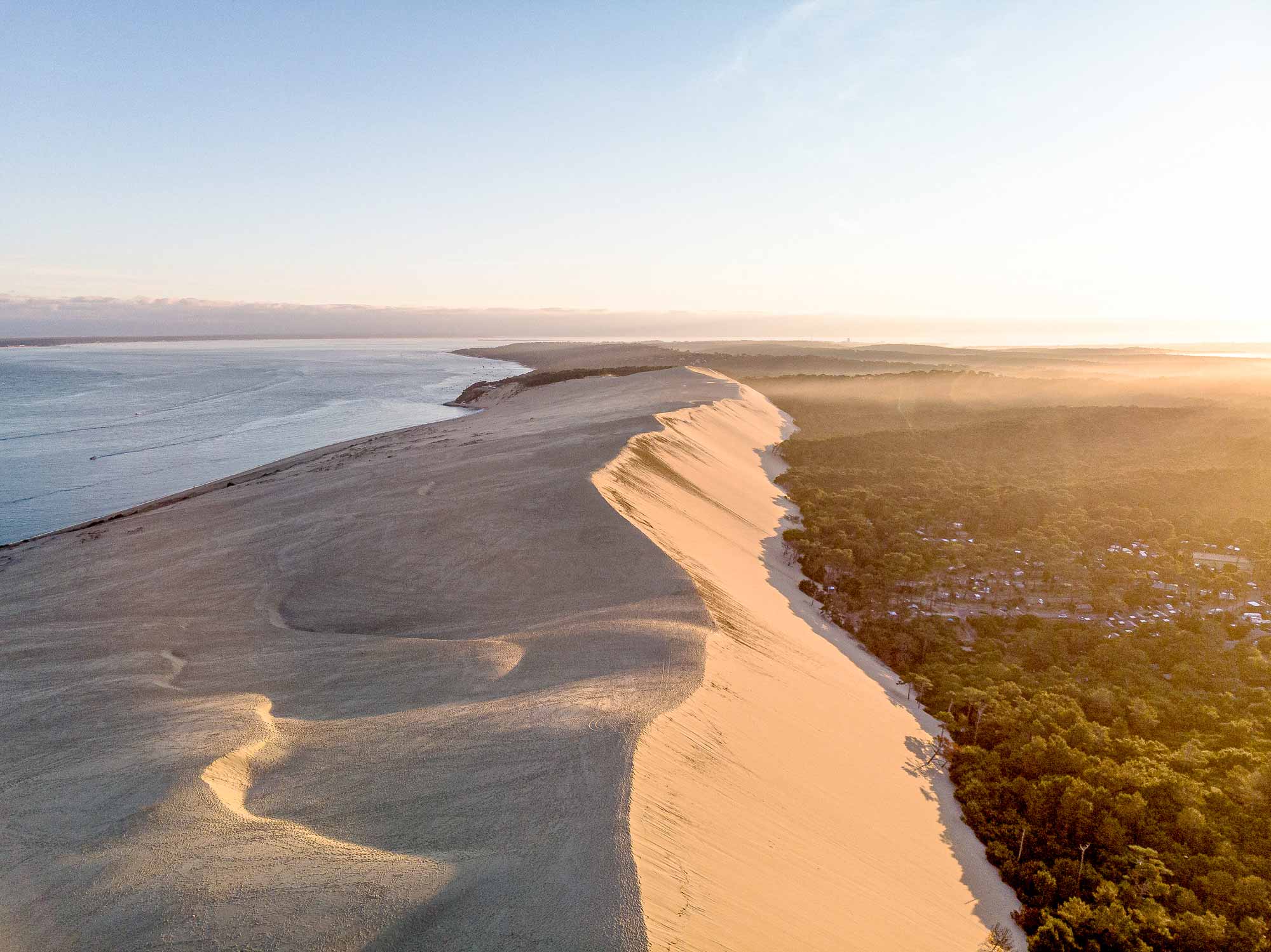
Straight, broad and Atlantic-facing, the shoreline runs for more than 200 kilometres, backed by dunes that rise abruptly out of the pines. The most famous is the Dune du Pilat, the tallest sand dune in Europe, reaching about 110 metres at its highest point and slowly migrating inland year by year. The climb is short but rewarding: the view is of the Atlantic to the west, the forests of Les Landes to the east and the Bay of Arcachon spread out to the north.

THE BAY OF ARCACHON AND THE OYSTER VILLAGES

The Bay of Arcachon is a sheltered triangular lagoon, opening to the Atlantic and edged on one side by the Dune du Pilat, on the other by the long, low peninsula of Lège-Cap-Ferret. Inside the bay, the tide floods in and out twice a day across vast oyster parks and pale sandbanks, exposing the Banc d’Arguin, a four-kilometre sand bar classified as a national ornithological reserve in 1972. On the eastern shore sits Pyla-sur-Mer, a discreet village in the pine woods at the foot of the great dune, the preferred address for Bordelais summer houses.

Across the water, Cap Ferret has its own particular character: a single, slender peninsula of low-slung wooden houses, sandy lanes and bicycles, with the Atlantic on one side and the bay on the other. The two coasts could not be more different, the ocean side a wild beach for surfers, the bay side a string of oyster villages, each with its own port of brightly painted cabanes ostréicoles, the wooden oyster huts where farmers work, and serve plates of just-shucked oysters with a glass of cold white wine to those passing by.

A morning on the water, by traditional pinasse, the flat-bottomed wooden boat once used by oyster farmers, or by maritime shuttle from Arcachon or Lège-Cap-Ferret, is a wonderful way to explore the bay. The shuttle from Cap Ferret reaches the Banc d’Arguin in around twenty minutes; from Arcachon, the crossing takes closer to an hour.

THE SOUTHERN COAST: BIARRITZ, SAINT-JEAN-DE-LUZ AND THE BASQUE EDGE

At its southern end, Aquitaine’s pine forests give way to softer green hills, the coast rises into low cliffs, the air carries the first hint of the Pyrenees, and the language of Basque fills shops and restaurants. This is the Côte Basque, a stretch of coast quite distinct from anything further north, with its own gastronomy and architecture.

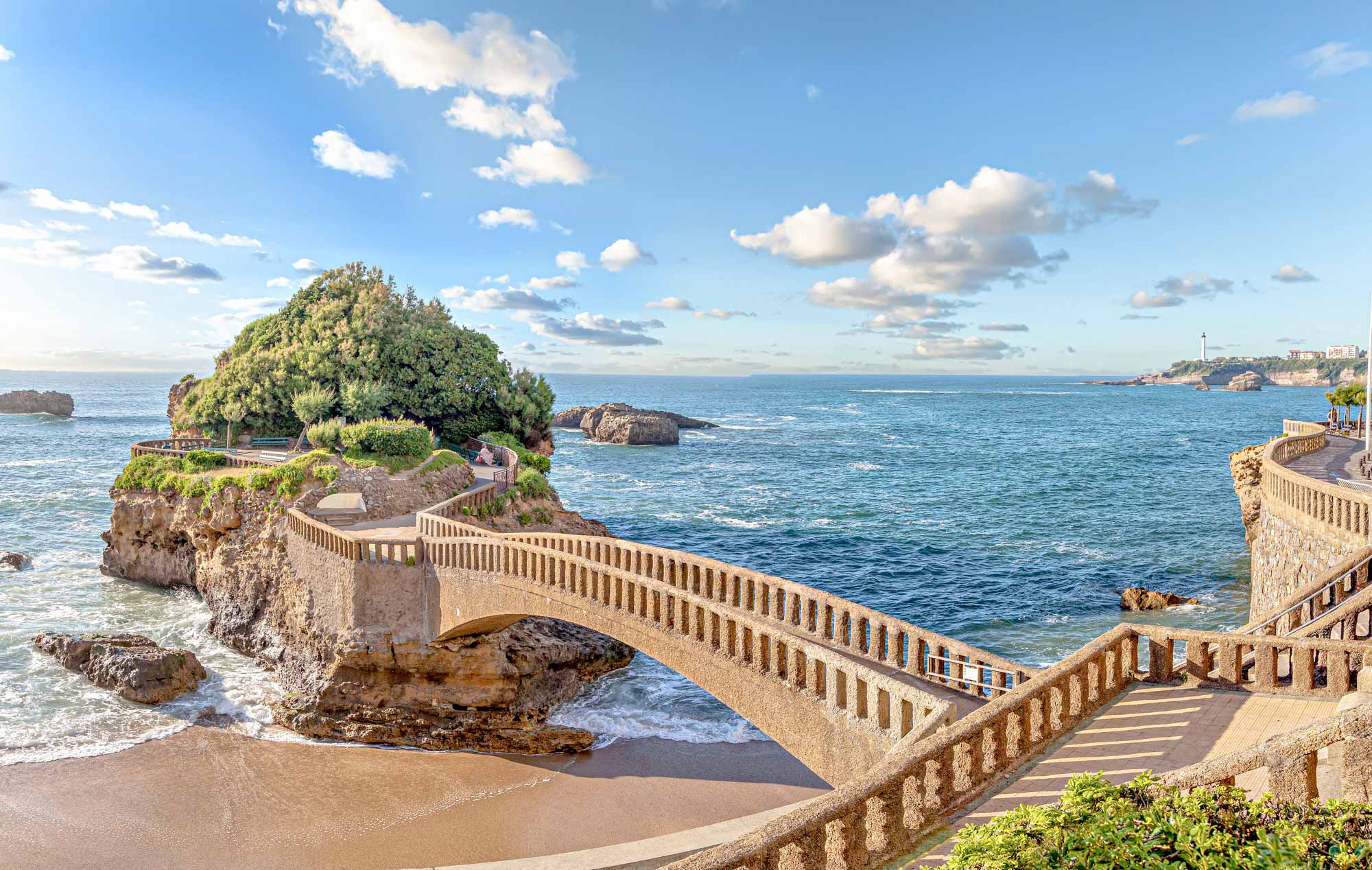
Biarritz was a small whaling and fishing village until the 1850s, when Empress Eugénie, the wife of Napoleon III, made it her summer retreat and brought half of European royalty with her. The town has carried that legacy elegantly ever since: a chic, slightly raffish resort with grand belle-époque hotels, a long surf beach in the middle of the city, and a reputation, since the 1950s, as the cradle of European surfing. South of Biarritz, Saint-Jean-de-Luz is more low-key, a former whaling port at the mouth of the Nivelle, with a sheltered bay and pretty pedestrianised centre. By local tradition, the macaron was first made here in 1660, prepared for the wedding of Louis XIV; a handful of family pâtisseries still bake them daily using the same recipe.

Between the two towns runs the Sentier du Littoral, the coastal footpath that traces the cliffs above the Atlantic, a half-day walk past surf beaches, hidden coves and old fishermen’s chapels, with the Pyrenees in the distance and, on clear afternoons, the line of the Spanish coast on the horizon.

THE SURF COAST: HOSSEGOR, LACANAU AND THE LONG WAVE

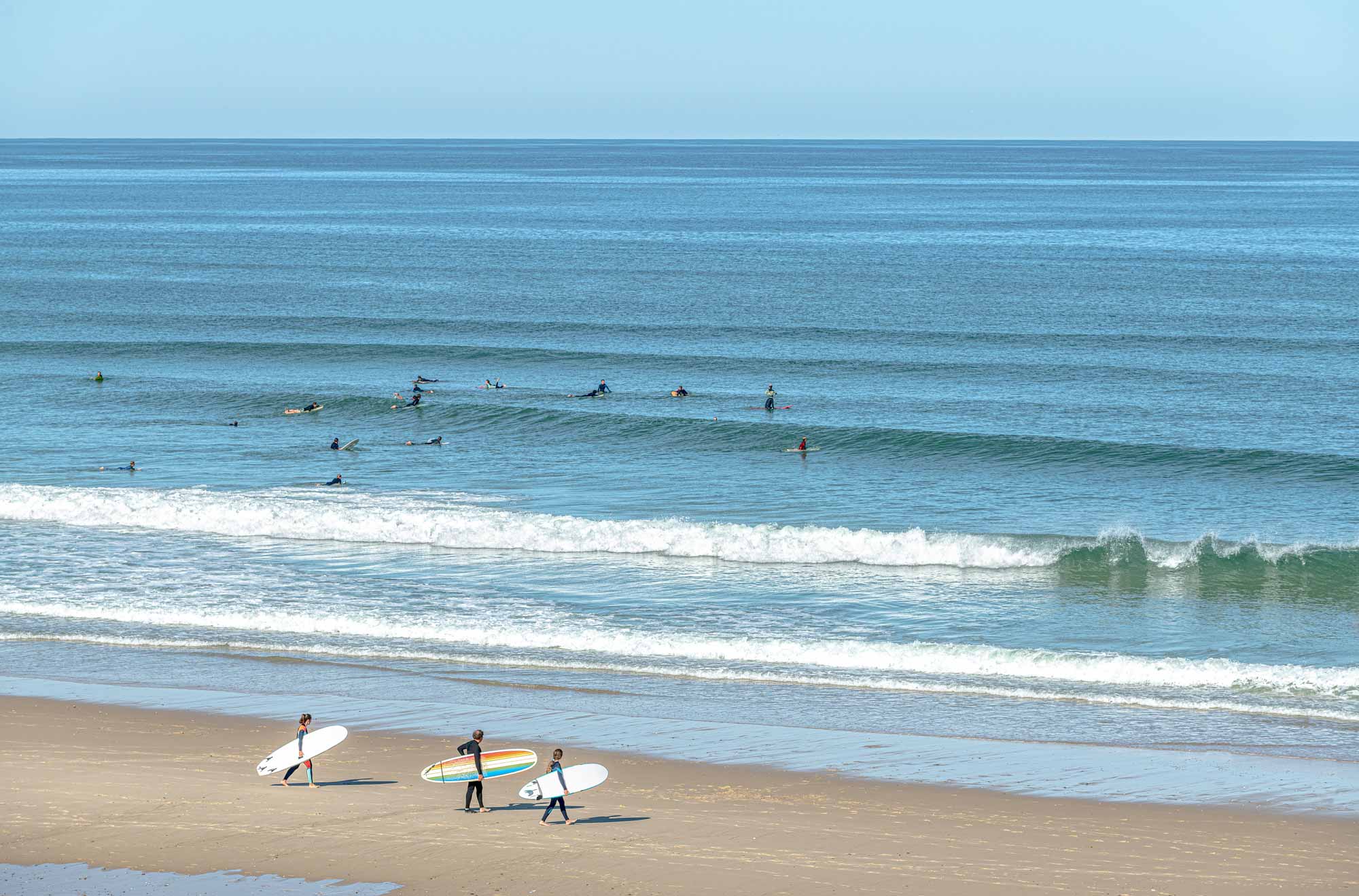
Between Cap Ferret and Biarritz lies a stretch of coast that has, over the last half century, become the surfing capital of Europe. The wave here is exceptional: long, powerful, and remarkably consistent, generated by Atlantic swells that travel thousands of miles and break onto beach breaks shaped each winter by storms. There is, famously, an underwater canyon, the Gouf de Capbreton, that cuts directly toward the shore at Hossegor, focusing the swell into the hollow, fast-breaking barrels that draw professionals from across the world.

Hossegor itself is the self-styled capital of French surfing, a lively, easy-going town of surf shops, board shapers and beachside cafés, host to the annual Quiksilver Pro France on the world tour. Further north, Lacanau offers the same quality of wave with rather less crowds: a long sandy strand, a string of beach breaks from La Nord to Super Sud, and the prestigious Lacanau Pro each August. Between them lie dozens of quieter beaches reached only via narrow tracks through the pines, long, empty, and almost always with rideable waves.

BORDEAUX AND THE WINELANDS

Inland, Bordeaux sits on the great curve of the Garonne, an hour from the coast and at the heart of one of the most storied wine regions on earth. Over the last 20 years, the city has transformed: its honey-coloured 18th-century stone has been scrubbed clean, its riverfront pedestrianised, and its tram network extended into the surrounding countryside. A long lunch in the old wine-merchant district of the Chartrons, an afternoon at the Cité du Vin on the river, an evening at a wine bar in Saint-Pierre: the city is defined by its wine experiences.

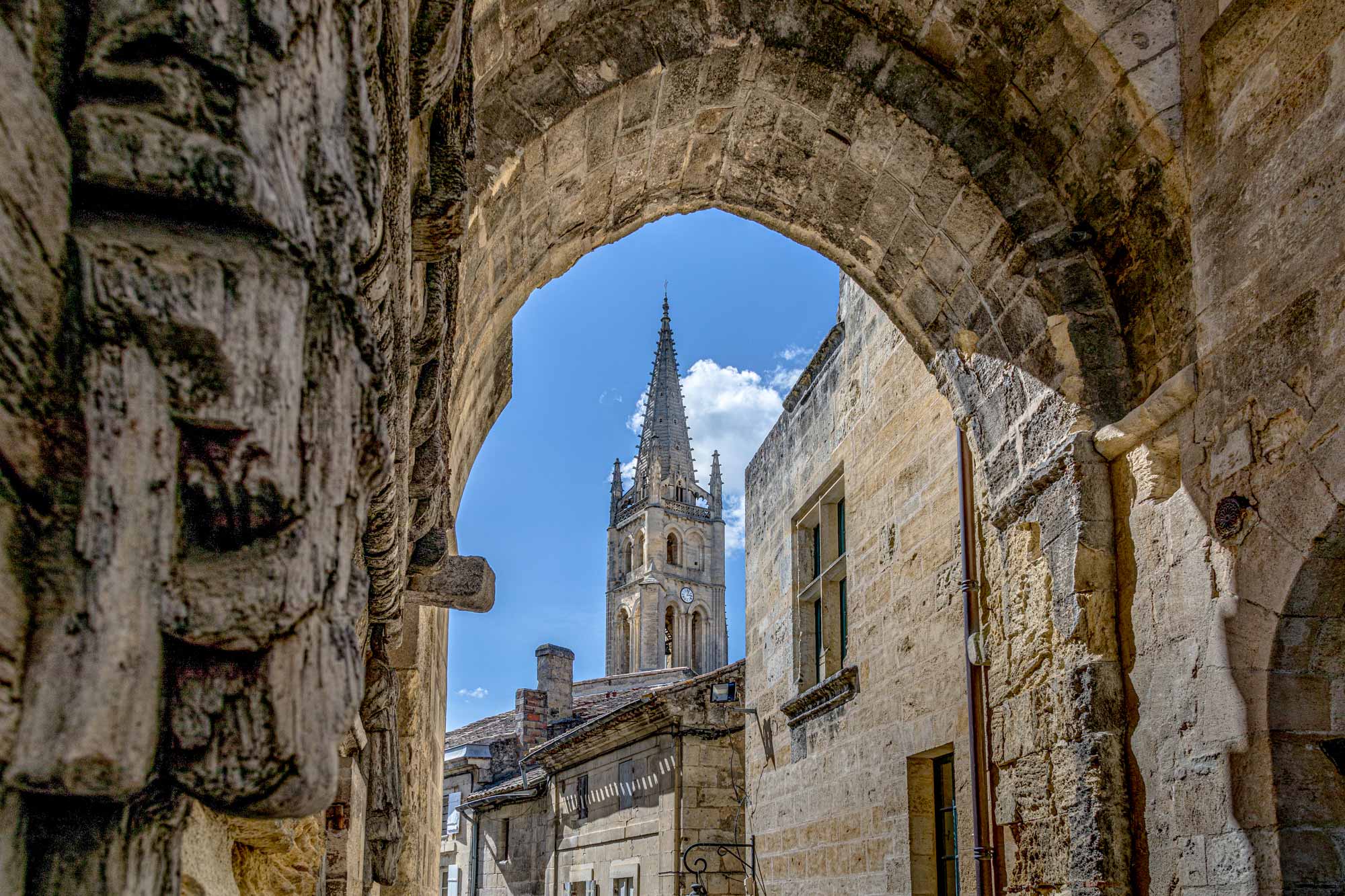
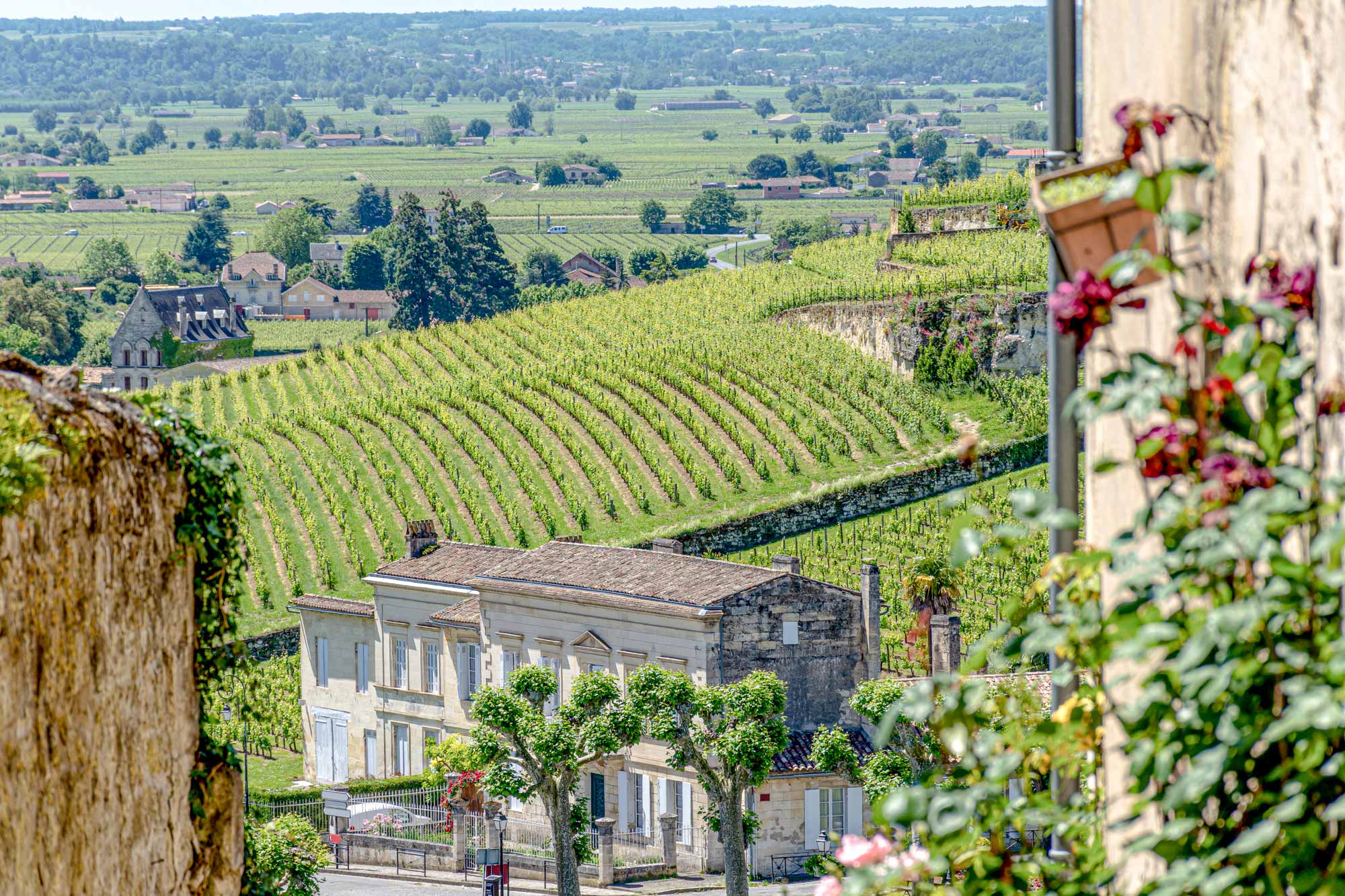
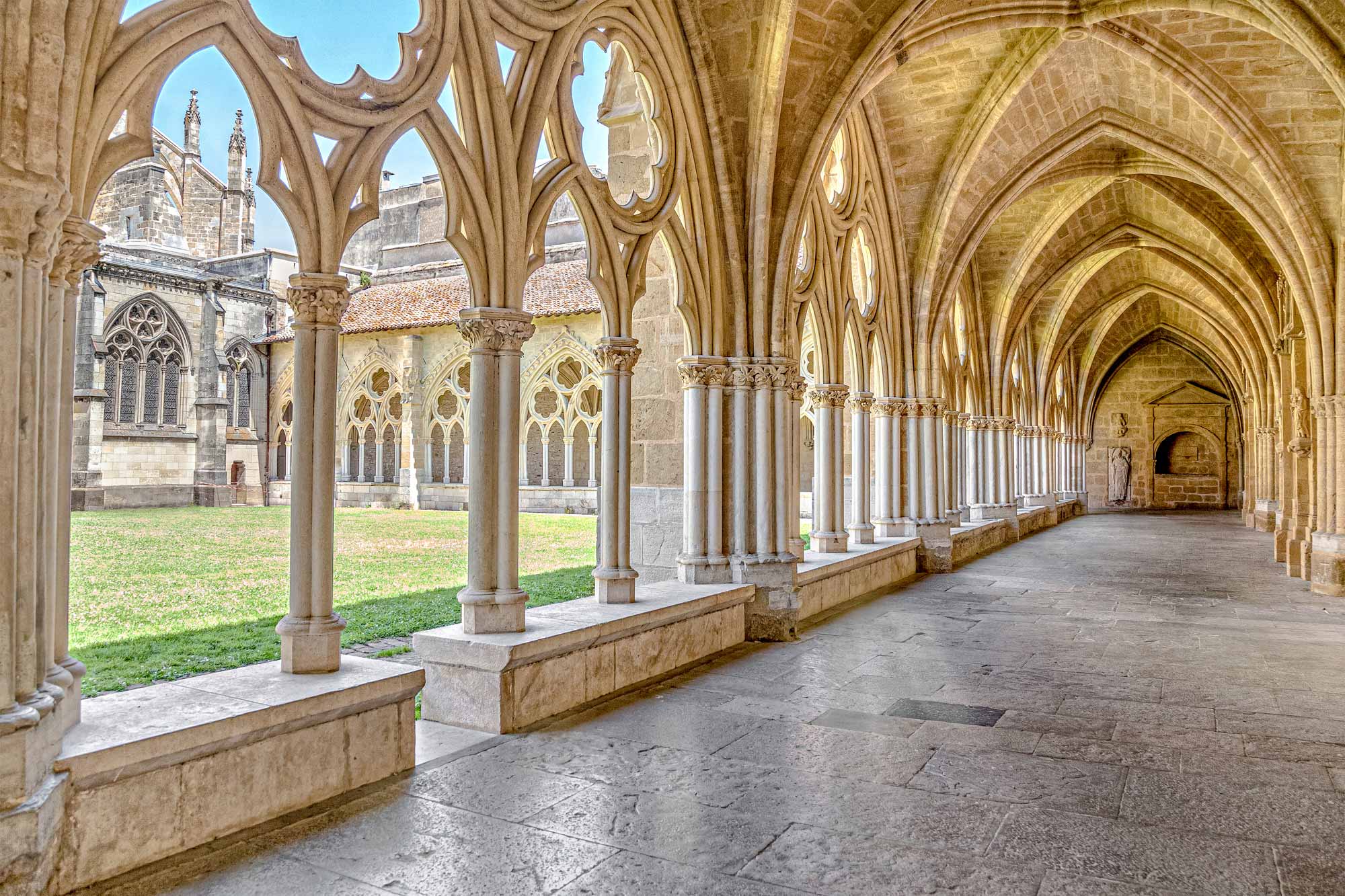
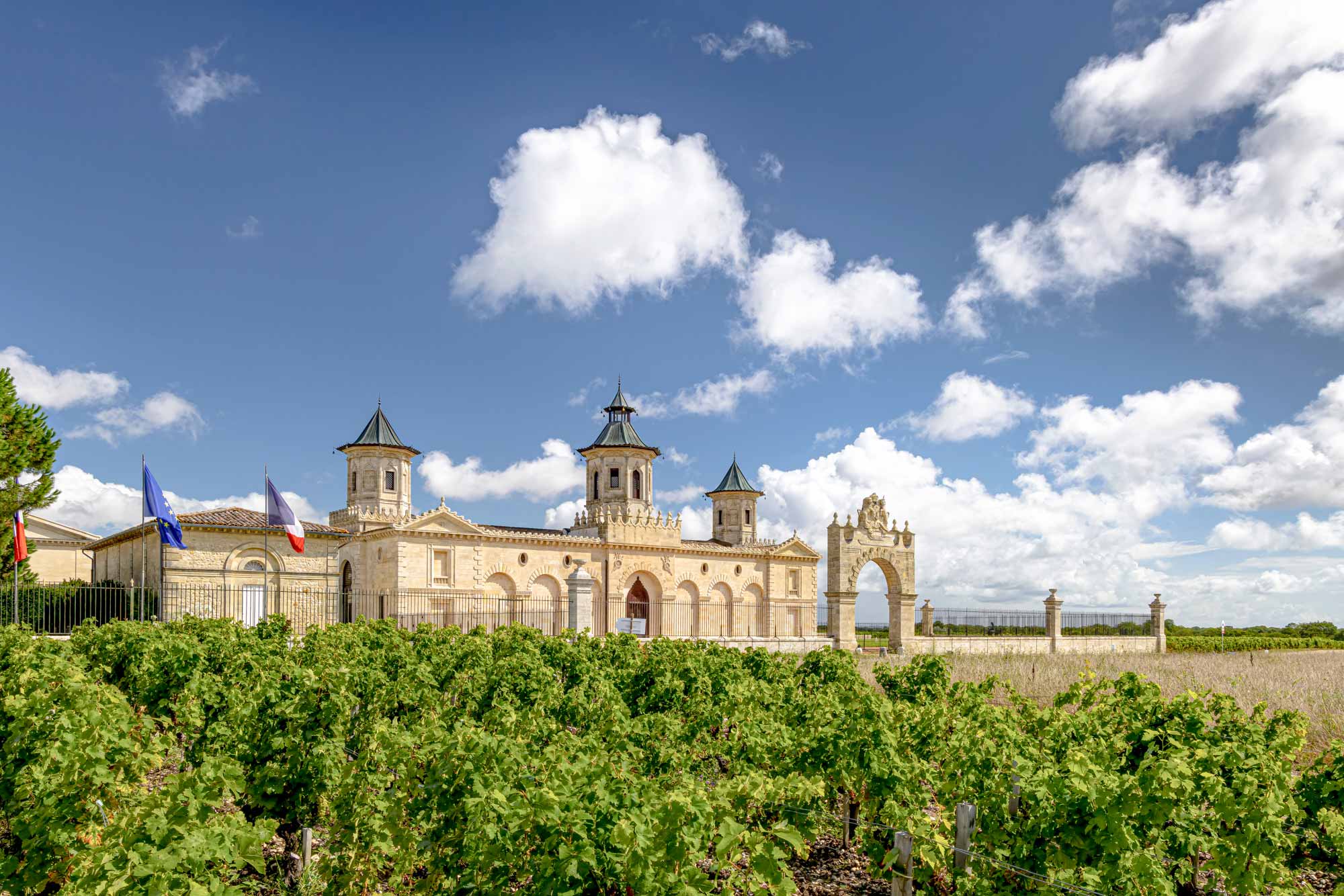
Around it lies the great patchwork of Bordeaux’s vineyards. To the north-west, on the gravelly Left Bank of the Gironde, the Médoc produces the long-lived Cabernet-Sauvignon-led wines Bordeaux is best known for, with the famed appellations of Margaux, Pauillac, Saint-Julien and Saint-Estèphe, and their grand châteaux strung along a single road. Across the river to the east, Saint-Émilion offers something quite different: a medieval hilltop village built of pale limestone, a UNESCO-listed monolithic church carved directly into the rock beneath it, and the rounded, Merlot-led wines of the Right Bank. Just south of the city, Pessac-Léognan is the only Bordeaux appellation producing both world-class reds and whites; further south, Sauternes makes Bordeaux’s great sweet wines, the result of an autumn mist off the Garonne that draws noble rot onto the Sémillon and concentrates the grape into a honeyed nectar.

A day in the vineyards is one of the defining pleasures of any Aquitaine stay, whether a private cellar tour of a château in the Médoc, a long lunch at a winemaker’s table in Saint-Émilion, or a quiet afternoon tasting Sauternes in the cool stone barrel rooms of a smaller estate. The driving distances are short, and the connection between the city, the vineyards and the coast makes it a satisfying region to visit.

THE OYSTERS AND THE TABLE

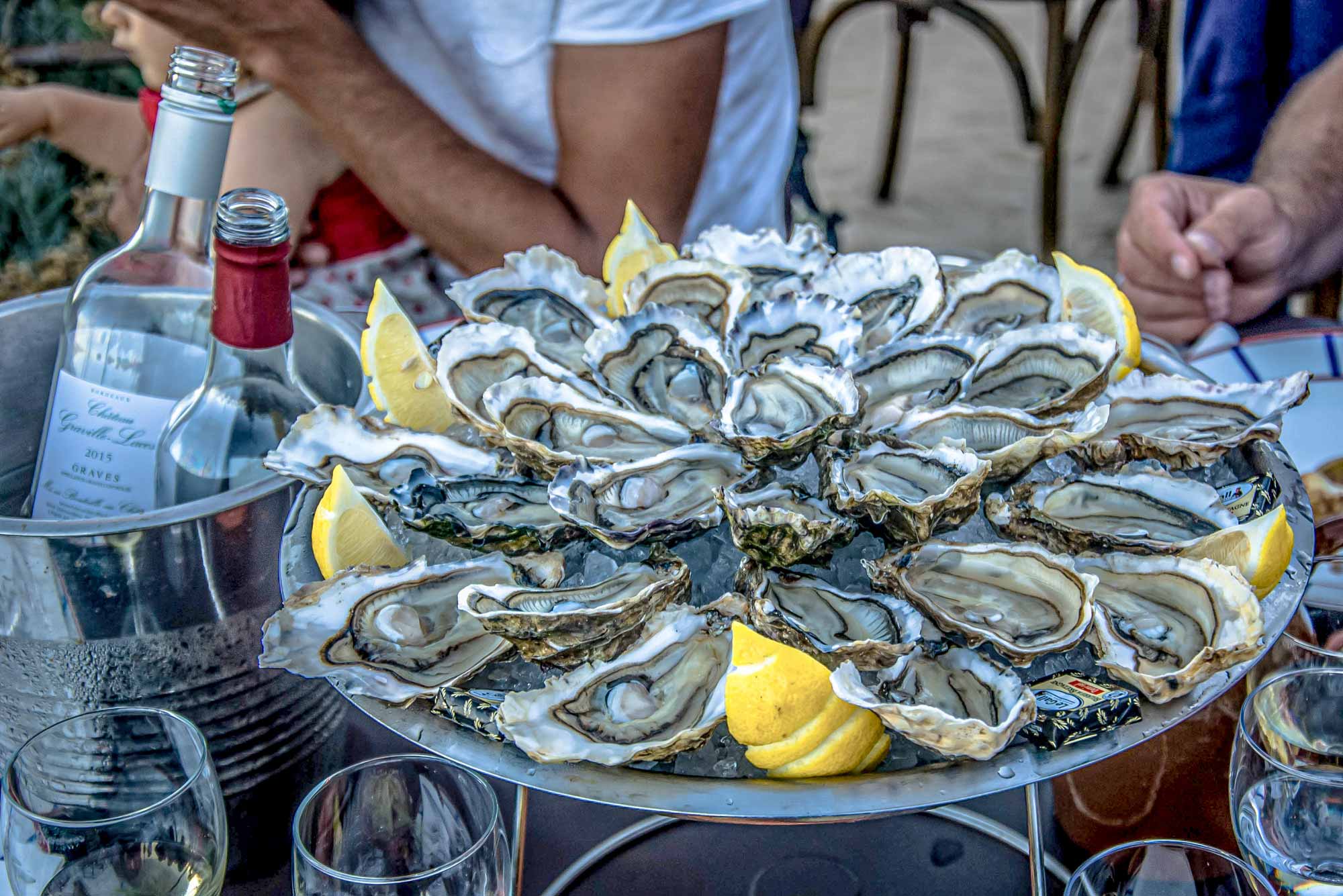
Of all Aquitaine’s specialities, the Arcachon oyster is the most prized – the Belles d’Arguin grown on the Banc d’Arguin are particularly heralded – and the regional ritual of eating them is one of the great pleasures of any visit. The setting is a cabane ostréicole, the wooden oyster shack on stilts at the edge of the bay; a wooden table with a view of the water; a platter of just-opened oysters; a glass of cold Entre-deux-Mers; perhaps a slice of country bread and unsalted butter. There are dozens of these cabanes scattered across the small oyster ports of the bay, Cap Ferret, L’Herbe, Le Canon, Gujan-Mestras, and an afternoon spent between them is a quintessential Bay of Arcachon experience.

Beyond the oysters, the regional table runs deep. Foie gras and magret de canard are hallmarks of the south-western kitchen, often served simply: the duck breast scored and seared in its own fat, sliced rare, served with a red wine sauce and the wines of the Médoc. From the coast come line-caught tuna and squid, particularly around Saint-Jean-de-Luz; from the pastures of the Pyrenean foothills come Ossau-Iraty cheese and Bayonne ham; and from the pâtisseries of Bordeaux comes the canelé, the small, dark, fluted cake of vanilla and rum, with a caramelised crust and a soft custard interior.

The contemporary scene matches the heritage. La Co(o)rniche at Pyla-sur-Mer, the 1930s clifftop hotel-restaurant reimagined by Philippe Starck in 2010, has a long terrace looking directly onto the Dune du Pilat and the Banc d’Arguin that’s perfect for drinks or dinner. In Cap Ferret, Les Bains and La Petite Grille have their own loyal following; in Biarritz and Saint-Jean-de-Luz, a generation of younger chefs is reworking Basque tradition with notable confidence. Across the region, the food is more local, more seasonal, and more rewarding than almost anywhere else in France.

WHEN TO VISIT

Aquitaine has a milder, more variable climate than the French Mediterranean, cooler in high summer, with a real edge to the Atlantic, and a longer shoulder season at both ends of the year. The bay is at its most beautiful from late May through to early October, with the warmest sea temperatures from July to early September. July and August bring the busiest weeks, and the highest demand for the best villas; June and September are arguably the loveliest months, with settled weather, open restaurants, and a softer pace. The vineyards are at their most photogenic in late September and October, around the vendange. For surfers, the autumn months from September through November tend to produce the year’s best, most consistent swells, with the water still warm into October.

GETTING HERE

The region is well served by two principal airports. Bordeaux-Mérignac (BOD) lies on the western edge of the city, with daily flights from London, Paris and the major European capitals, and is the most convenient gateway for the Bay of Arcachon, the Médoc and the city itself, a thirty-minute drive into Bordeaux, an hour to Cap Ferret or Pyla. Further south, Biarritz Pays Basque (BIQ) is the better choice for Saint-Jean-de-Luz, Hossegor and the Basque coast, a small, easy airport set just behind the beach. For travellers who want to avoid flying altogether, the high-speed TGV from Paris Montparnasse reaches Bordeaux in just over two hours and Biarritz in under four, one of the most painless rail approaches to any French summer destination. For travellers combining the south-west with other parts of France, Aquitaine pairs naturally with <a href=”https://www.villacollective.com/provence”>Provence</a> for an east-west contrast, or with the <a href=”https://www.villacollective.com/cote-dazur”>Côte d’Azur</a> for the full Atlantic-Mediterranean sweep.

AQUITAINE WITH VILLA COLLECTIVE

The pleasure of Aquitaine lies in its contrasts, and our houses are chosen to sit inside them: in the pines above Pyla with a private path to the dune, in the low timber architecture of Cap Ferret between bay and ocean, above the rooftops of Biarritz, or out among the vines of the Médoc. Each one comes with a Villa Collective team that knows this stretch of Atlantic coast intimately. They will secure the table you want at La Co(o)rniche, arrange a cellar visit at a celebrated château, send a pinasse out to the Banc d’Arguin with oysters chilling on board, or point you down the right sandy back road through the forest. Start with our <a href=”https://www.villacollective.com/aquitaine”>collection in Aquitaine</a>, or explore further across <a href=”https://www.villacollective.com/france”>France</a>.

EXPLORE THE JOURNAL

DISCOVER MORE

France: The Guide Where mealtimes are a sacred ritual of hearty food and long conversation, ancient châteaux pepper the landscapes, and a glass of fine wine is never too far away.
PROVENCE: LAVENDER, LIGHT AND THE LONG TABLE Hilltop villages the colour of honeyed stone, lavender rolling to the horizon, markets that begin at dawn and lunches that refuse to end — a portrait of the countryside that, more than anywhere else in France, taught the world how to live well.