Puglia Guide: Trulli, Lecce & the Two-Sea Coast

There is a stretch of southern Italy where the country narrows to a heel and the land seems to flatten under a much larger sky. Puglia begins a little north of Bari and runs for almost 400 kilometres down to the tip of the Salento, with the Adriatic on one side and the Ionian on the other, and very little in between but olive groves, dry-stone walls and small white towns balanced on low hills. Overlooked by tourists for years, Puglia was Italy’s little secret.

Although Puglia is well on the map, it retains a still, slow pace, under blue skies and almost perpetual sunshine. For visitors, mornings open over an espresso in the shaded square of a whitewashed village; afternoons are given to a swim in an iridescent sea; evenings stretch out at a long table under a fig tree, with a carafe of Primitivo and a plate of orecchiette drizzled in local olive oil. The architecture is unique to Puglia, in particular the conical trulli, fortified masserie and baroque facades in soft honey-coloured stone. The food is among the most ingredient-led in the country, simple yet full of natural goodness.
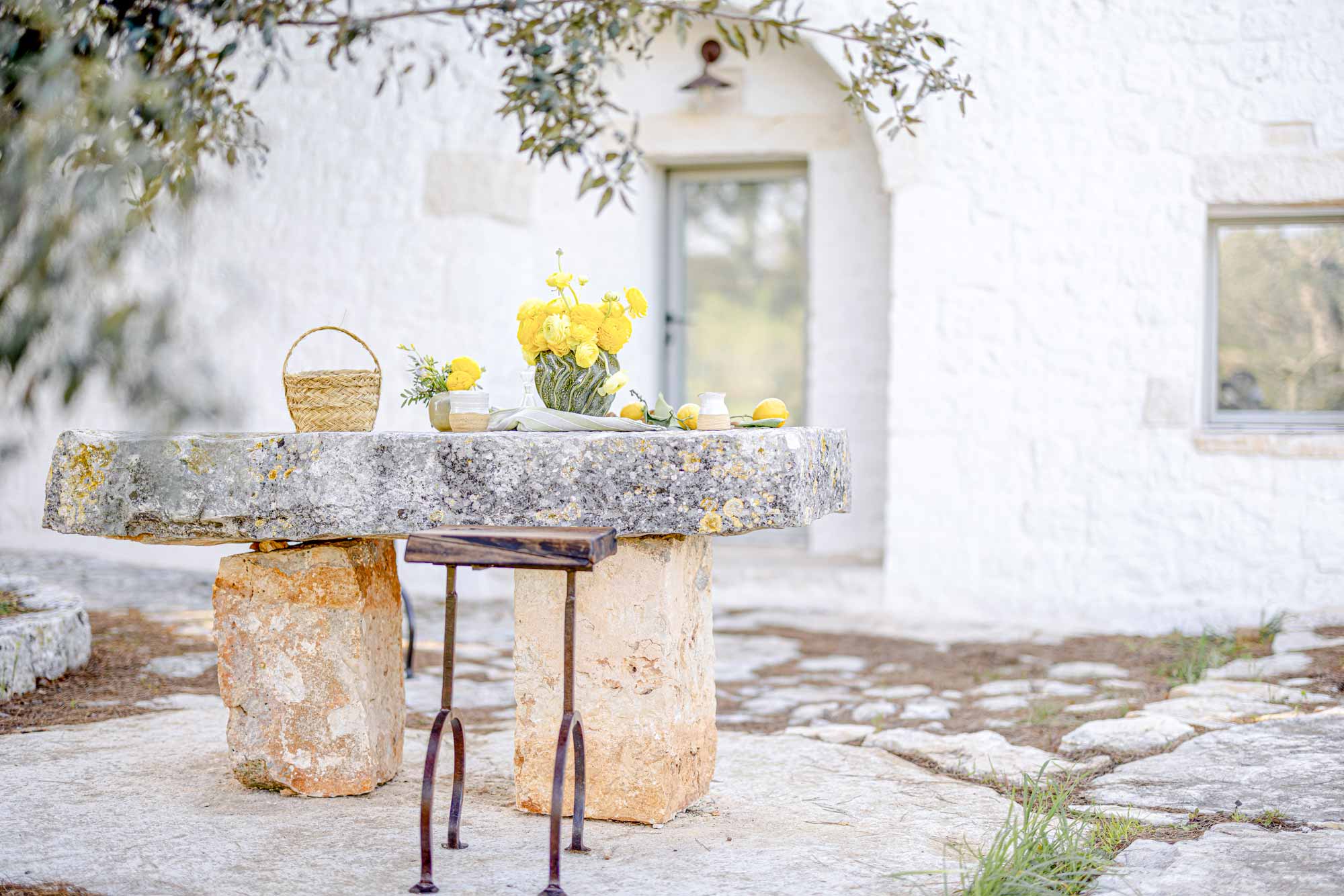
TWO SEAS AND OLIVE GROVES

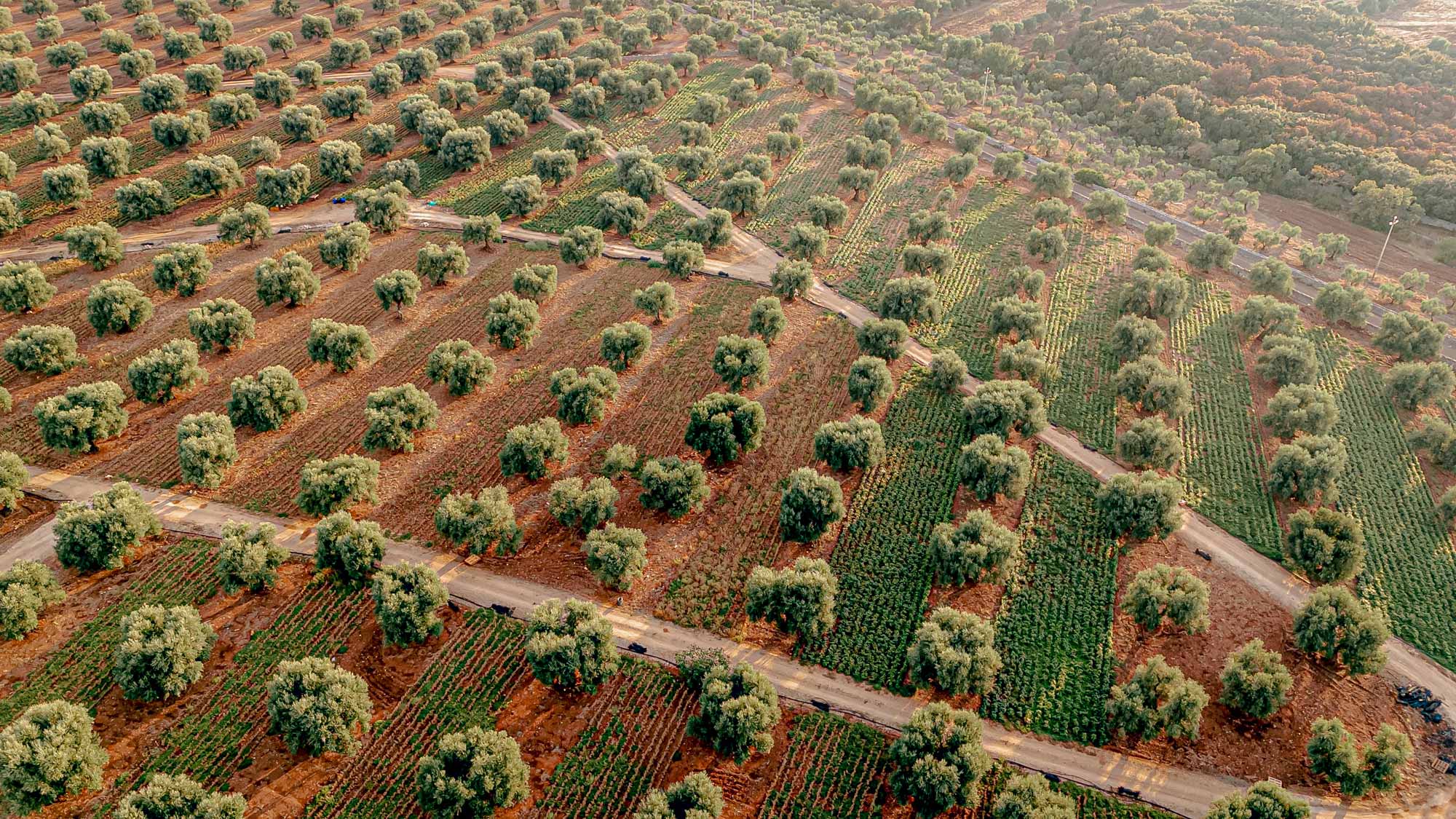
Puglia is geographically simple yet visually striking. The region forms the long, narrow heel of the Italian boot, bordered by the Adriatic Sea to the east and the Ionian Sea to the south and west, with the limestone plateau of the Murgia rising gently inland. Almost the entire interior is given over to olive groves, some of the trees here are more than 1,000 years old.

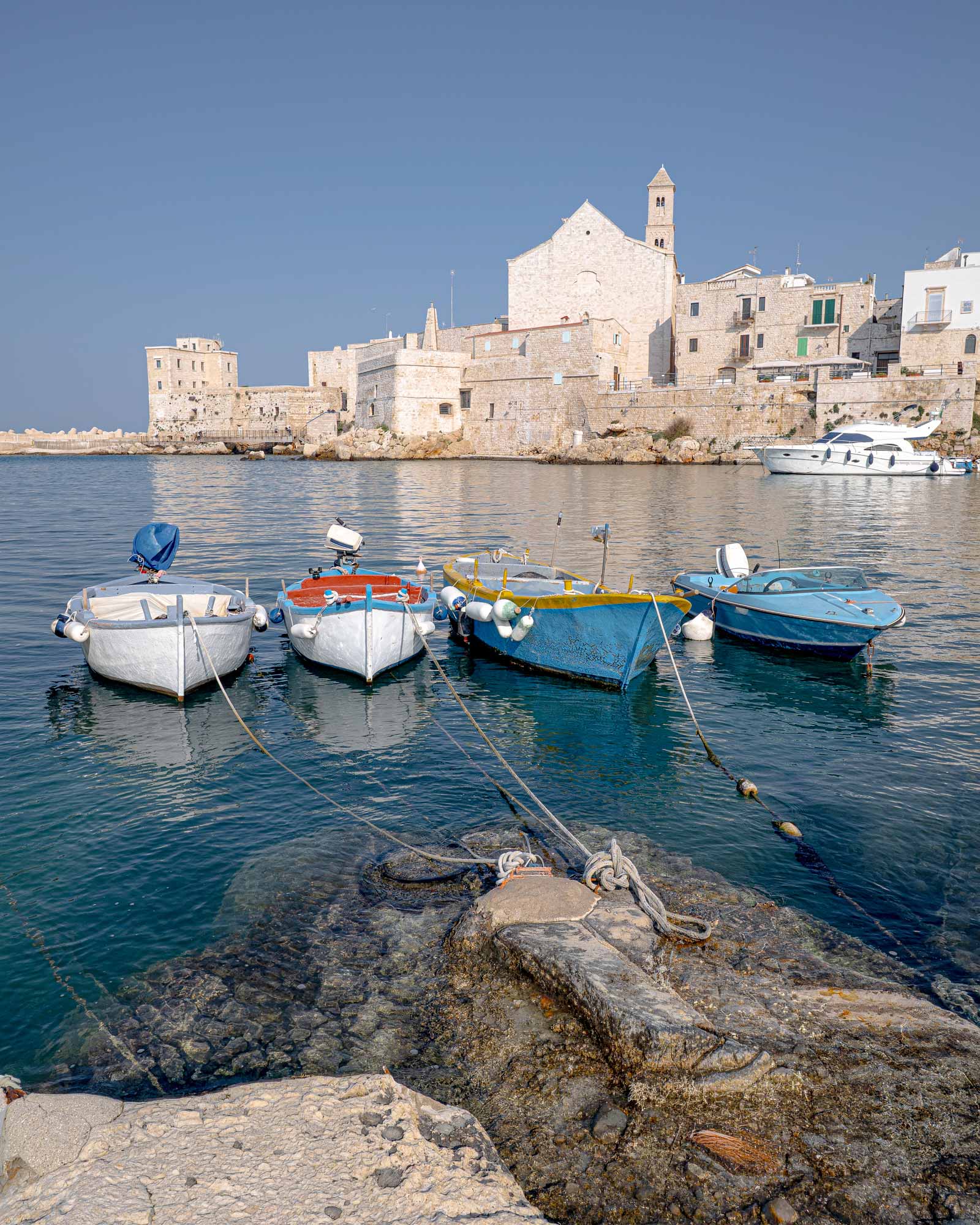
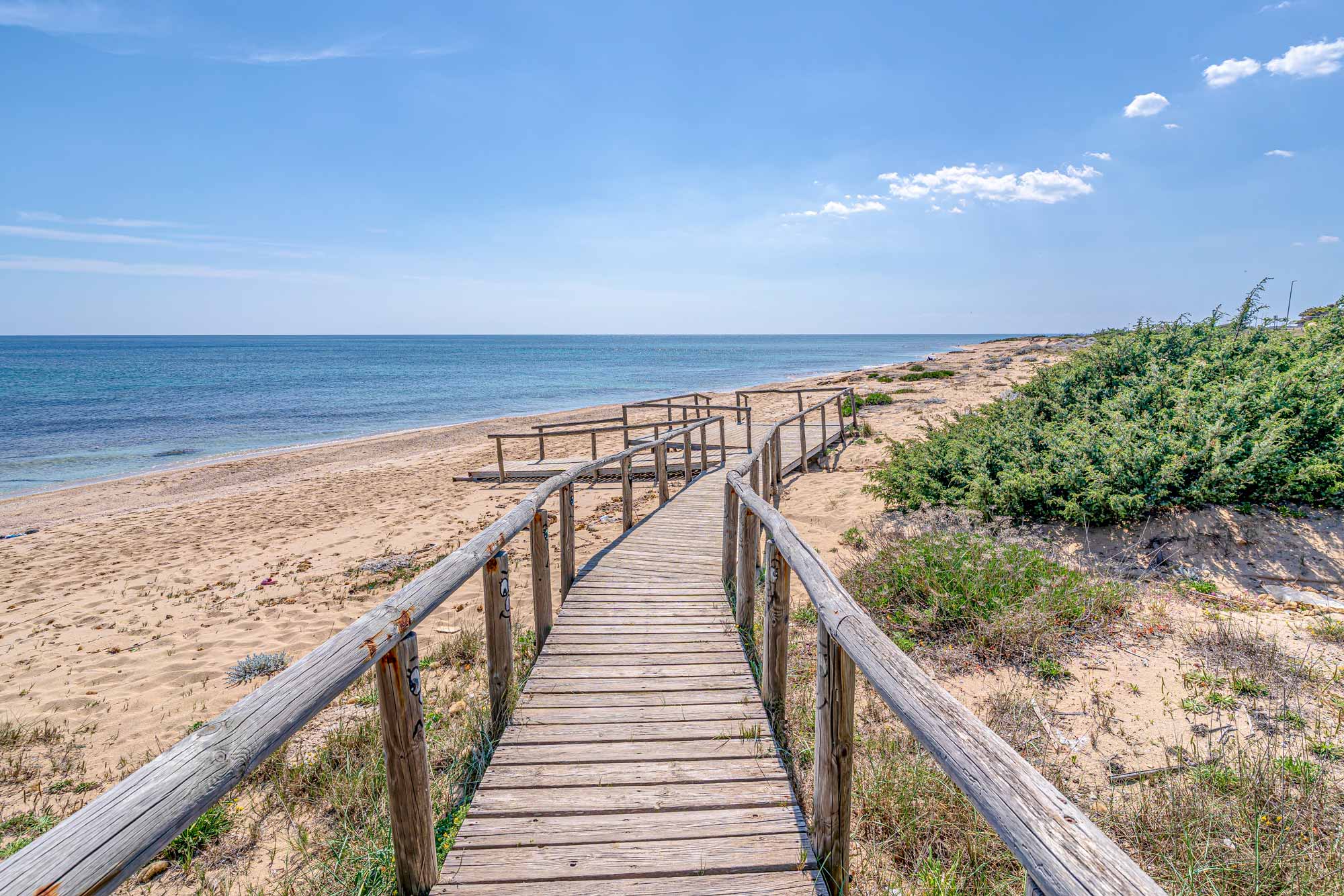
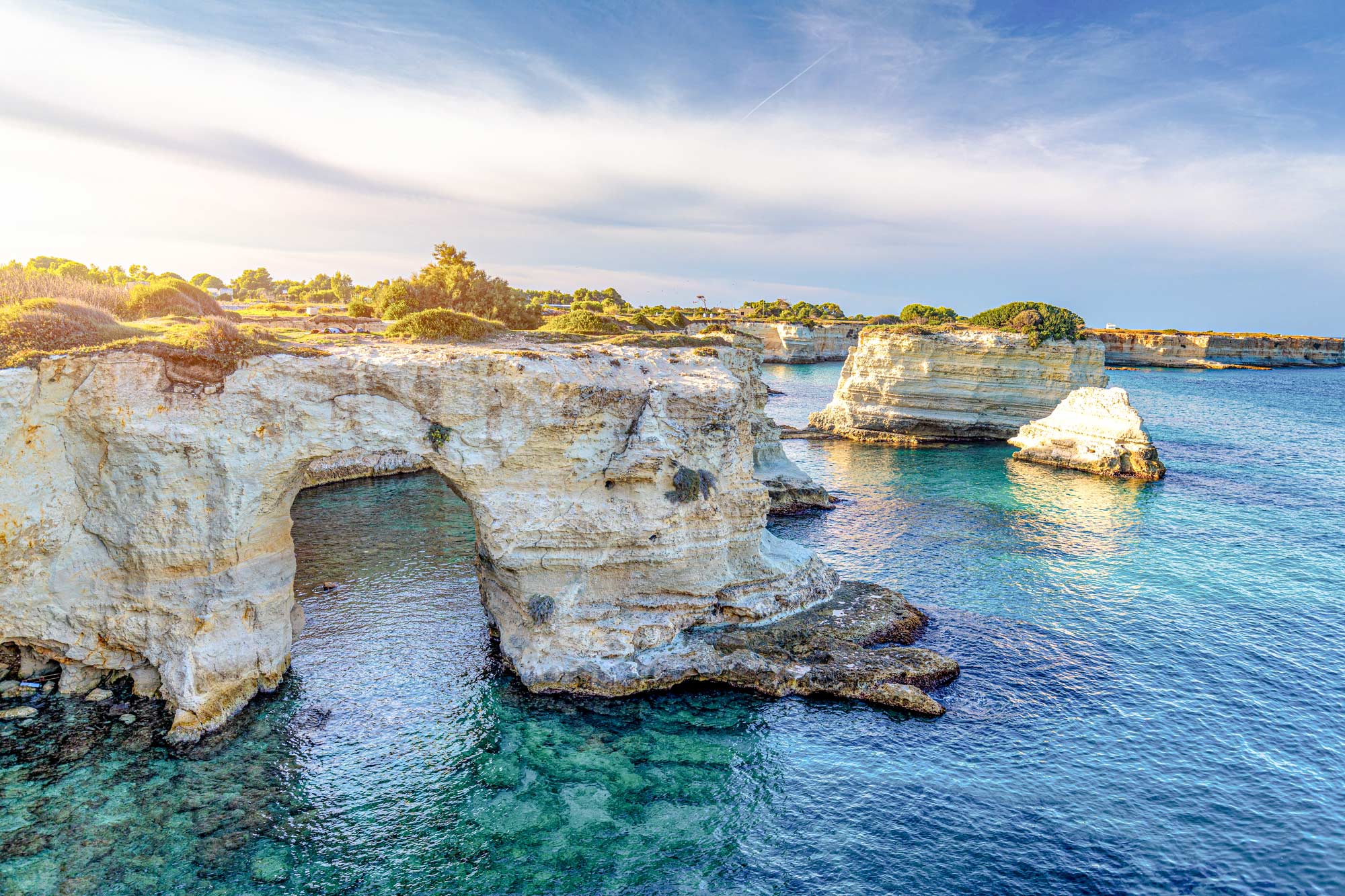
The two coasts have distinct personalities. The Adriatic side, running south from Bari through Polignano a Mare, Monopoli and down towards Otranto, has dramatic limestone cliffs, sea caves and small pebble coves, with water that turns from sapphire to deep navy by mid-afternoon. The Ionian side, curving west from the tip of the Salento towards Gallipoli, is gentler and sandier, with shallow turquoise bays that have earned it the unofficial nickname of the Maldives of Salento.

THE TRULLI OF THE VALLE D’ITRIA

At the heart of central Puglia lies the Valle d’Itria, a gentle plateau of vineyards, almond trees and olive groves dotted with one of the more unexpected architectural traditions in Europe: the trulli, small, whitewashed houses with conical, stone roofs built without mortar. The greatest concentration is in Alberobello, a UNESCO World Heritage Site since 1996, where more than 1,500 trulli crowd the slopes of two adjoining districts. The Rione Monti quarter alone contains around 1,000 of them, and the view across its cascading grey roofs from the Santa Lucia belvedere is one of the most photographed in southern Italy. Understandably, Alberobello’s beauty comes at a price and its narrow lanes are often congested with tourists, and many of the trulli have been turned into gift shops.

The story behind the trulli is, charmingly, one of tax avoidance. From the 15th century onwards, the local Counts of Conversano required farmers to build their houses using dry-stone methods so that the dwellings could be quickly dismantled when royal tax inspectors arrived, and quietly reassembled when they left. The technique survived long after the tax-collectors had gone, and the buildings remain remarkably cool in the heat of summer.

Around Alberobello, three villages give the valley its quieter character. Locorotondo, built in a perfect circle on a low hill, is famous for its whitewashed lanes, its cummerse houses with sharply pitched roofs, and its crisp white wines. Cisternino is the village to come to for an evening of grilled meat from one of its fornello pronto butcher-tavernas, where you choose your cut from the counter and it is grilled to order at a table outside, matched with bold Puglian red wine served in a colourful ceramic jug. And Martina Franca, the largest and most aristocratic of the four, is laid out around a quiet baroque centre of palazzi, churches and arcaded streets, a foretaste of what Lecce will deliver further south.

OSTUNI, POLIGNANO AND THE COASTAL WHITE TOWNS

No image of Puglia is more enduring than that of Ostuni, the Città Bianca, the White City, rising in tiers of whitewashed houses on a hill above the Adriatic coastal plain. The historic centre is a maze of lime-painted alleys, sudden archways and small piazzas, with a 15th-century Gothic cathedral at its highest point and views that, on a clear day, run all the way to the sea. Lime-washing began here as a measure against plague; it survived as one of the most distinctive townscapes in southern Italy.

Half an hour north along the coast, Polignano a Mare is the kind of place that briefly steals every photograph. White houses cling to limestone cliffs that fall sheer into a sea of luminous blue, and at the foot of them lies Lama Monachile, a small pebble cove framed between two rock walls and reached down a flight of stone steps. The beach is small and the crowds often fill every space, but it is still one of Puglia’s most startling sights. Beneath the town runs a series of sea caves, the most theatrical of which now hosts Grotta Palazzese, a restaurant set within a vaulted natural cavern that has been used for banquets since the eighteenth century, and that regularly appears on lists of the most singular dining rooms in the world.

A short drive further is Monopoli, a working harbour town with a softly faded old quarter, a 16th-century castle on the seafront, and a string of small, sandy coves a short walk in either direction from the historic centre.

HONEYED LECCE THAT GLOWS GOLDEN

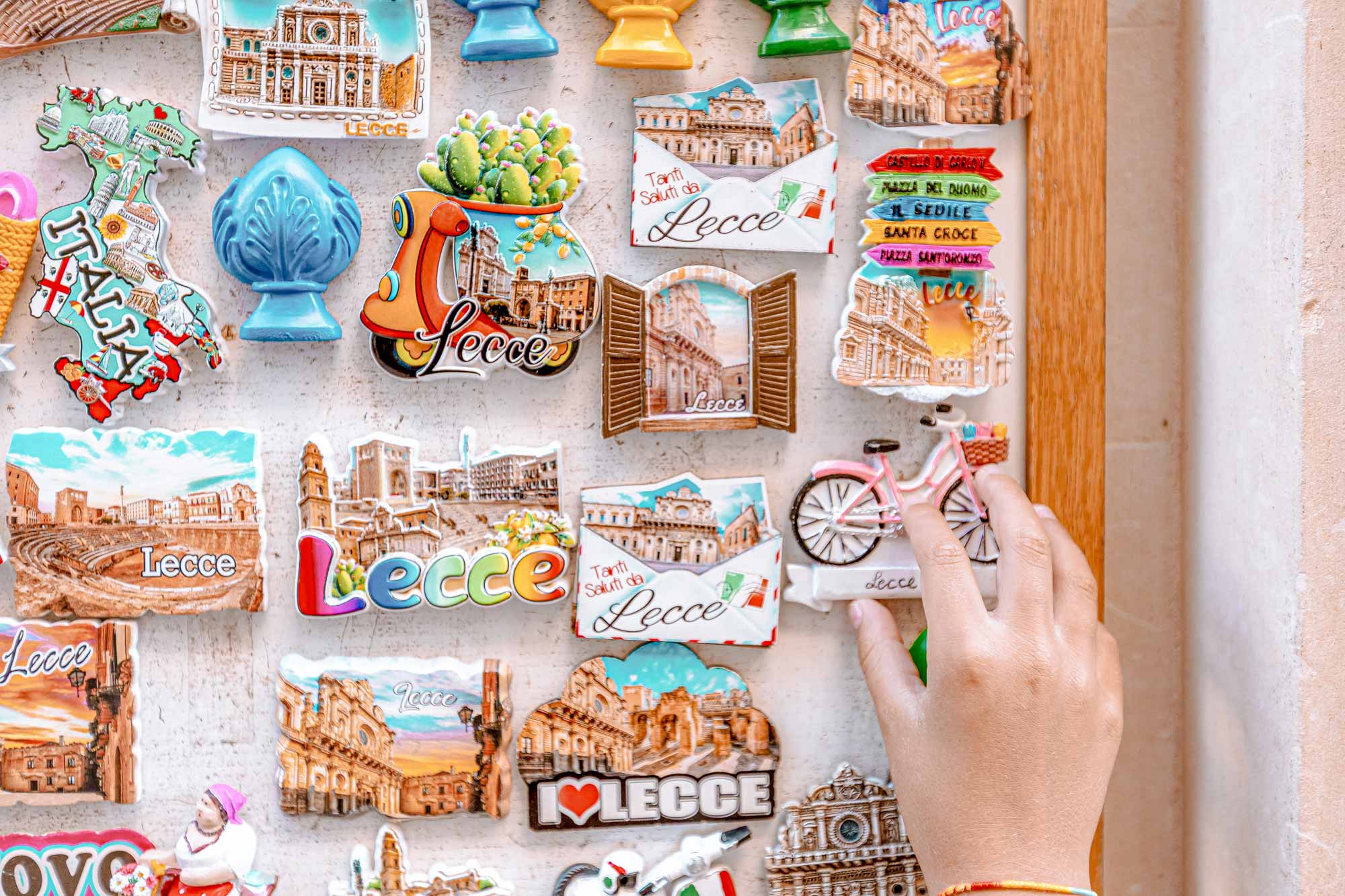
Down in the Salento, Lecce is the regional capital of southern Puglia and one of the most theatrically beautiful cities in Italy. Built almost entirely from pietra leccese, a soft, honey-coloured limestone that can, famously, be carved with a penknife, its centro storico is a sustained exercise in the local style known as Barocco Leccese. Between the late 16th and the end of the 17th century, almost every important building in the city was rebuilt in this style, and the facades remain astonishing: cherubs, columns, festoons of fruit and flowers, twisting balconies and gargoyles, all carved in stone the colour of caramel.

The high points are the Basilica di Santa Croce, with a rose window and a facade so dense with carving that it is sometimes described as a stone tapestry; the vast Piazza del Duomo, enclosed on three sides and entered through a single gateway; and the Roman amphitheatre half-buried at the city’s heart in Piazza Sant’Oronzo. Lecce is also, by some margin, the best place in Puglia for an evening of slow aperitivo, good food, shopping for artisan ceramics and carved olive wood and lingering over a late-night ice cream.

FARMHOUSE CHIC

The masseria, perhaps more than any other building, defines the Puglian countryside. These are fortified agricultural estates, masseria derives from the Latin massa, meaning farm, typically arranged around a central walled courtyard, with the landowner’s house above and the farmers’ quarters, stables, oil mills and storerooms below. Most of the masserie standing today date from the 16th century, when the threat of pirate raids and brigandage along the Adriatic coast made fortification a practical necessity.

Over the last two decades, a quiet wave of restoration has turned many of these buildings into some of the most distinctive places to stay in Italy. The best of them retain their original architecture intact, vaulted whitewashed rooms, stone floors, pebbled courtyards, working olive mills, while adding the discreet comforts of a contemporary villa, the best of which can be found by browsing our website. A morning at a masseria might begin with bread and ricotta on the courtyard table, followed by a long swim in a pool edged by olive trees, and end with a private cooking lesson in a kitchen built into the original frantoio.

ORECCHIETTE, BURRATA AND THE PUGLIAN TABLE

Known as cucina povera, Puglia’s culinary traditions reflect rural Puglian traditions where something delicious can be made from the simplest ingredients. The region produces nearly half of Italy’s olive oil and a remarkable share of its durum wheat, and the local table reflects both. Orecchiette, small “little ear” pasta shapes hand-shaped from semolina, is the iconic dish, and in the old town of Bari you can still walk the so-called orecchiette street, where the local signore shape the pasta on wooden boards set out in their doorways. The classic preparation is orecchiette con cime di rapa: pasta tossed with a type of turnip top that’s similar to broccoli, garlic, anchovy, chilli and olive oil, a dish that contains the whole region in five ingredients.

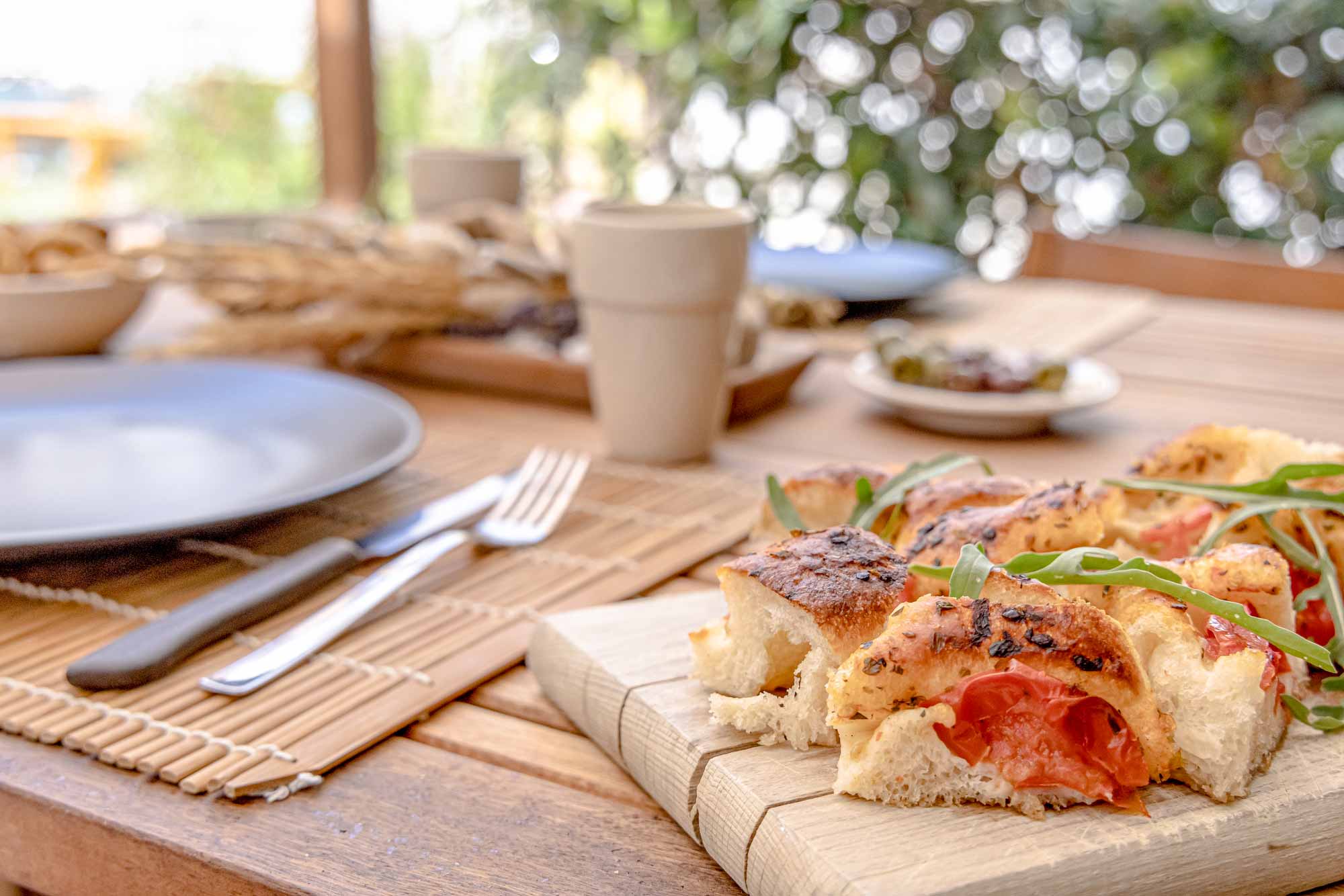
Then there is burrata, invented in Andria in the early 20th century by the Bianchino brothers, who needed to use up the day’s leftover mozzarella curds; they wrapped a soft pouch of stretched curd around a filling of cream and torn mozzarella and inadvertently created one of the great Italian cheeses. Eaten within hours of being made, with nothing more than good bread and oil, it is one of the most memorable things you will eat in Italy. Around it sit the other staples: focaccia barese, dimpled and generous, topped with cherry tomatoes, olives and oregano; bombette, small parcels of pork rolled around cheese and grilled over coals in the Cisternino style; tiella, a baked layered dish of rice, potatoes and mussels from the Bari coast; and a regional bread tradition that includes the celebrated long-keeping loaves of Altamura.

PRIMITIVO, NEGROAMARO AND THE WINES OF THE SOUTH

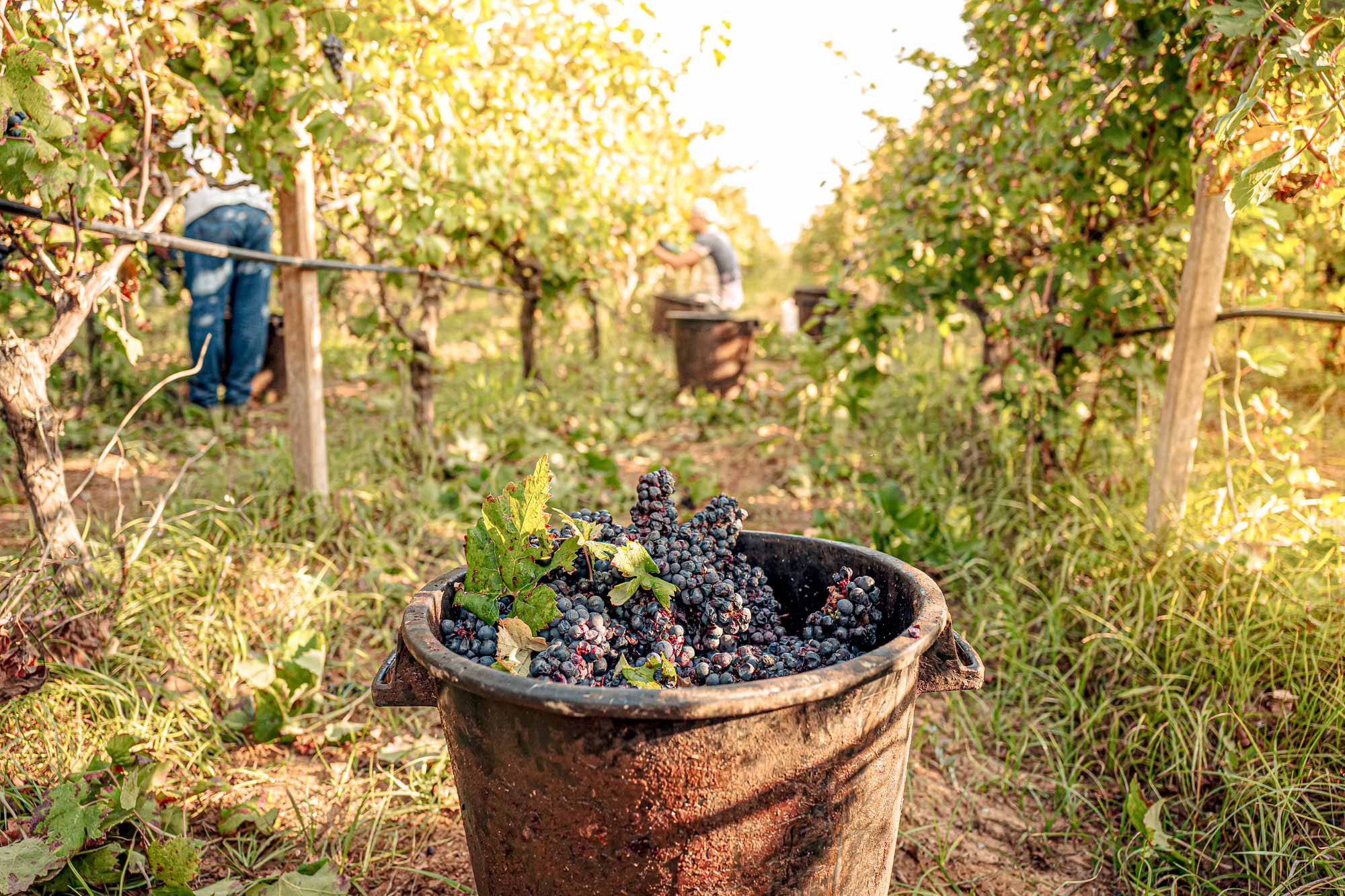
Puglia is one of Italy’s great wine regions, and for travellers used to the more austere reds of Tuscany or Piedmont, the discovery of the southern style can be a small revelation. The region’s flagship grape is Primitivo, genetically the same variety as California’s Zinfandel, which produces deep, warm, full-bodied reds, most famously around the town of Manduria in the southern Salento, where old vines and a hot, dry climate give the wines remarkable concentration and a softness that belies their alcohol.

Alongside it grows Negroamaro, literally “black bitter”, the other defining grape of the Salento, central to the wines of the Salice Salentino DOC and to a long tradition of pale, dry rosatos that are among the most underrated rosés in the Mediterranean. Cellar visits in either Manduria or the Salice Salentino area can easily be built into a stay; many of the best estates are small, family-run, and surprisingly easy to drop into for an unhurried tasting.

OTRANTO, GALLIPOLI AND THE DEEP SALENTO

At the easternmost point of Italy, Otranto sits on a small natural harbour with a Norman cathedral whose floor is paved with one of the largest medieval mosaics in Europe, a twelfth-century tree of life that runs the full length of the nave. The town also carries a darker history as the site of the 1480 Ottoman siege, and the side chapel of the cathedral preserves the remains of the eight hundred locals who were martyred in its aftermath. Beyond Otranto, the coast runs south past low cliffs and tiny coves towards Santa Maria di Leuca, the southernmost point of the heel.

On the Ionian side, Gallipoli, whose Greek name means simply “beautiful city”, occupies a small island linked to the mainland by a 16th-century stone bridge. Its old town is a tight grid of whitewashed lanes wrapped around a baroque cathedral and a small fishing port still working at dawn. At night, Italians throng the lanes and the seafront; here are also excellent restaurants. The beaches to the north and south are among the loveliest on the Ionian coast: shallow, pale-sanded and improbably turquoise.

WHEN TO VISIT

Puglia is rather lovely from late April through the end of October. May and June are arguably the best months of all: the countryside is still green, the wildflowers are out across the Murgia, and the sea is warm enough to swim from early June. September and early October return that gentleness, long, settled, golden days, with the vine harvest in full swing and the olive harvest just beginning. July and August bring true southern heat and the busiest weeks of the season, particularly along the Salento coast; a quiet inland masseria is the surest way to enjoy the region without the crowds.

GETTING HERE

Puglia is served by two international airports: Bari Karol Wojtyła (BRI), in the centre of the region, and Brindisi Salento (BDS), further south. Both connect directly with the major European hubs in season, and Rome is little more than an hour away on a domestic flight. From Bari, Alberobello and the Valle d’Itria are around an hour by car, Ostuni and the Itria coast around ninety minutes, and Lecce two hours; from Brindisi, Lecce and the deeper Salento are within forty-five minutes. A hire car is essentially required: the region rewards drives between villages, masserie and coastal coves, and the country roads are quiet and well-surfaced. For travellers building a longer Italian itinerary, Puglia pairs naturally with the gentler, hill-town rhythms of Tuscany or Umbria further north, or with the lakeside elegance of the Italian Lakes for a complete portrait of the country.

PUGLIA WITH VILLA COLLECTIVE

Puglia’s architecture does much of the storytelling, and we choose houses that carry it well: restored masserie set deep in the olive groves of the Valle d’Itria with their own oil mills; sea-facing houses along the Ostuni coast; trulli turned into discreet retreats within walking distance of Alberobello. Each comes with a Villa Collective team who know the region intimately. They can reserve the table at Grotta Palazzese, set up a private orecchiette lesson with a Bari nonna, arrange a morning at a working olive press, or point you to the Ionian cove that is best for a sunset swim. Explore our Puglia villas and masserie to begin planning.

EXPLORE THE JOURNAL

DISCOVER MORE

A villa for every occasion Finding the perfect villa that suits a large group is the first step in making sure your celebration sings. We can match you with the ideal property for your party, plan all the big and little details ensuring your occasion rises far beyond expectations. Read our recommendations for big gatherings.
5 Reasons to Book Your 2027 Villa Holiday Now 2027 bookings with rates guaranteed at 2026 levels. Five reasons to plan your villa holiday early — from peak-date availability to the finest homes across the Mediterranean and beyond.