Tinos Guide: Marble, Dovecotes & the Cyclade

An island of marble  hundreds of ornate stone dovecotes, Greece’s great pilgrimage church and one of the finest tables in the Cyclades, read our guide to the artisans’ island of the Aegean. 

Tinos sits in the northern Cyclades, a short hop from Mykonos yet a world away from it. It is one of the larger islands in the group, a long spine of terraced hillsides and windswept granite rising to the peak of Exomvourgo, and it wears its character openly: swathes of marble , hundreds of ornate dovecotes stitched across the slopes, and, in its capital, the most important pilgrimage church in Greece. Where its glamorous neighbour trades in clamour, Tinos trades in craft, faith and an unhurried kind of beauty. 

We’d recommend taking Tinos slowly. Mornings belong to the marble villages of the north, where sculptors still work stone by hand as they have for generations; afternoons drift into a swim at a wild north-coast cove or a long lunch by the water; evenings settle into a village square or a harbourside table for upmarket Cycladic cuisine.  
AN ISLAND OF MAKERS AND BELIEVERS

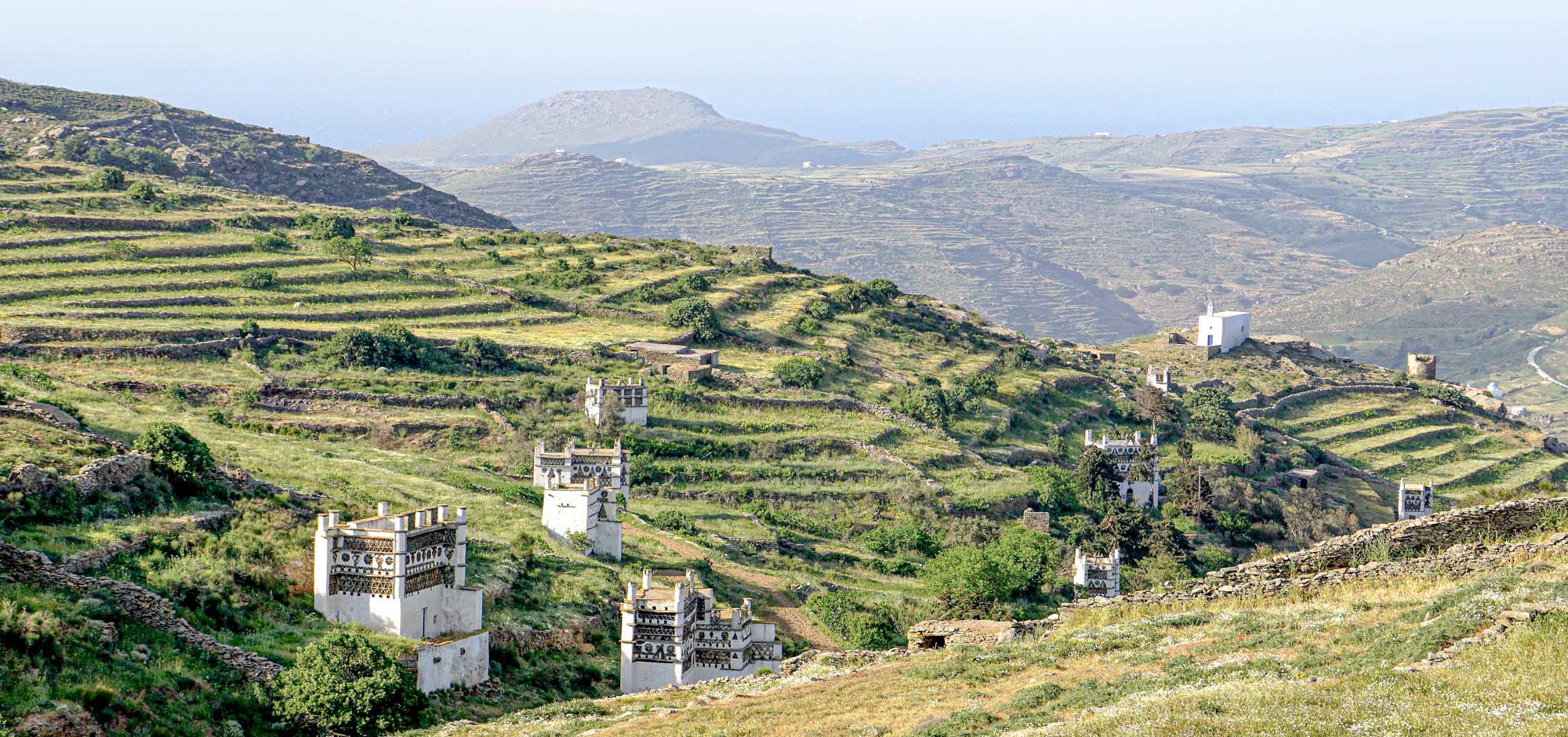
Tinos lies in the north-eastern Cyclades, between Andros to the north and Mykonos to the south, close enough to the latter to be reached in half an hour by fast ferry. It is among the largest islands in the archipelago, and one of the most mountainous: a rugged interior of schist and marble, terraced by hand over centuries into a vast staircase of dry-stone walls, threaded by footpaths and crowned by the granite pyramid of Exomvourgo, the fortified rock that was the island’s Venetian stronghold. More than forty villages are scattered across these hills, each with its own square, its own church and, often, its own trade.

What sets Tinos apart from its neighbours is how much of its history is still visible in the landscape. The marble that made the island famous is everywhere underfoot and overhead, in lintels, fountains and bell towers. The dovecotes stand like small stone palaces on the terraces. And over all of it presides the great white church of Chora, drawing pilgrims from across the Orthodox world.

PYRGOS AND THE ISLAND OF MARBLE

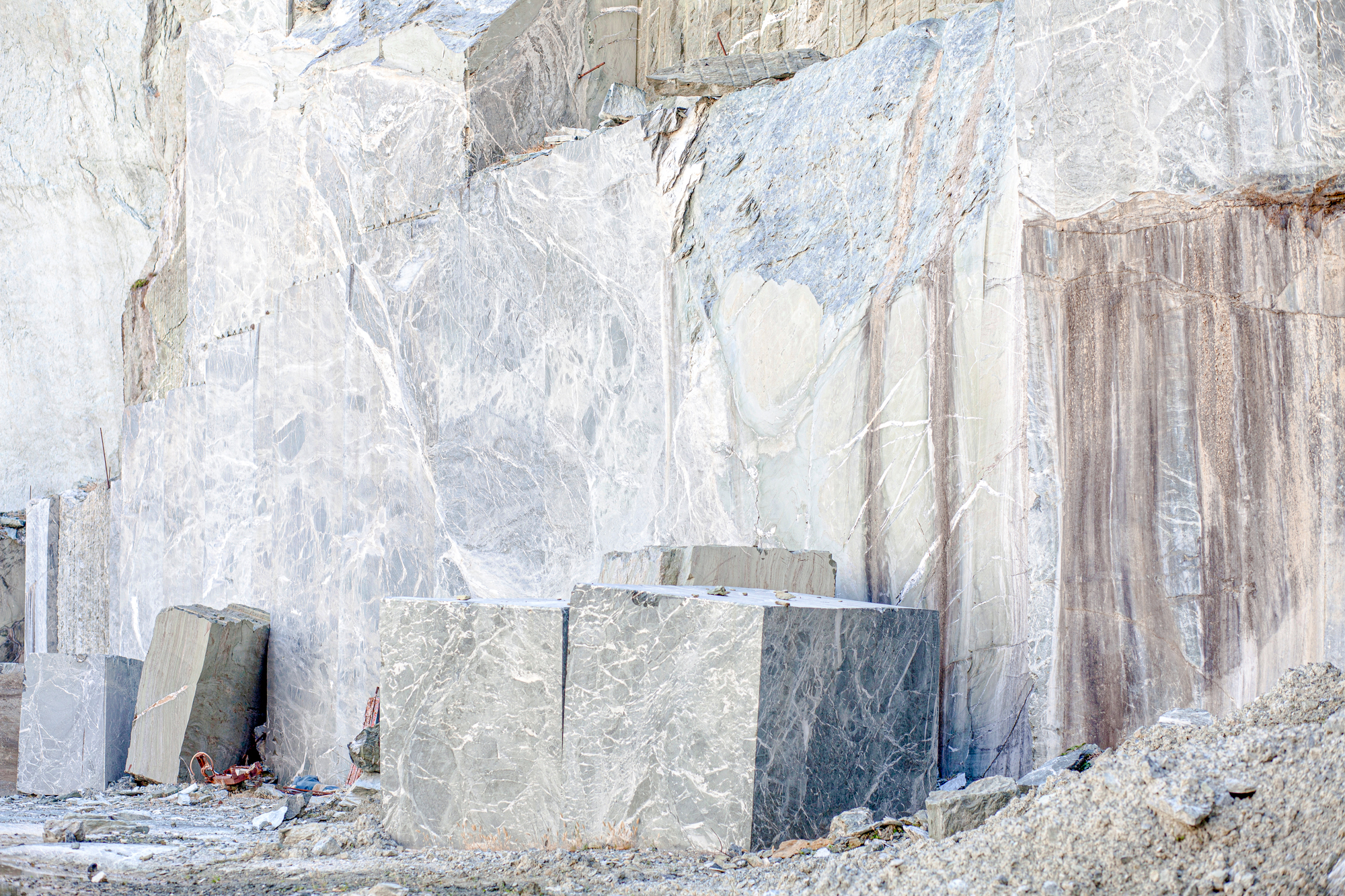
To understand Tinos, begin with its stone. The island has been one of the great marble-carving centres of Greece since antiquity, and the tradition never died here; it was handed down until the craft of Tinian marble was inscribed on UNESCO’s list of intangible cultural heritage in 2015. Its cultural capital is Pyrgos, high in the northern hills of Exo Meria, the most beautiful andcultured of the island’s villages: a place where the café tables, the fountains, the bus stop and even the gravestones in the cemetery are carved from local white marble. 

Pyrgos was the home of the island’s celebrated School of Fine Arts and the birthplace of some of Greece’s finest sculptors, among them Yannoulis Chalepas, whose former house is now a small museum. Just outside the village, the Museum of Marble Crafts, created by the Piraeus Bank Group Cultural Foundation, is the finest of its kind in the country, walking you from the geology of the quarries through the tools and techniques to the finished work, all against a view of the marble hills it describes. Along the lanes, the workshops are still open, and you can watch a sculptor draw a figure out of a raw block of stone. 

THE DOVECOTES

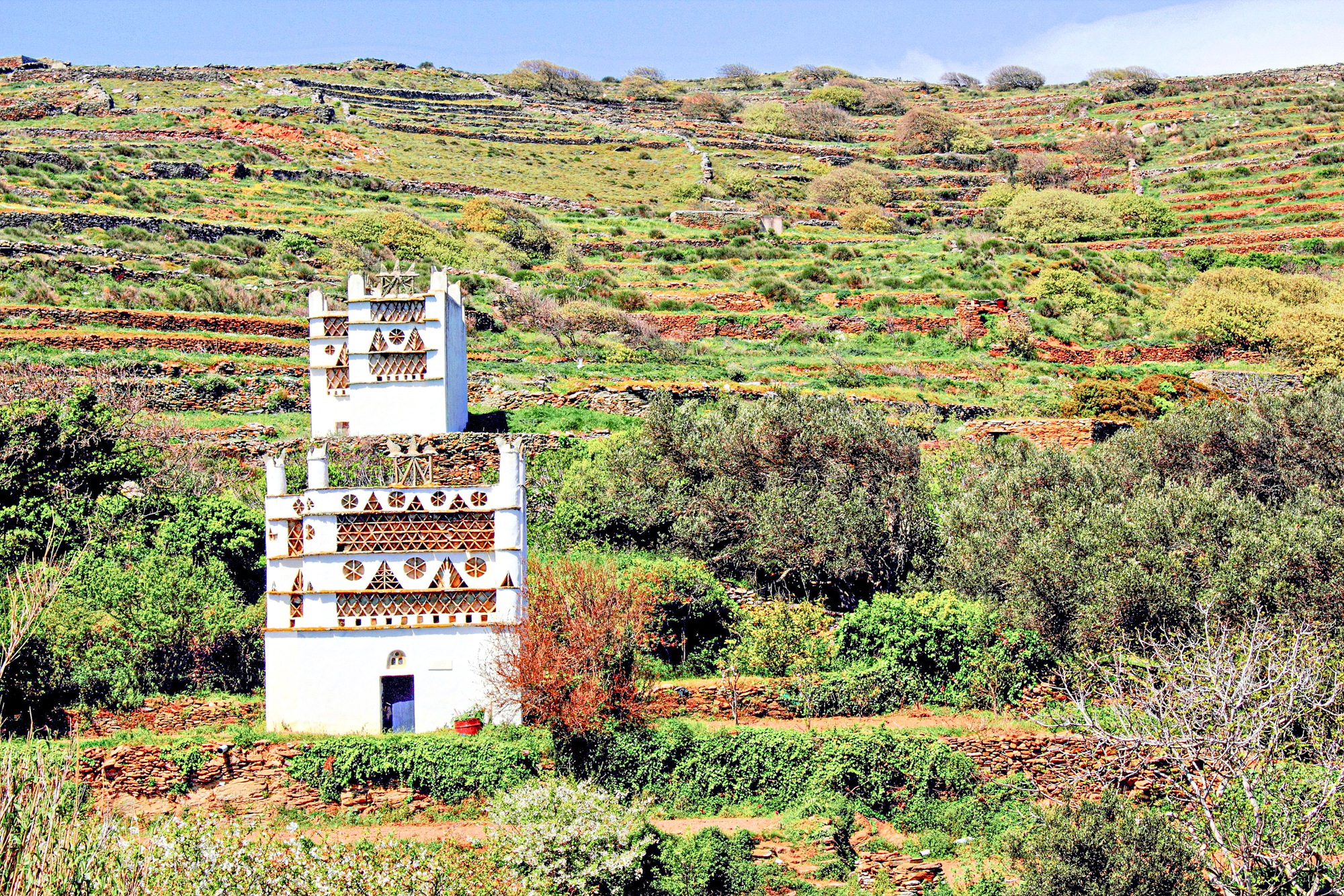
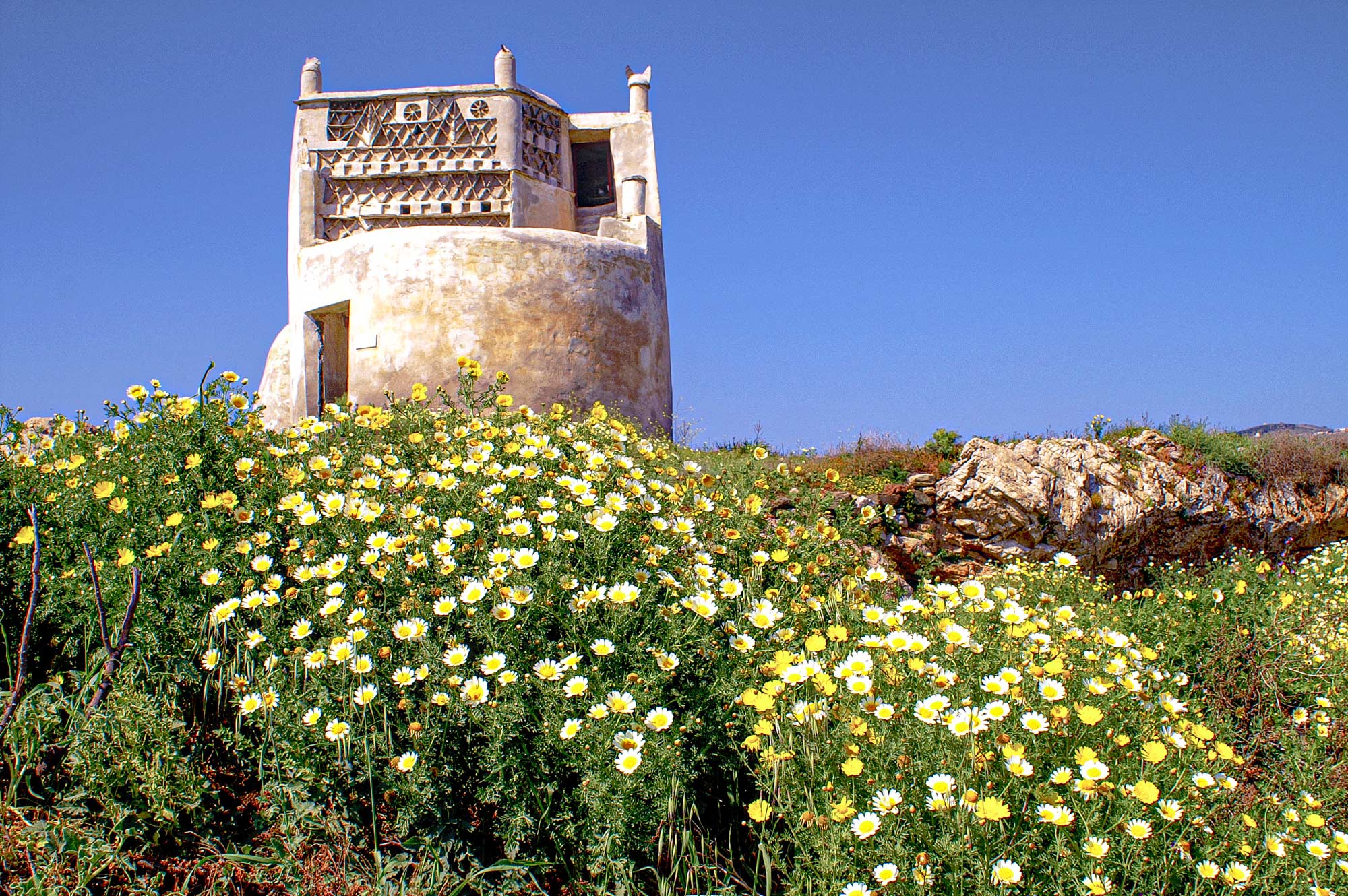
No feature of the island is more distinctive than its dovecotes. Introduced under Venetian rule and perfected by generations of local craftsmen, these are not just humble pigeon lofts but elaborate two-storey towers of stone, their upper walls pierced with intricate lattices of thin slate slabs arranged into suns, cypresses and diamonds, part farmhouse, part folk sculpture. Hundreds of them stand across the island, and the greatest concentration is in the green valley of Tarambados, where a signed path leads down among the finest examples. Built to house the pigeons once prized for their meat and their manure, many are still in use, and at dusk the birds wheel out over the terraces around them. 

PANAGIA EVANGELISTRIA AND THE SACRED ISLAND

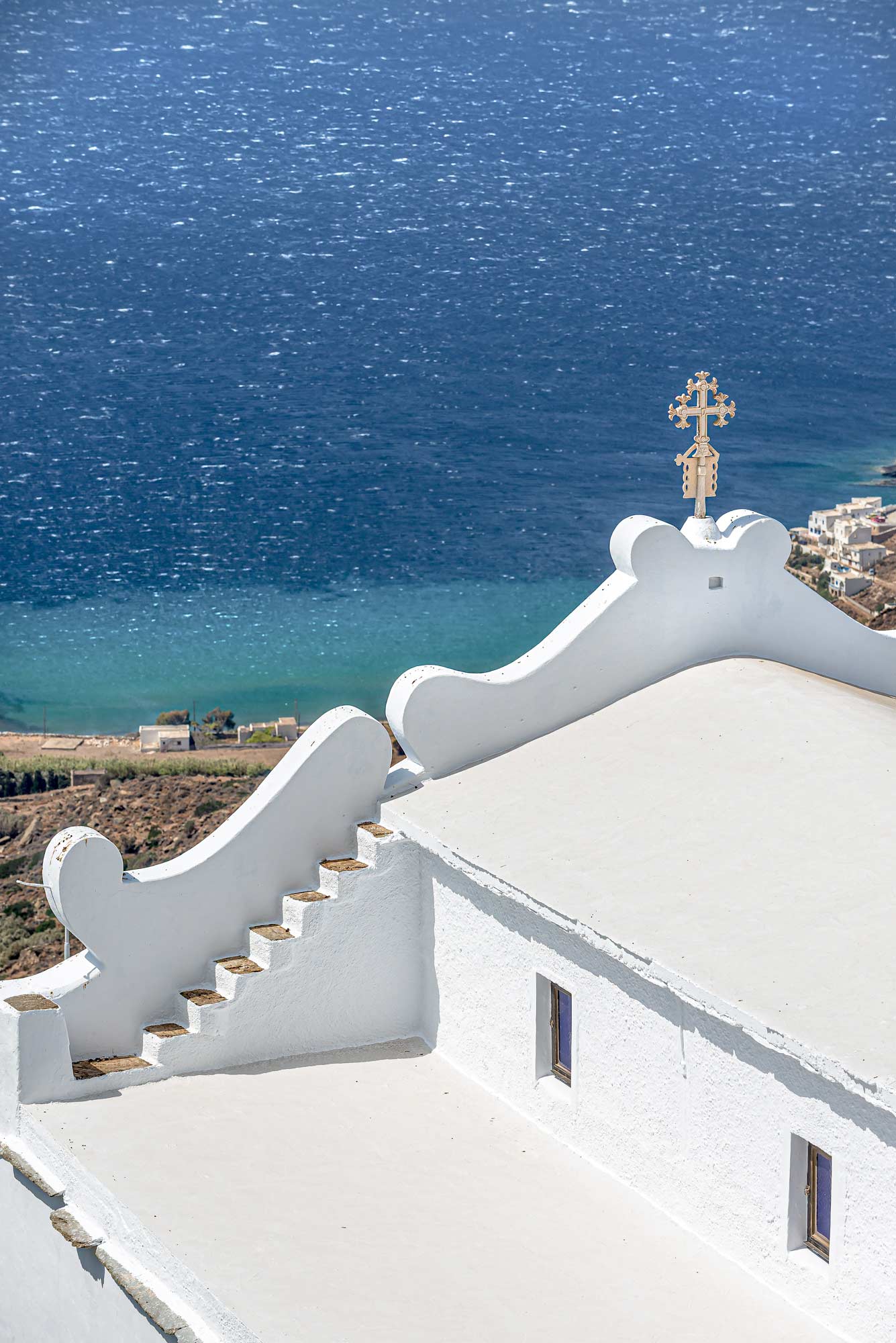
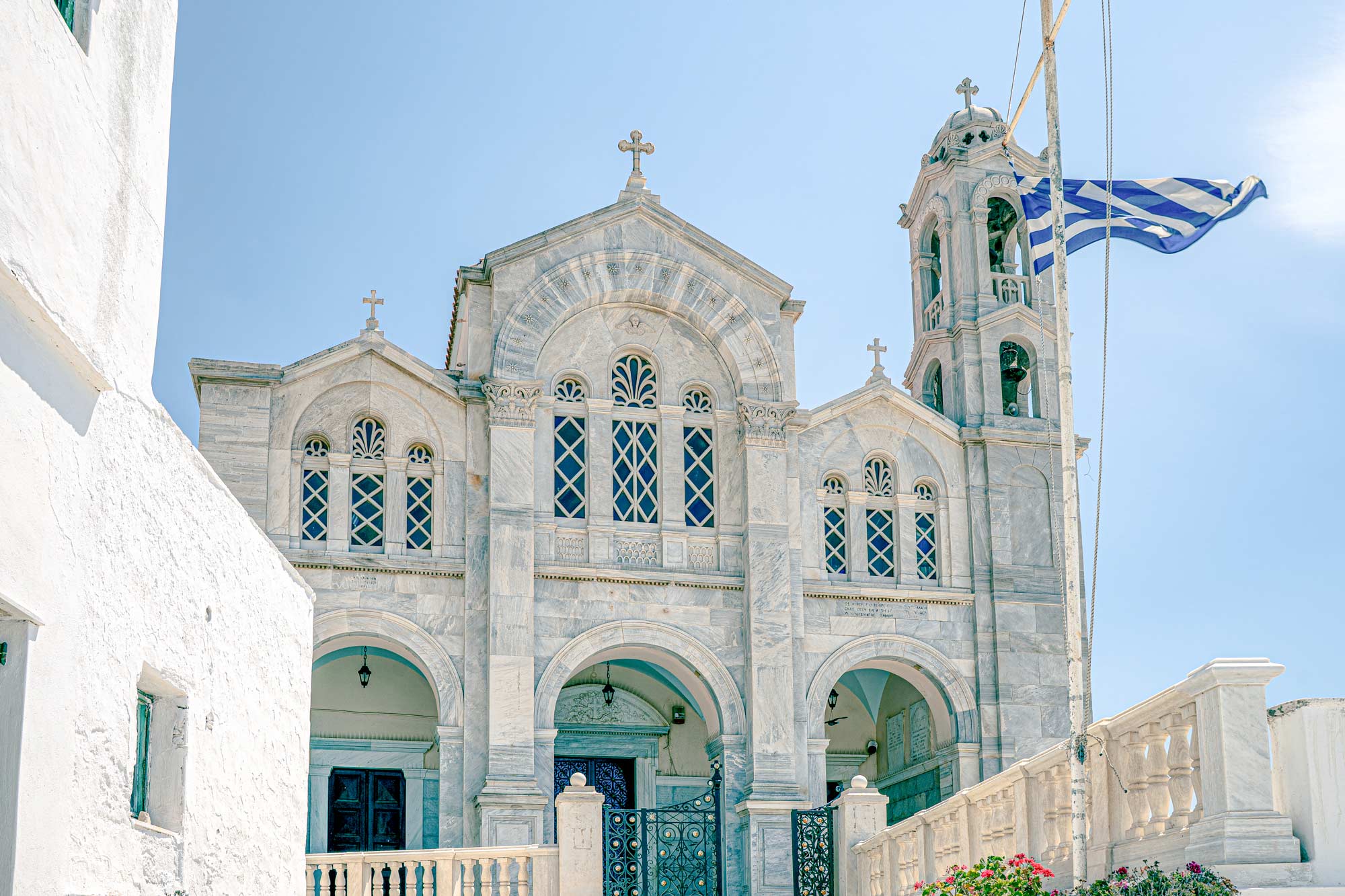
For most Greeks, Tinos means one thing above all: the church of Panagia Evangelistria, the country’s holiest Marian shrine. Its origins lie in 1823, when a nun of the island, later canonised as Saint Pelagia, was led by a series of visions to a field where a miraculous icon of the Annunciation was unearthed. A great church of gleaming Tinian marble was raised over the spot, and it has drawn pilgrims ever since. 

The church stands at the top of Chora, reached by a broad marble avenue that climbs straight up from the port. On the feast of the Dormition of the Virgin, the 15th of August, the island fills with pilgrims, and the most devout make their way up that avenue on their knees to reach the icon, in one of Greece’s largest and most moving religious gatherings. Outside the pilgrimage days, the church is calm, its marble courtyards cool and quiet, and the town below goes about its business with the unhurried confidence of a place long used to visitors of every kind. 

VOLAX AND THE INLAND VILLAGES

Beyond Pyrgos and Chora, the pleasure of Tinos is its forty-odd inland villages, most of them barely touched by the summer. Kardiani and Isternia cling to the western slopes above the sea; Dyo Choria and Triantaros look out across the south; and everywhere the old footpaths that once linked them have been cleared and waymarked, making Tinos one of the best walking islands in the Cyclades. 

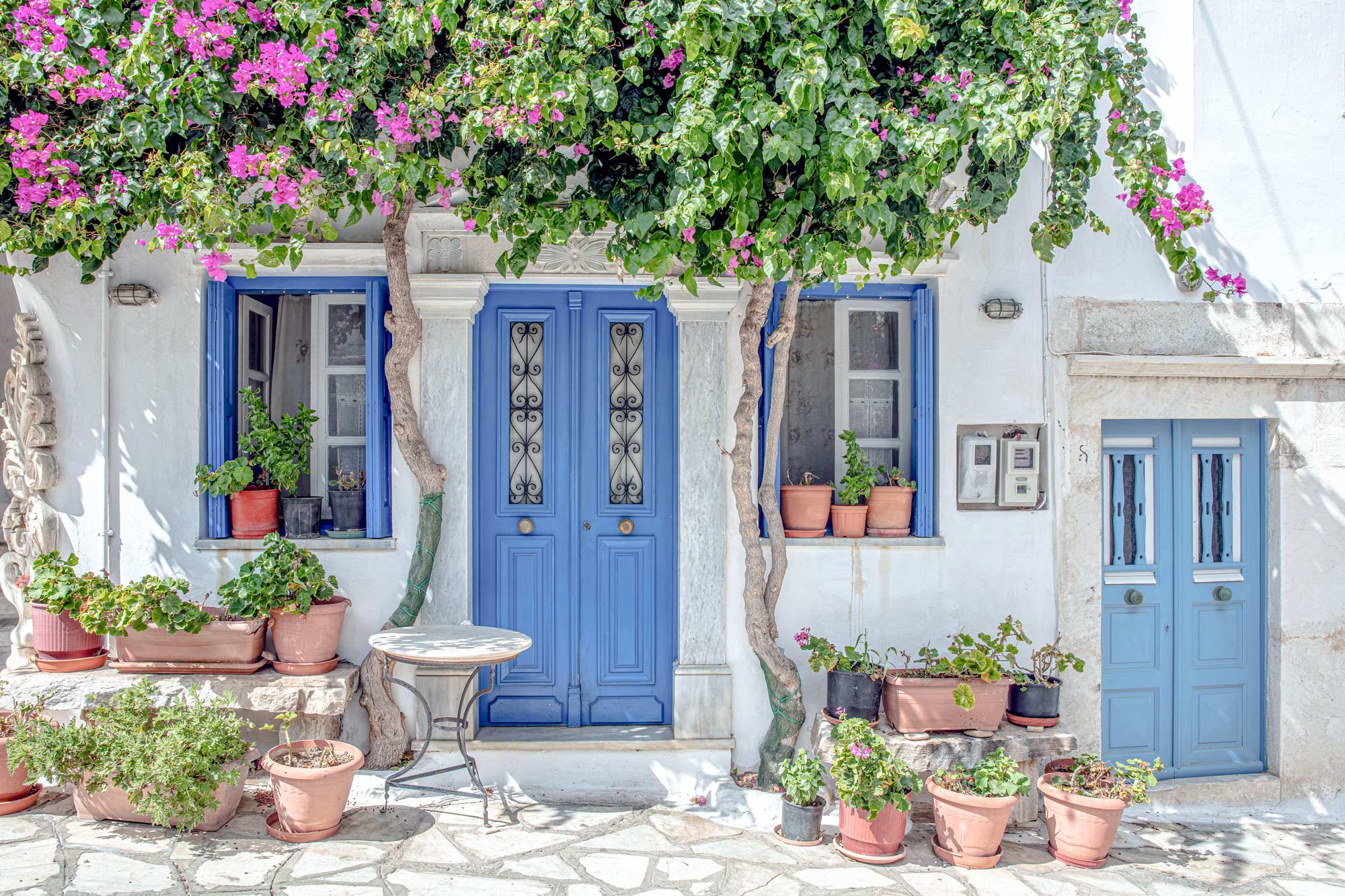
Strangest and most memorable is Volax, set in a shallow bowl in the centre of the island and surrounded by a field of giant round granite boulders, some the size of houses, scattered as if by a careless giant. The village itself is a whitewashed maze famous for its basket-weavers, and in summer a tiny open-air theatre stages performances among the rocks.

TINOS’S CULINARY TABLE

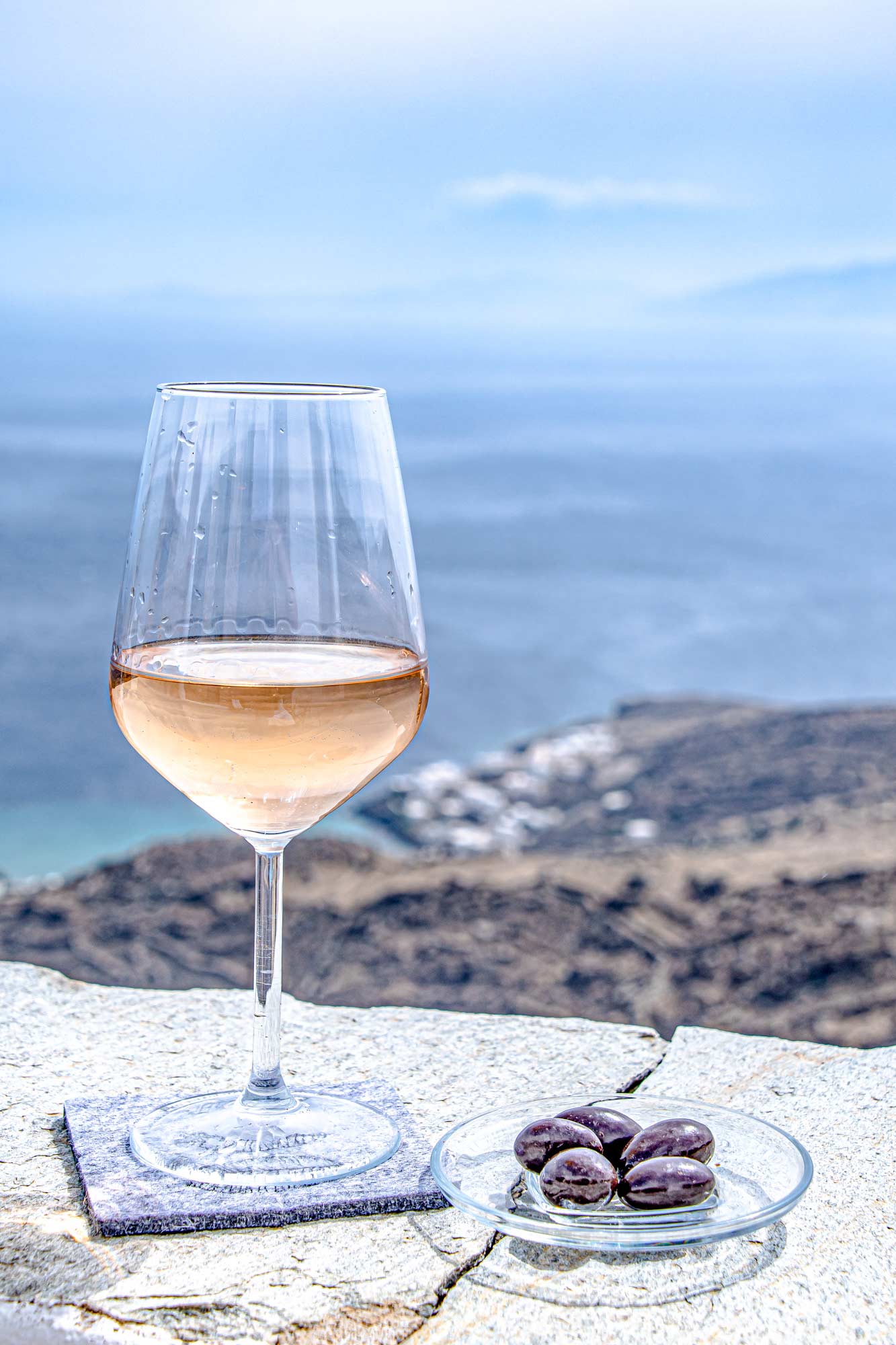
Tinos has become one of the finest places to eat in the Cyclades. It is a genuinely productive island, with small farms and vineyards that produce artichokes and capers, cured louza pork, the soft, sharp kariki cheese, thyme honey, and fierce local raki, and a generation of cooks has built a serious food scene on those foundations. 

 Thalassaki, set on the water at the little port of Ormos Isternia, pairs a view straight down the Aegean with the inventive, produce-led cooking of chef Antonia Zarpa. Marathia, on the beach at Agios Fokas just below Chora, is a soulful island kitchens, a place that helped pioneer the dry-ageing of fish in Greece. Around them, village tavernas from Volax to Pyrgos still serve the older food, slow-cooked, generous and rooted in the land. 

SANDY COVES AND WILD BEACHES

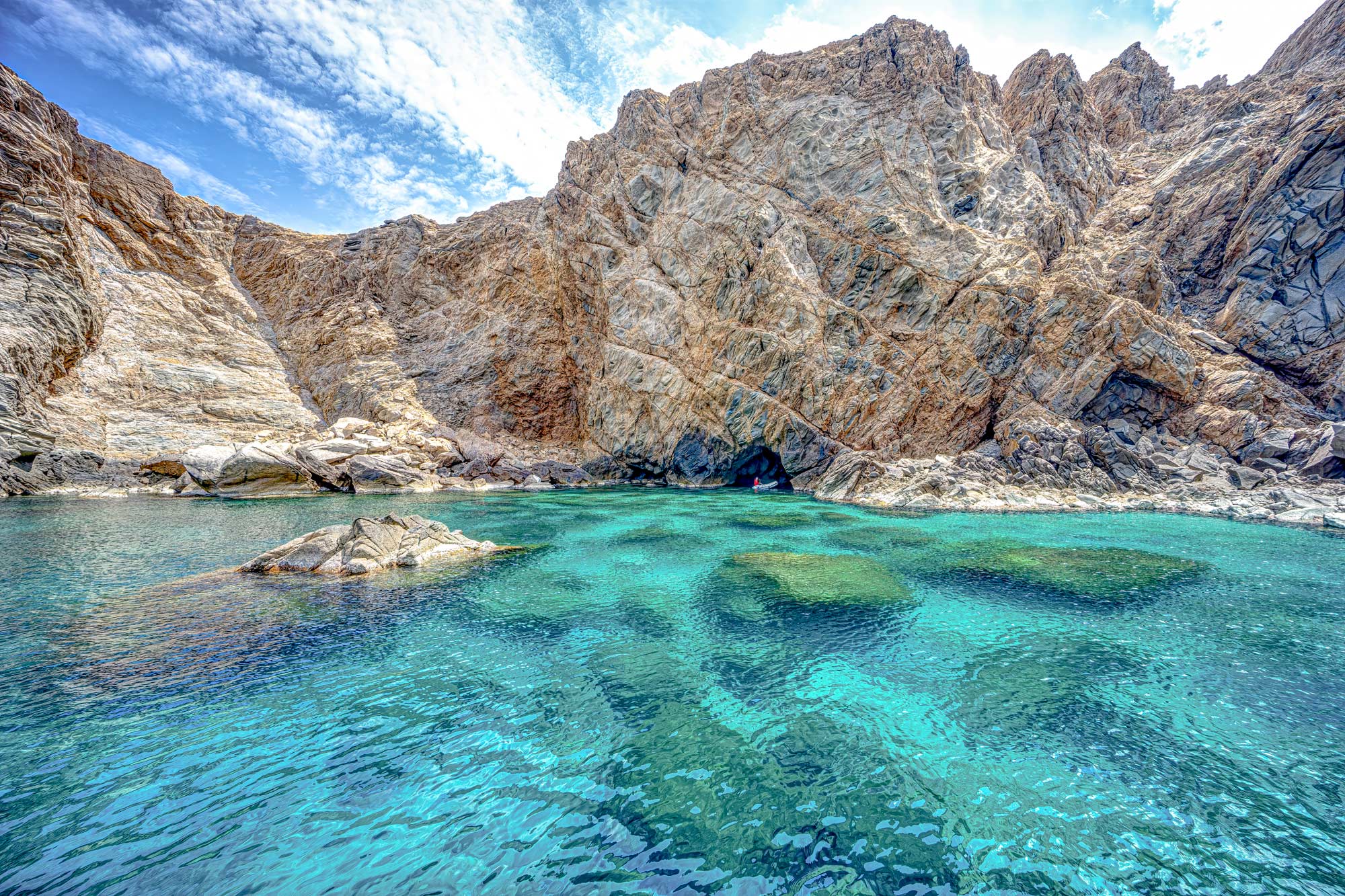
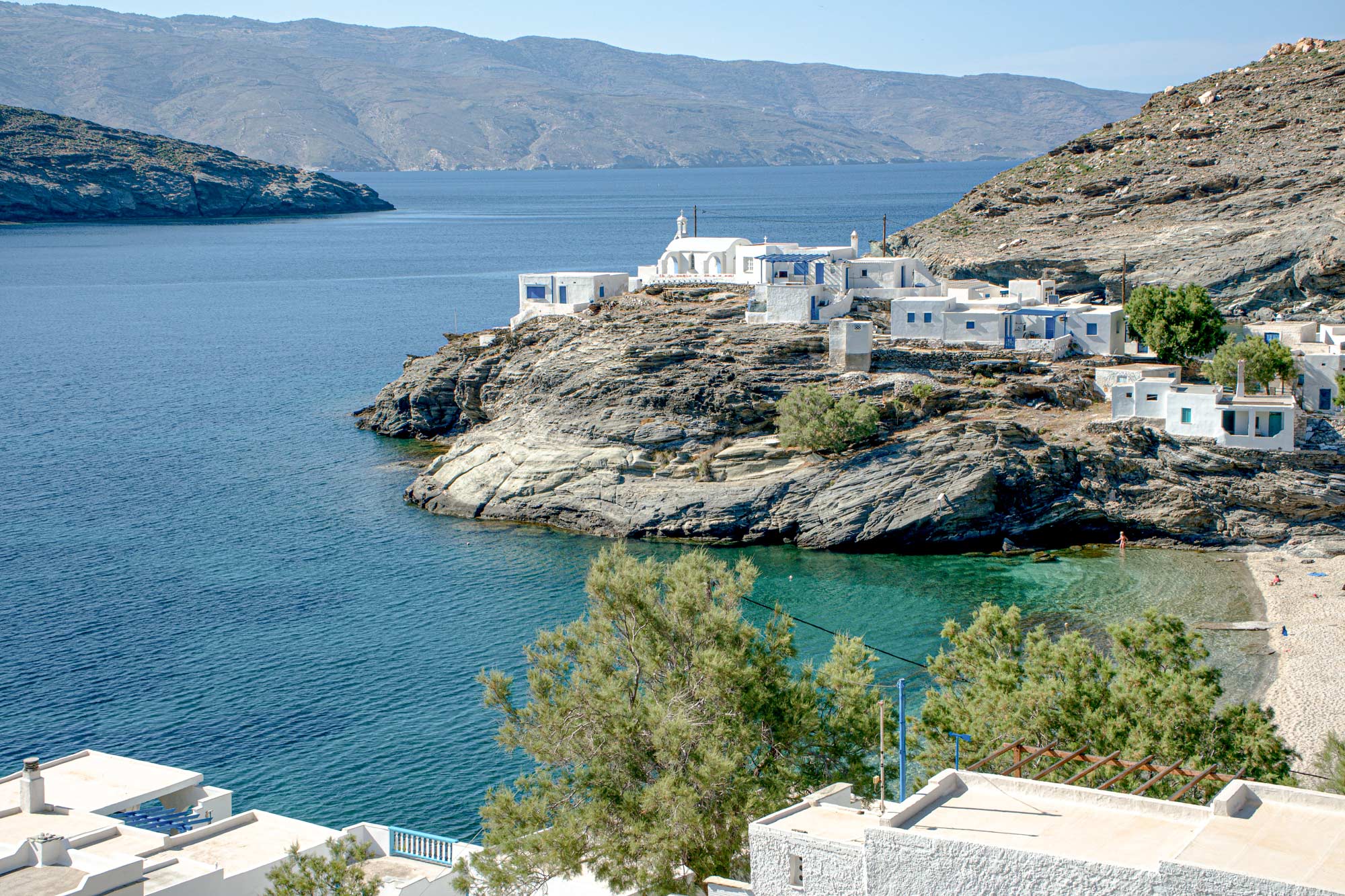
For an island so devoted to stone, Tinos has a surprising run of beaches, most of them wild and uncrowded. On the north coast, Kolymbithra is the best known: two sandy coves below a green valley, one calm and shallow for families, the other open to the swell and popular with surfers. Further east along the same coast, Livada is a dramatic, remote bay of dark sand and big Aegean waves, framed by eroded rocks and reached by a winding road. On the gentler south coast, Agios Romanos is a long, calm, shallow beach favoured by windsurfers and by anyone after an easy afternoon, while Kionia, a short drive west of Chora, offers the most convenient swim of all, beside the scattered ruins of an ancient sanctuary of Poseidon. 

WHEN TO VISIT

Tinos is at its best from May to October. June and September are the nicest months: warm, settled weather, temperate seas, and easily secured restaurant reservations. July and August bring the strong meltemi wind, for which Tinos is famous, and the crowds are thin by Cycladic standards except around one date. The 15th of August, the feast of the Dormition, is extraordinary to witness but overwhelming to travel into unprepared: rooms and ferries book out months ahead, and the town belongs to the pilgrims. Come for it deliberately, or steer a week clear, but do not arrive by chance. May and October are quieter and cooler, ideal for the walker who wants the inland villages largely to themselves. 

GETTING HERE

Tinos has no airport, which adds to its calm character. Almost everyone arrives by sea, most easily from Rafina, the smaller of Athens’ two main ferry ports and the closest to the airport, from which fast boats reach Tinos in around two hours and conventional ferries in nearly four, with several sailings a day in season. Services also run from Piraeus and Lavrio. The simplest approach of all is often via Mykonos: the two islands are barely half an hour apart by fast ferry, so you can fly into Mykonos and be on Tinos in time for lunch. Once here, Tinos sits at the heart of a natural island-hopping cluster, with Mykonos, Syros and Andros all close by.

TINOS WITH VILLA COLLECTIVE

Tinos is the artisans’ island: marbleswathed  with dovecotes stitched across the terraced hills, and one of the best tables in the Cyclades laid at the water’s edge. It is a place of craft and quiet rather than nightlife, and the houses we keep here answer to that. Some are stone houses set among the terraces and dovecotes of the interior; others stand above a north-coast cove with a path down to the water. Each comes with a team who know the island from the inside, and who can open the door of a marble sculptor’s workshop in Pyrgos, hold a table at Thalassaki or Marathia, set out a guided walk between the inland villages, or send a boat around to Kolymbithra. To begin, explore our collection of villas on Tinos, or the wider islands of Greece. 

EXPLORE THE JOURNAL

DISCOVER MORE

A villa for every occasion Finding the perfect villa that suits a large group is the first step in making sure your celebration sings. We can match you with the ideal property for your party, plan all the big and little details ensuring your occasion rises far beyond expectations. Read our recommendations for big gatherings.
The taste of Greece Greek cuisine is rooted in hospitality, community and centuries of tradition. From simple taverna dishes and olive oil-rich cooking to contemporary island restaurants and a thriving wine culture, our guide explores the flavours, rituals and ingredients that shape Greece’s distinctive food scene.