Ithaca Guide: Vathy, Kioni & Odysseus's Isle

The island of the mythical homecoming, a deep sheltered harbour, two small fishing villages on the northern shore, coves reached only on foot or by sea and a green mountainous spine, read our guide to the most storied and least hurried of the Ionian islands. 

Of all the Ionian islands, Ithaca has a name that has echoed for three thousand years as the destination Odysseus spent ten years trying to reach, and a landscape that has changed remarkably little since. Homer called it rugged, and rugged it remains: a place of olive terraces, cypress and holm oak, goat bells on the hillsides and a coastline folded into coves you can only reach by boat. With no airport or resort hotels, Ithaca has remained blissfully authentic.  

Ithaca very much rewards the kind of traveller who is content to slow down. Days here have a simple shape. Mornings begin slowly on the terraces of our villas, with chef-prepared breakfasts to be lingered over. Take coffee on the Vathy waterfront or a quayside table in Kioni, and by midday, you could be spent swimming off a pebble cove reached by a skippered caique or walking through the pines. Evenings settle into a long taverna dinner with the boats knocking gently at their moorings.  
THE ISLAND OF THE RETURN

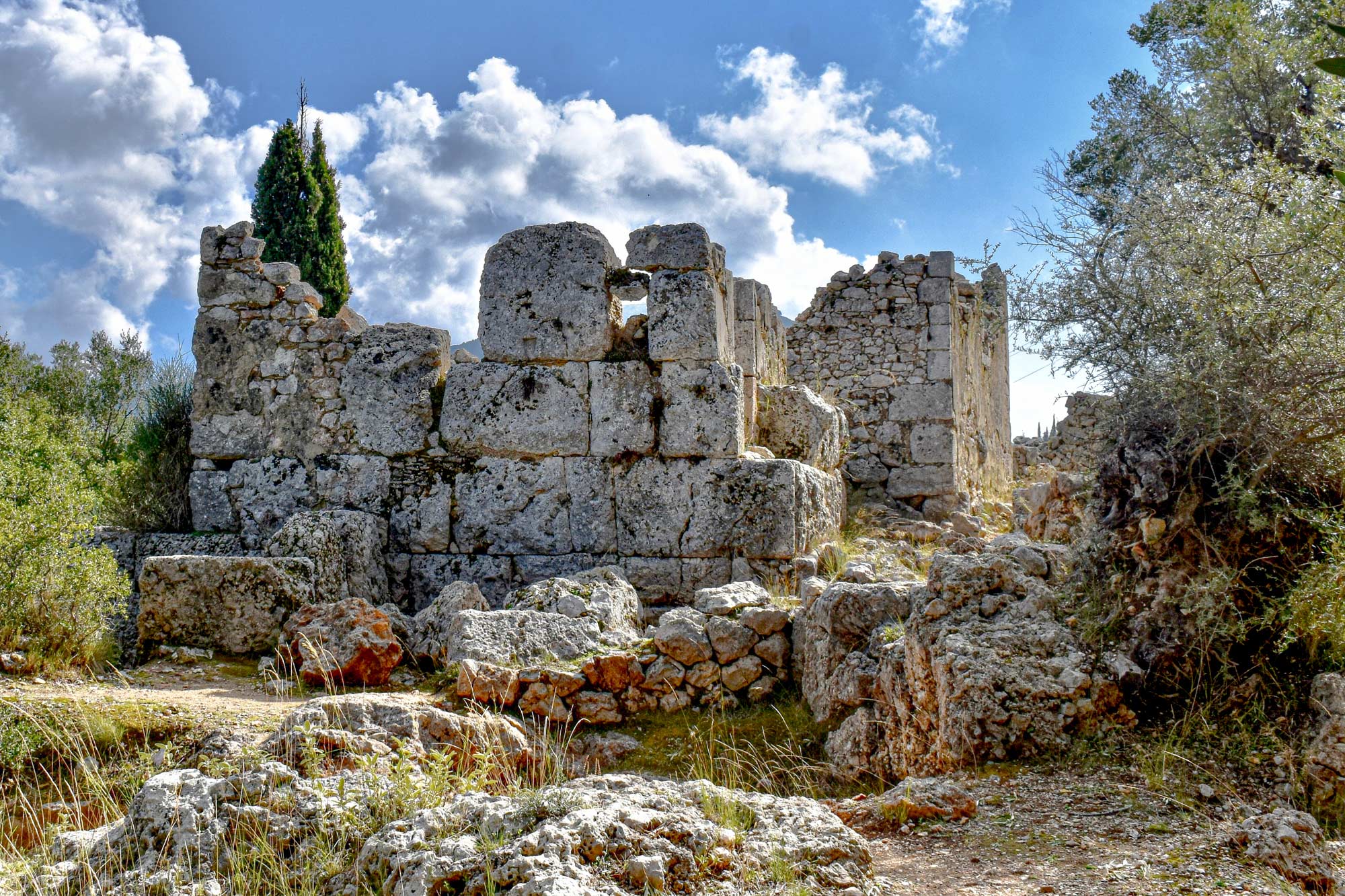
Ithaca carries the heaviest literary reputation of any small island in Greece, and it wears it lightly. This is, by long tradition, the home of Odysseus, the kingdom he sailed back to at the end of The Odyssey… Above the seashore of Dexia, a short way from Vathy, the Cave of the Nymphs, known locally as Marmarospilia, is identified with the grotto where the returning Odysseus is said to have hidden the gifts of the Phaeacians. On the Aetos isthmus, a steep path climbs to the ruins the islanders call the Castle of Odysseus, the acropolis of ancient Alalkomenes, with walls and traces of settlement reaching back to the Bronze Age. Although scholars have tried, no one can prove that Ithaca was the setting for Odysseus’s final homecoming, although it’s certainly fun to imagine that it is as you explore caves, terraces and ruins  

VATHY, THE DEEP HARBOUR

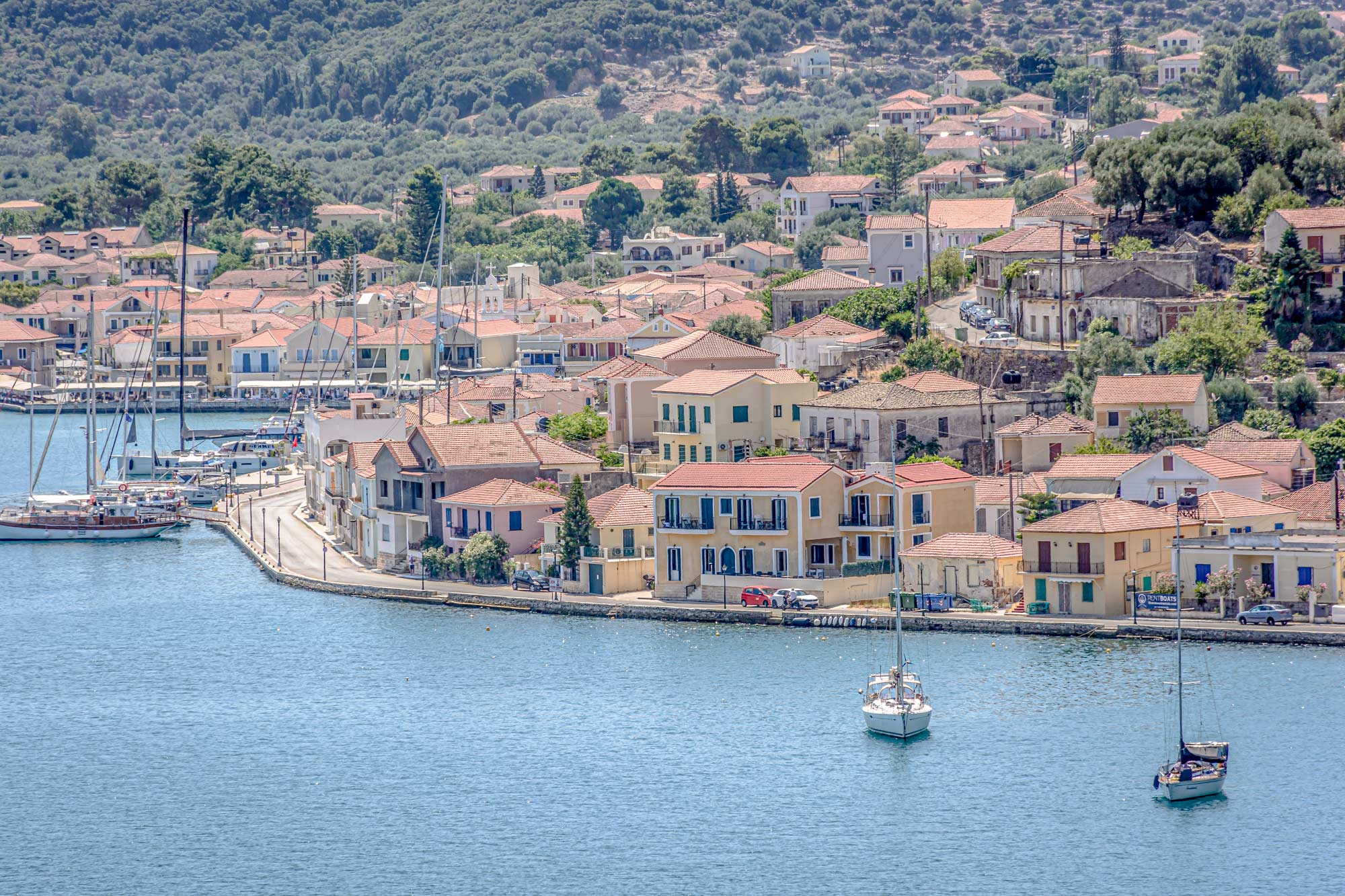
The island’s capital, Vathy, sits at the head of one of the finest natural harbours in the Mediterranean: a deep, almost enclosed horseshoe bay with a narrow mouth, so sheltered that the town is built right around the water in a gentle amphitheatre of pastel houses and red-tiled roofs. The name itself simply means deep. Rebuilt after the earthquake of 1953 that reshaped much of the Ionian, Vathy is modest and unshowy: a working town rather than a resort, with a small archaeological museum, a handful of tavernas along the quay, and fishing boats tied up where the ferries and yachts come in. 

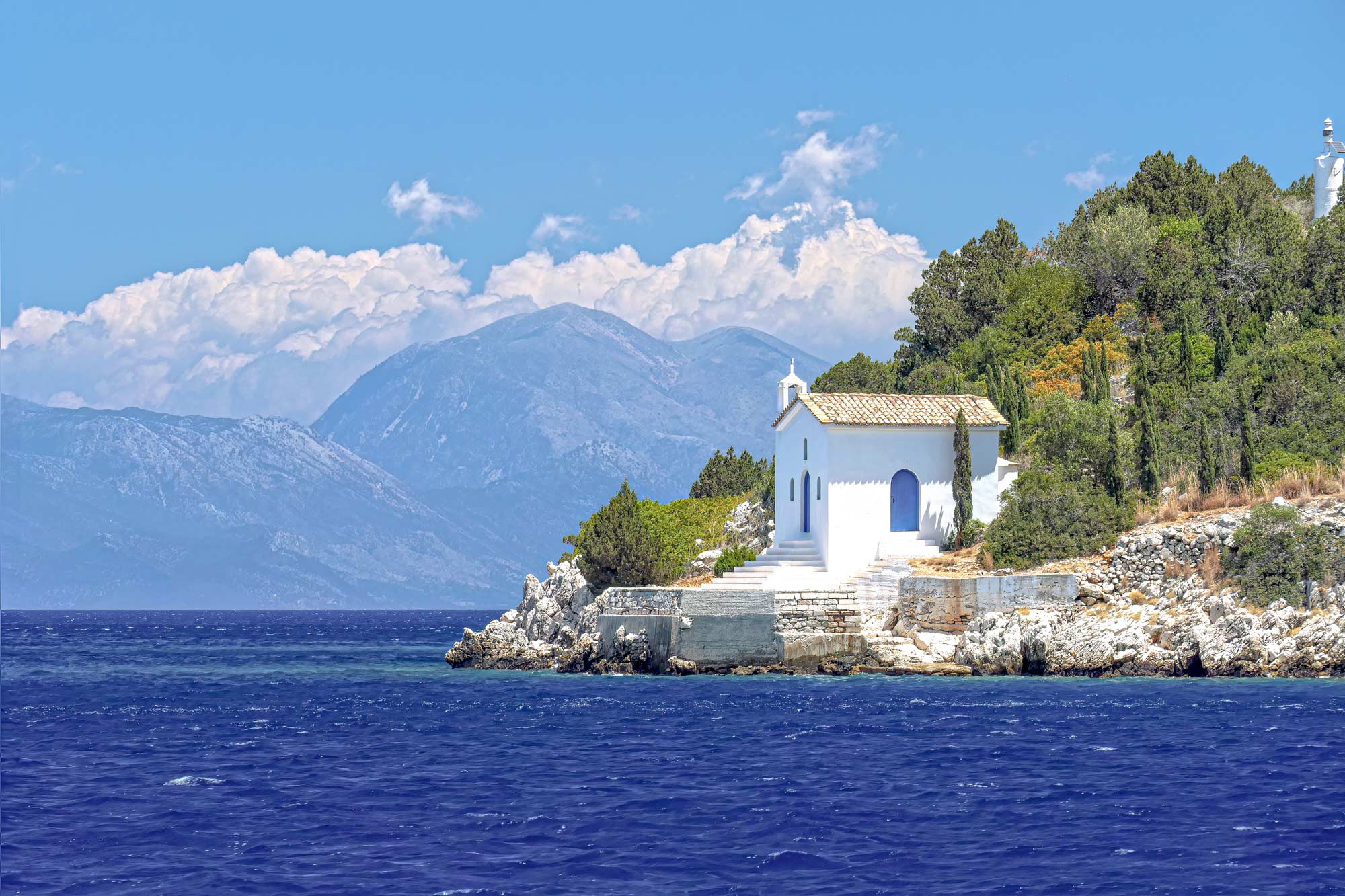
It is the natural base for a stay. Everything on the island is within a short drive; the shops and provisions are here, and the evening ritual of a slow walk around the waterfront, an ouzo and a plate of something grilled as the light fades, is one of the quiet pleasures of Ithaca. A tiny wooded islet, Lazaretto, sits in the middle of the bay with a single chapel, once a quarantine station and later a prison, now simply the picture everyone photographs from the quay. 

KIONI AND FRIKES, THE NORTHERN VILLAGES

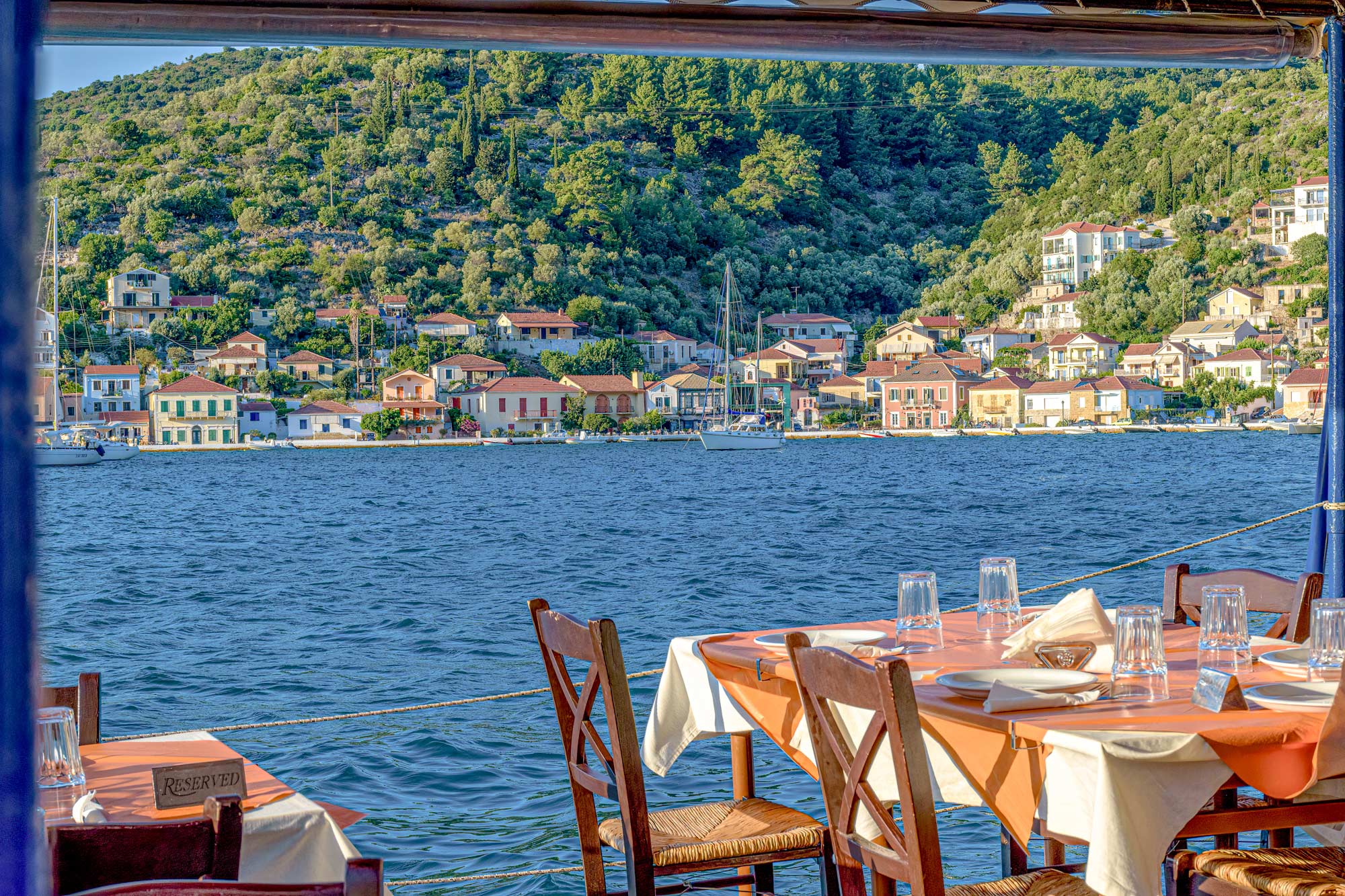
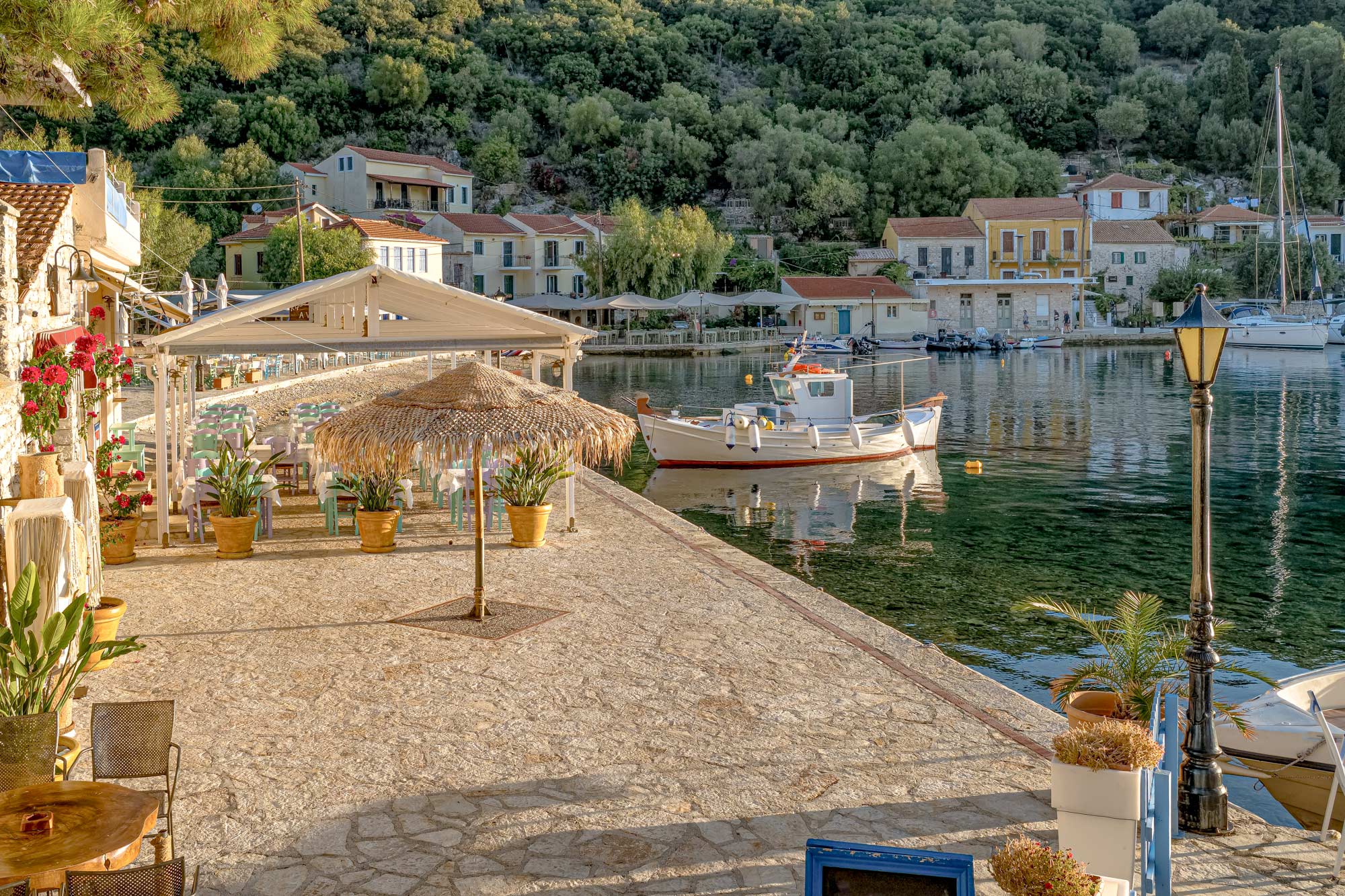
The northern half of the island holds Ithaca’s two prettiest villages, both small fishing harbours that have kept their character. Kioni is the more picturesque of the pair, a cluster of stone houses spilling down a green hillside to a tiny bay, its waterfront lined with tavernas whose tables sit almost on the water and three ruined windmills standing sentry on the far headland. 

A few kilometres north, Frikes is smaller and more workaday, a narrow natural harbour between two hills that has served as the north’s fishing and trading port since the 16thcentury. A short row of tavernas lines the quay, the caiques come and go, and the ferries to Lefkada and Kefalonia call in here. Both villages are at their best in the early evening, when the day-boats have gone, and the water goes still. 

ITHACA’S SUBLIME SWIMMING COVES

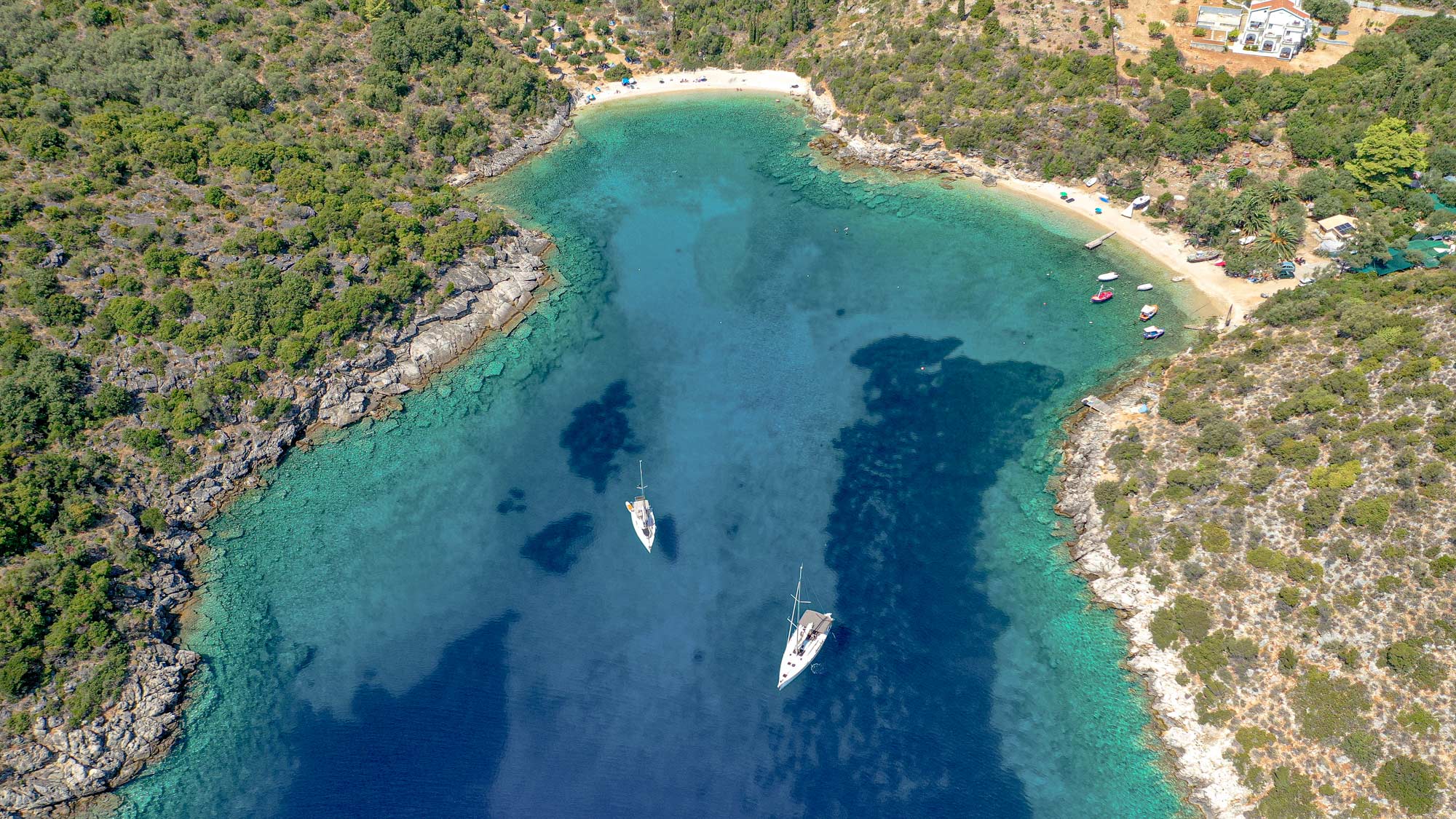
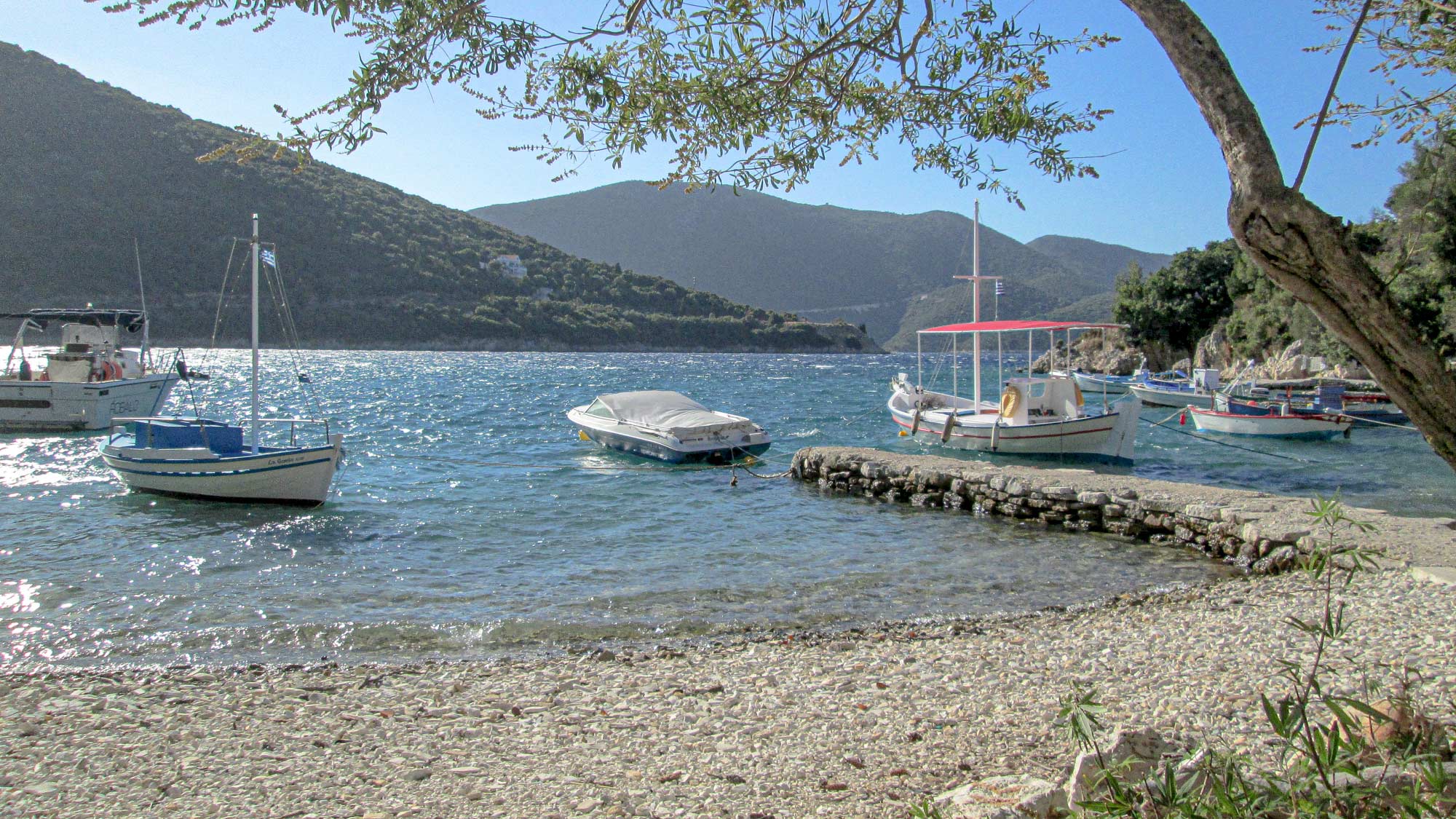
Ithaca is not an island of long golden sands, but it is known for its idyllic coves: small, clear, pebbled and often reached with a little effort, which is exactly what keeps them quiet. Filiatro, a ten-minute drive from Vathy, is ta wide bay of white pebbles and glass-clear turquoise water sheltered by limestone slopes. Nearby Sarakiniko and Gidaki share the same luminous water, and Dexia, on the road out of town, is probably the most convenient to reach.. 

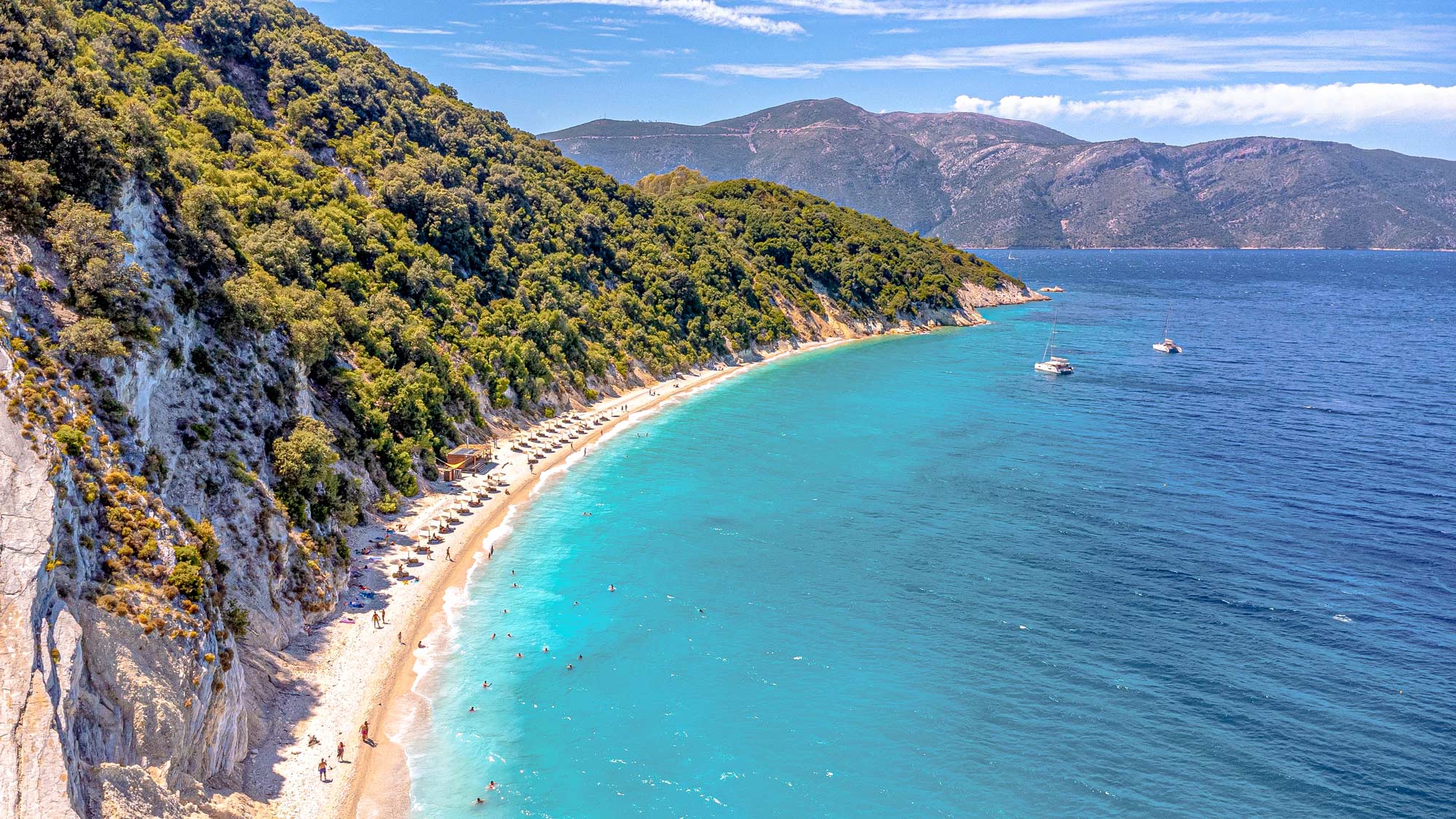
The most rewarded swim, though, is Gidaki, widely held to be the finest beach on the island and reachable only two ways: on foot, by a half-hour path over the headland through the pines, or by small boat from Vathy. Its inaccessibility is its gift, a long stretch of pale pebbles and empty water with none of the trappings of a resort beach. This is the pattern all over Ithaca: the best coves are the ones a caique or a good pair of shoes will take you to, and having one to yourself for an afternoon is its singular charm. 

HILLYGREEN INTERIORS

Away from the harbours, Ithaca rises quickly into a green, mountainous interior that is best explored on foot. The spine of the northern half is Mount Neritos, wooded and threaded with the old stone paths that once linked the villages before the roads came. The walking here is some of the most rewarding in the Ionian: centuries-old olive trees, cypress and holm oak, drystone terraces, ruined windmills and long views back down to the sea on both sides at once. 

The classic routes climb between the coast and the high villages, the old track from Kioni up to Anogi, a stone hamlet near the island’s highest ground, and the paths that loop out from Stavros in the north through Exogi and the hamlets above Polis Bay. Stavros is the market village of the north and a useful base for this end of the island, close to the sites that local tradition ties to Odysseus’s palace. Spring, when the hills are green and thick with wildflowers, is the walker’s season. 

DAYS ON THE WATER, AND TRIPS TO KEFALONIA

Ithaca is, above all, an island to be seen from the sea, and the culture here is a sailing one. It sits in the heart of the southern Ionian, with steady afternoon breezes, short hops between islands and sheltered bays to anchor. The channel between Ithaca and Kefalonia is busy all summer with yachts and flotillas, and a day on a skippered boat, tracing the Odyssey coastline, dropping into coves like Gidaki that have no road, swimming off the back of the boat, is one of Ithaca’s most simple pleasures.  

Kefalonia lies just across the water, and the two islands are natural companions. The ferry from Sami on Kefalonia to Piso Aetos takes barely half an hour, and many stays here take in both: Ithaca for quiet and myth, Kefalonia for its scale, its beaches and its convenient airport. A caique or a chartered yacht makes the short crossing simple, and the coves along the strait between them are among the loveliest in the Ionian. 

WHEN TO VISIT

Ithaca is at its best from May to early October. June and September are the most appealing months by some margin: warm, settled days, a sea that holds the summer’s heat, tavernas still open and the harbours pleasantly quiet. July and August are hotter and busier, with the summer sailing crowd filling Kioni and Frikes and the moorings at a premium, though the island never feels overrun the way its larger neighbours can. May is the walker’s month, green and wildflowered and cool enough for the high paths, while by late October the season is winding down and much of the island returns to itself. Ithaca is a summer place; outside the season, many tavernas and boats close. 

GETTING HERE

Getting to Ithaca takes a little more resolve than most Greek islands, which is part of why it stays quiet. The island has no airport of its own. The usual route is to fly into Kefalonia, whose airport near Argostoli takes domestic flights from Athens in around an hour and seasonal European services in summer, then drive across to the port of Sami and take the short ferry to Ithaca. The crossing from Sami to Piso Aetos, the island’s main ferry port, is roughly half an hour. From the mainland, ferries run to Ithaca from the small port of Astakos, and the wider network connects on through Kefalonia and Lefkada. Once here, a hire car is all but essential for exploring the island by road.  For a longer island-hopping stay, Ithaca pairs naturally with Kefalonia next door and the wider Ionian. 

ITHACA WITH VILLA COLLECTIVE

Ithaca is the island of homecoming,  guests who come once tend to return, often for years, and our houses here are chosen with that in mind. Some sit at the water’s edge near Kioni, close enough to keep a boat at the jetty and swim before breakfast; others stand on the hillsides above Vathy, with the deep harbour laid out below and the whole bay turning gold at dusk. Each comes with a team who know the island from the inside and can arrange your stay: a quayside taverna table in Kioni, a private caique to the empty coves and across the strait to Kefalonia, a skippered day around the Odyssey coastline, or simply the walk over the headland to Gidaki with a picnic waiting. To begin planning your own return, explore our collection of villas on Ithaca or our wider portfolio across the islands of Greece. 

EXPLORE THE JOURNAL

DISCOVER MORE

A villa for every occasion Finding the perfect villa that suits a large group is the first step in making sure your celebration sings. We can match you with the ideal property for your party, plan all the big and little details ensuring your occasion rises far beyond expectations. Read our recommendations for big gatherings.
5 Reasons to Book Your 2027 Villa Holiday Now 2027 bookings with rates guaranteed at 2026 levels. Five reasons to plan your villa holiday early — from peak-date availability to the finest homes across the Mediterranean and beyond.