Portofino Guide: Harbour, Castello Brown & the Coast

A few hundred residents, a horseshoe of ochre and rose-coloured houses, a piazzetta the size of a tennis court and a harbour just deep enough for the yachts that anchor off it each summer: Portofino is one of Italy’s most enduring sights. Tucked into the tip of a green promontory that juts into the Gulf of Tigullio, east of Genoa, it began life as a Roman fishing port and spent the 20th century becoming shorthand for a certain kind of Italian glamour. A day in Portofino is a delight for the traveller who loves to gaze onto beautiful things. Mornings are for the walk up to the lighthouse before the day boats arrive; middays for a swim in the emerald cove at Paraggi or a crossing by boat to the abbey at San Fruttuoso; evenings for the slow ritual of aperitivo in the Piazzetta as the light turns the houses to amber and the last excursion boats slip back toward Santa Margherita. It is a place to be savoured rather than conquered, and it holds its charm for families, couples and solo wanderers.
THE HARBOUR AND THE PIAZZETTA

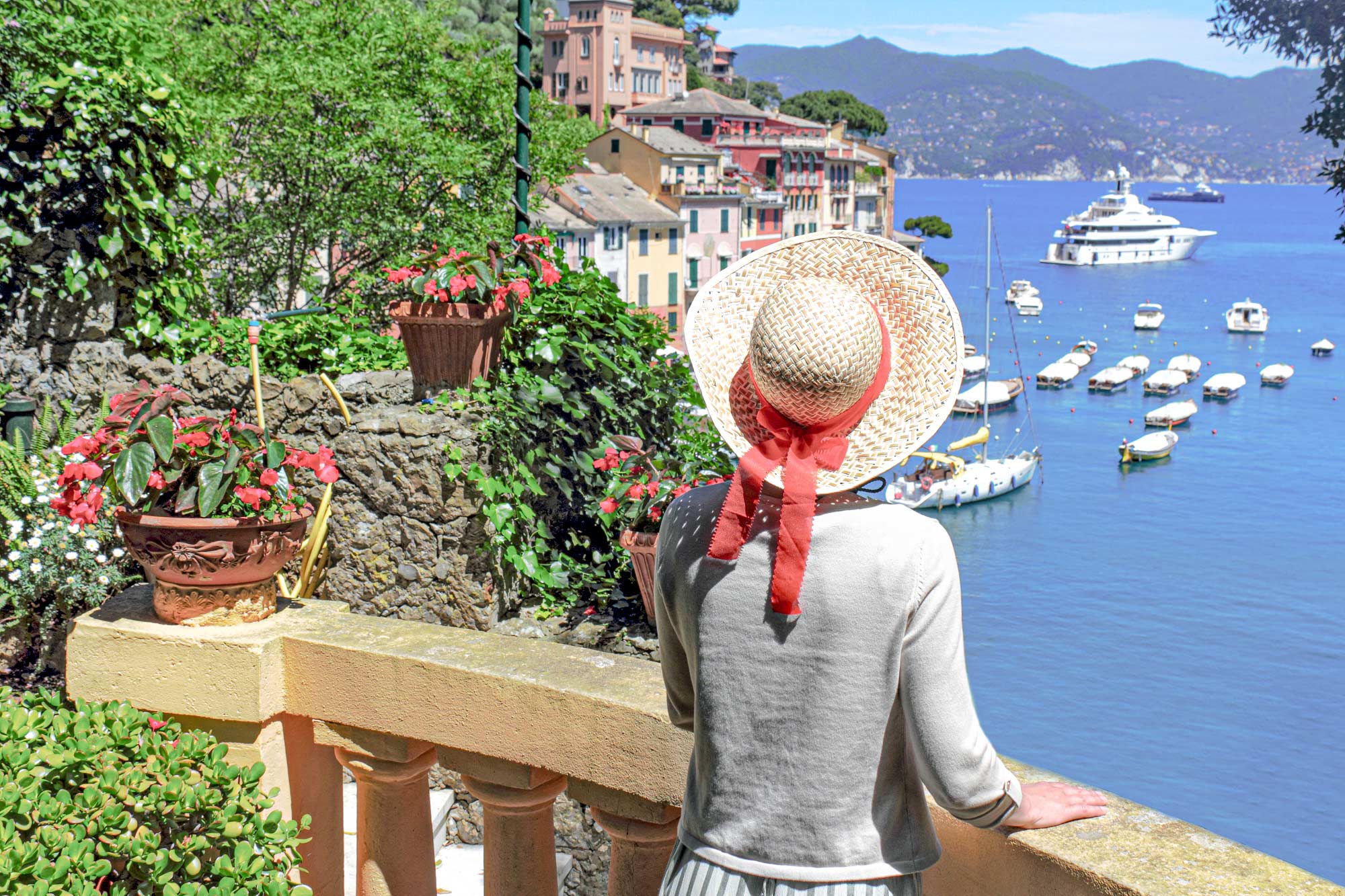
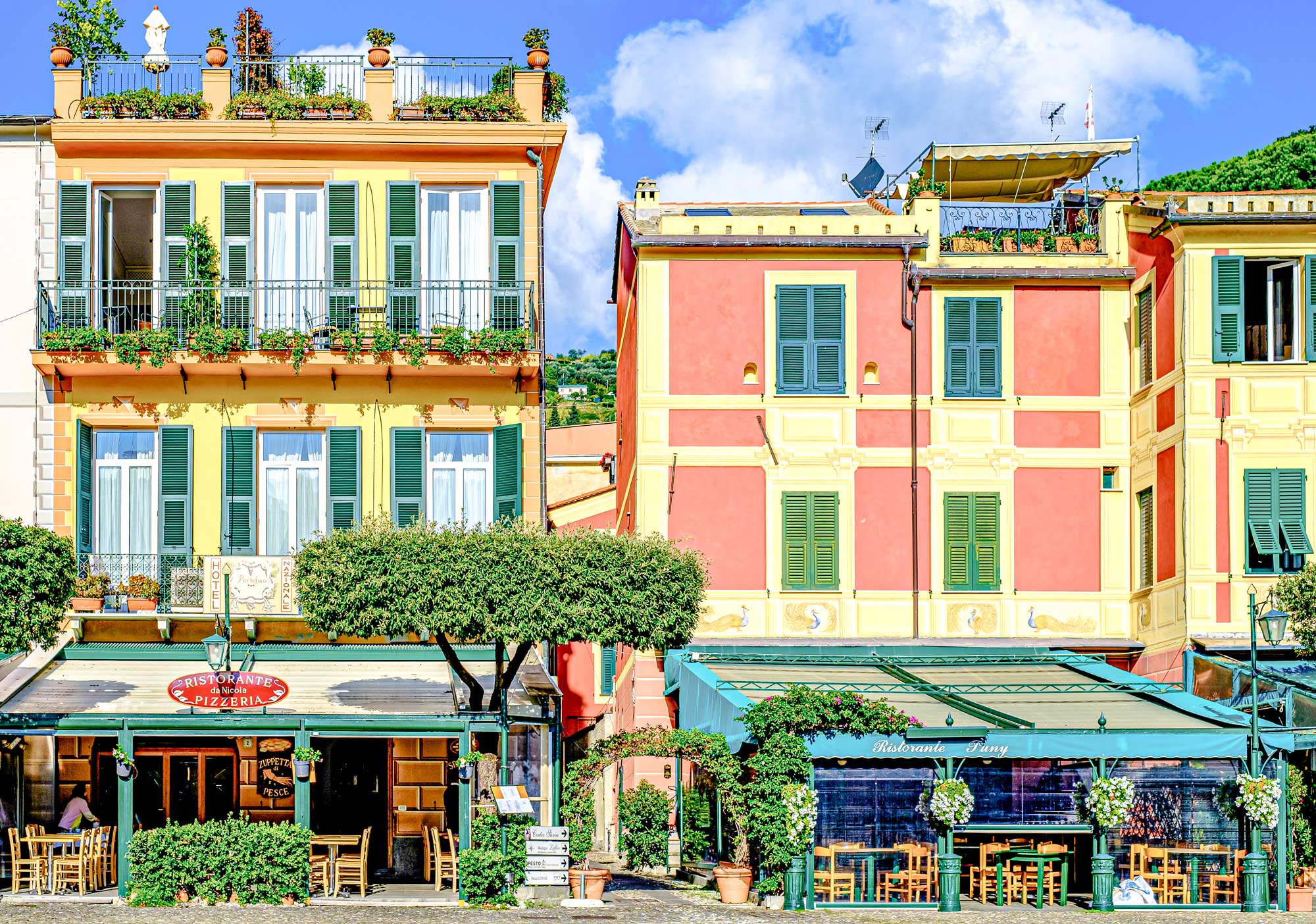
Everything in Portofino faces the water. The Piazzetta, the small square that opens onto the harbour, is the heart of the village and, by most reckonings, the most photographed small square on the Ligurian coast: a modest rectangle framed on three sides by tall, narrow houses in faded pink, apricot and terracotta, their painted-on shutters and trompe l’oeil cornices a Ligurian tradition in themselves. The fourth side is the harbour, where fishing boats once tied up and where tenders from the anchored yachts now come and go through the day.

The scale is the surprise. First-time visitors, arriving with the image of somewhere grand, find instead a village you can cross on foot in a few minutes, its lanes climbing steeply behind the waterfront into gardens and olive terraces. Above the square, reached by a short flight of steps, sits the Chiesa di San Giorgio, rebuilt after the last war and said to hold relics of the saint who is the village’s patron; lower down, the older Chiesa del Divo Martino keeps its Romanesque calm a street back from the noise. Sit at a caffè table in the Piazzetta with a coffee or a glass of something cold, and the whole theatre of Portofino plays out in front of you.

CASTELLO BROWN AND THE WALK TO THE LIGHTHOUSE

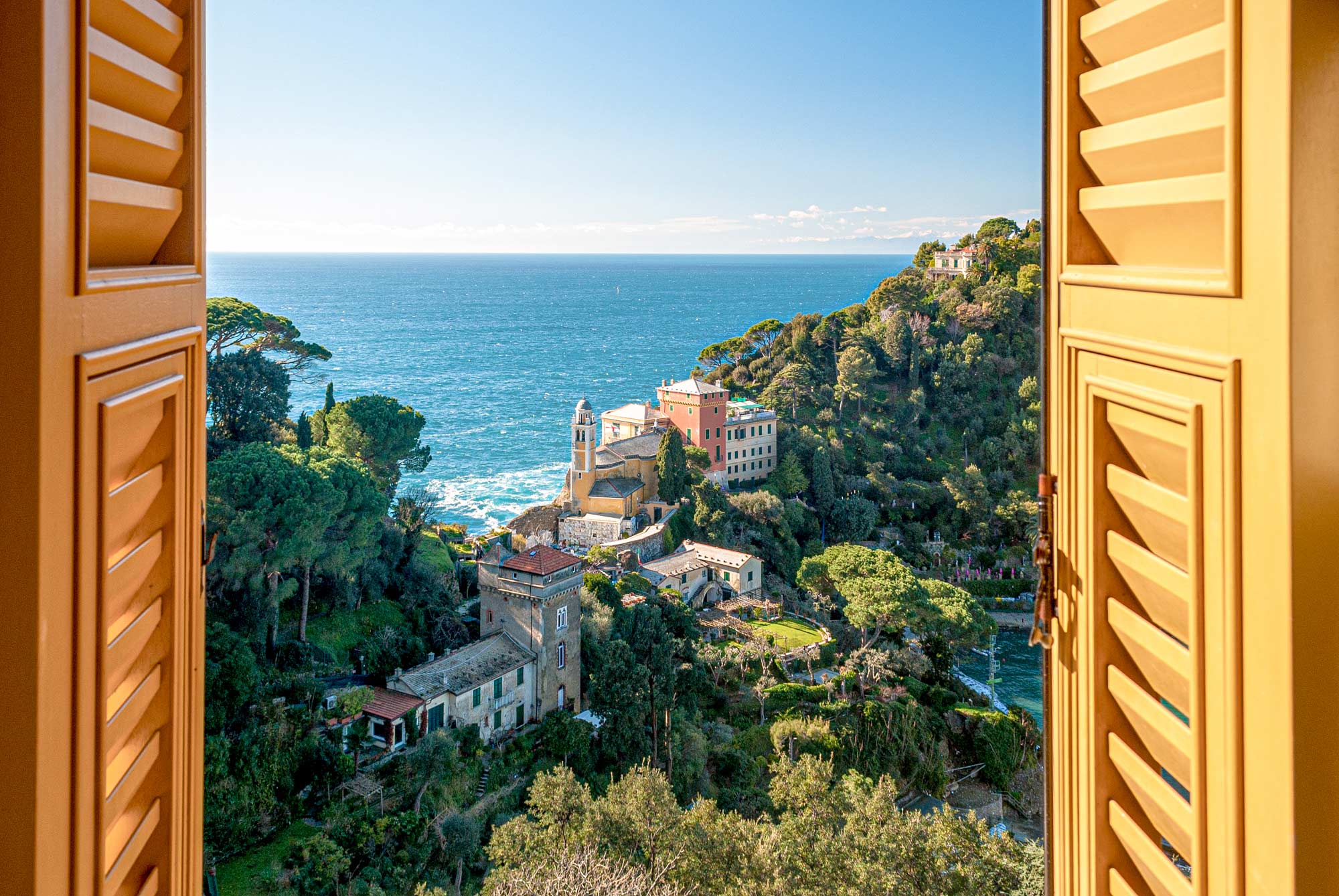
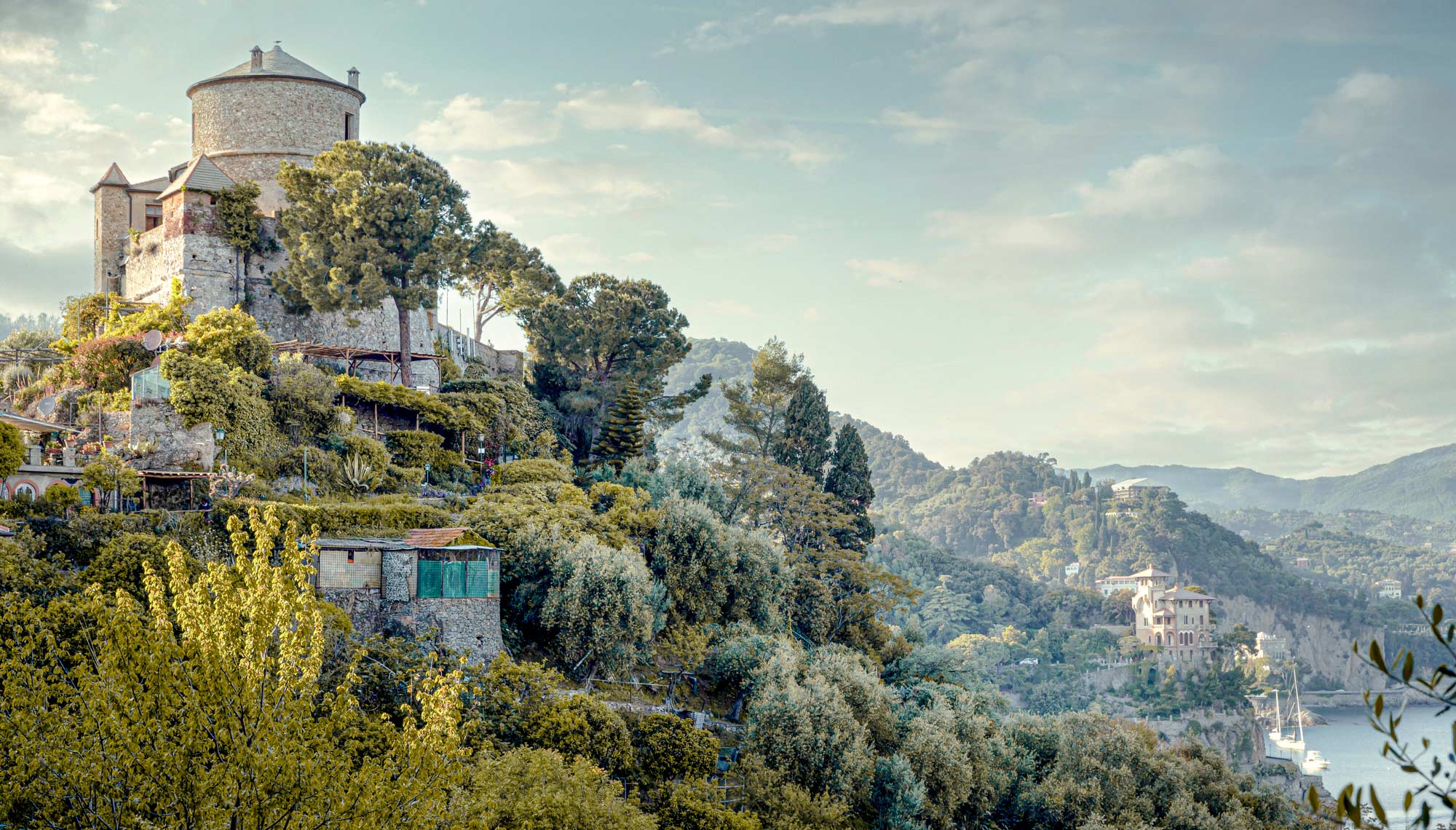
The best views of Portofino are on foot. From the Piazzetta, a signed path climbs through gardens in 15 minutes or so to Castello Brown, the fortress that has guarded the harbour mouth since the 16th century. It takes its curious name from Montague Yeats Brown, the British consul who bought it in the 1860s and turned a military stronghold into a private home; today it is a small house museum, with the finest panorama in the village, straight down over the Piazzetta, the moored yachts and the bay beyond.

From the castle the path continues out along the point, past the little Chiesa di San Giorgio and on through the trees toward the Faro, the lighthouse built in 1917 at the very tip of the promontory. It is a walk of perhaps half an hour from the square, mostly downhill on the way out, along Via della Penisola with the sea on both sides. The lighthouse itself is not open, but there is a small bar tucked beside it where you can sit with a drink at the end of the land and watch the boats round the headland. Go early or late, when the light is long and the day-trippers thin.

SAN FRUTTUOSO AND THE CHRIST OF THE ABYSS

On the far side of the promontory, in a cove that no road reaches, stands one of the most romantic sights on the whole Riviera: the Abbey of San Fruttuoso, a medieval Benedictine monastery whose arches rise straight from a shingle beach, backed by wooded cliffs and open only to those who arrive on foot or by sea. The oldest parts date back around 1,000 years; the tower and the family tombs of the Doria, the great Genoese dynasty who rebuilt it, look out over one of the prettiest small bays in Liguria. There is no traffic here, no crowds beyond the day boats, only the abbey, the water and a taverna or two.

Below the surface, a short way offshore, lies the reason many make the crossing. The Christ of the Abyss, a bronze statue of Christ with arms raised toward the light, was lowered onto the seabed here in 1954, some 17 metres down, cast by the sculptor Guido Galletti in memory of a diver lost in these waters. Snorkellers can make out its outline on a calm, clear day; divers descend to it directly. Boats run to San Fruttuoso through the season from Portofino, Santa Margherita and Camogli, a crossing of 15 or 20 minutes, and the walk over the hills from Portofino is one of the great short hikes of the coast.

SANTA MARGHERITA LIGURE AND PARAGGI

Portofino has no real beach of its own. For the nearest swathe of sand, look to Paraggi, the small emerald cove on the coast road halfway to Santa Margherita, the only true beach on the Portofino side of the promontory, known for its startling green water over a pale seabed. You can reach it by the coast road, by the walking path, or by the little ferry that follows the shore.

A short way on lies Santa Margherita Ligure itself, the graceful belle epoque town that is Portofino’s larger, easier neighbour and, for many, the place to base a longer stay. Palm-lined and unhurried, with a proper working harbour, painted facades every bit as fine as Portofino’s and a good number of restaurants and shops, it has the depth of a real town rather than a set piece. It is also the road and rail gateway to the whole peninsula, and the point from which most journeys into Portofino begin.

THE PROMONTORY AND THE COASTAL PATHS

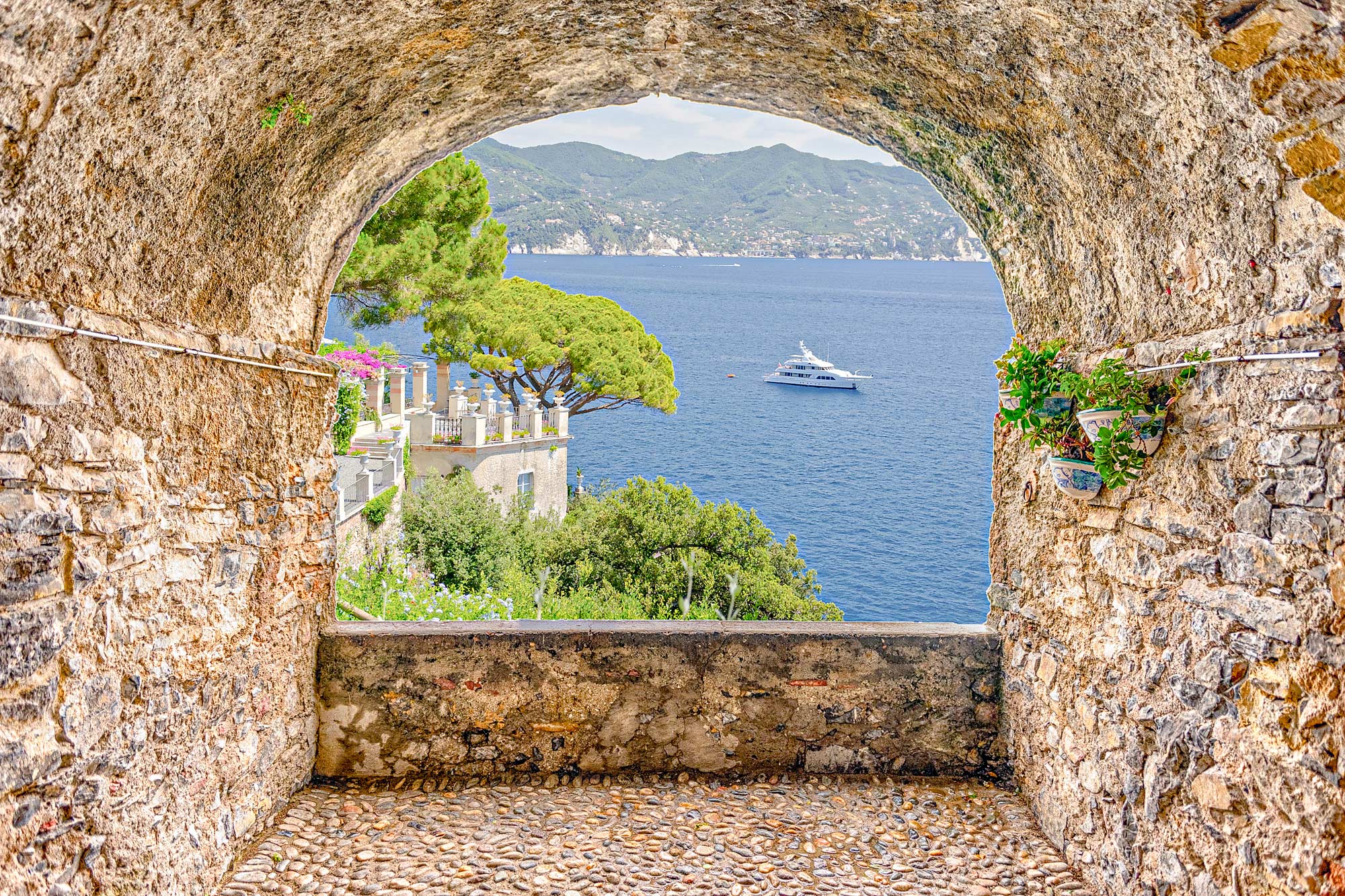
Behind and above the village rises the reason Portofino has never sprawled: the Portofino promontory, a headland of Mediterranean pine, holm oak and aromatic scrub protected as a regional nature park and laced with a network of old mule tracks and coastal paths. The park covers the whole cape between Camogli, Santa Margherita and Portofino, and walking the green hills reveals lovely views over the harbour below.

The classic outing is the path from Santa Margherita to Portofino by way of Nozarego and Paraggi, a few gentle hours through olive groves and pine woods with the Gulf of Tigullio opening at every turn. More ambitious walkers cross the spine of the promontory to San Fruttuoso, or push on to the fishing village of Camogli on the far shore. The paths are well marked and much loved, but the ground is steep and stony in places; proper shoes and an early start are very much recommended.

THE SCENE AND THE TABLE

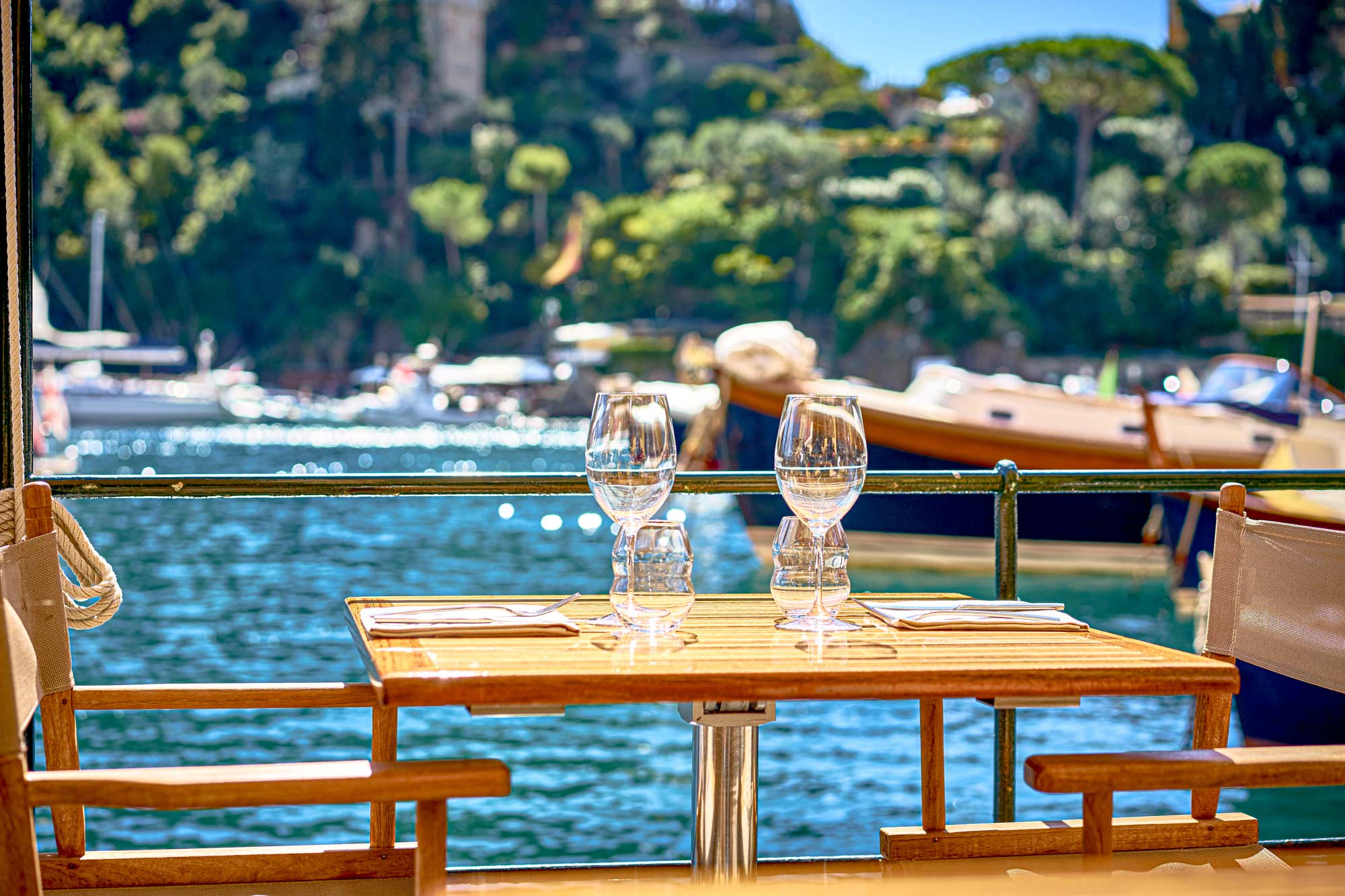
Portofino’s glamour is tangible, but it is unshowy. There are no nightclubs and no high-rise hotels; the luxury here is discretion, and its temple is the Splendido, the Belmond hotel set in a former monastery on the hillside above the bay, whose terrace has drawn the famous and the fortunate since the 1950s. Below in the harbour, the yachts arrive by sea and their guests come ashore for the evening ritual that Liguria does better than almost anywhere: the aperitivo, a Negroni or a glass of white and a plate of olives taken at a Piazzetta table as the light goes gold. The food is gloriously simple and unmistakably Ligurian. This is the birthplace of pesto, pounded from the small-leaved basil grown in these hills and turned through trofie or trenette; of focaccia, dimpled and glossy with oil; and of the seafood that comes in from the same waters the fishing boats have always worked. Look, too, for cappon magro, the elaborate tiered salad of fish and vegetables that is Genoese cooking at its most festive, and for the local white wines of the coast. And for those who want more of the same, the villages of the Cinque Terre lie just down the shore, an easy day out by boat or train from a Portofino base, with the hill country of Tuscany a straightforward drive further on.

WHEN TO VISIT

Portofino is at its best in the shoulder seasons. May, early June and September bring warm, settled weather, a sea that is comfortable for swimming and a village that breathes more easily than in the peak weeks. July and August are the height of the yacht season: glamorous, crowded and hot, with the day boats arriving in numbers and the best harbourside tables booked well ahead. Late April and early October are quieter again, ideal for coastal path walks and for having the Piazzetta more to yourself. Most of the hotels, restaurants and boat services run from around Easter to October; deep winter is beautiful, but much of the village closes down.

GETTING HERE

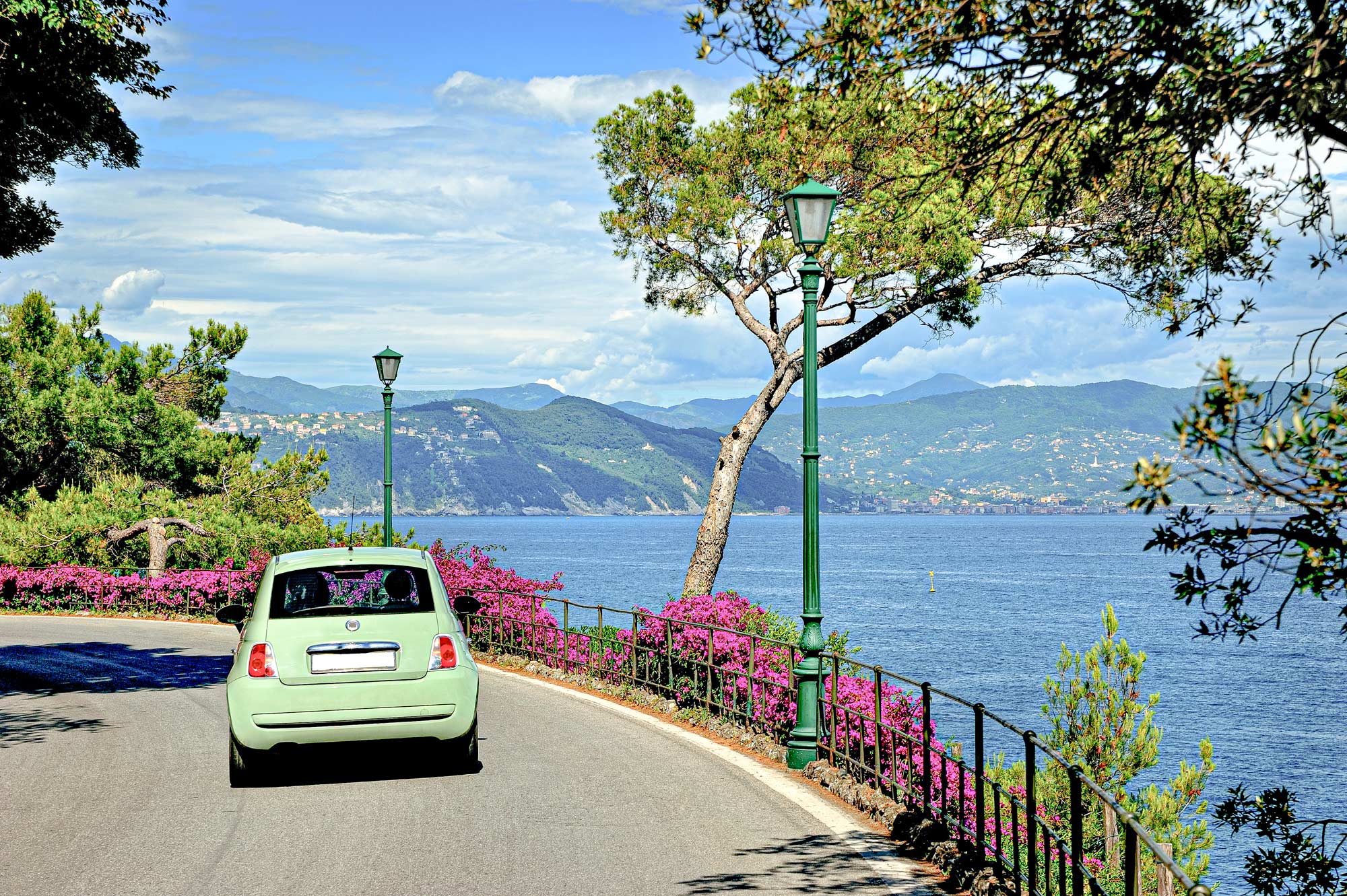
Portofino is easier to reach than its exclusivity suggests. The nearest airport is Genoa’s Cristoforo Colombo, around 40 minutes away by road, with Milan and Pisa within a couple of hours for wider connections. Most journeys, though, come by train: the coastal line runs to the station at Santa Margherita Ligure-Portofino, a short hop from Genoa, and from there it is a 15 to 20 minute drive along the celebrated corniche road into the village, or, far better, the little ferry that runs down the shore by way of Paraggi. The village centre has no cars: private vehicles stop at the edge of town, where parking is limited and costly, and the last stretch is made on foot, by taxi or by boat. Arriving by sea, as Portofino was always meant to be reached, is the loveliest approach of all.

PORTOFINO WITH VILLA COLLECTIVE

Portofino is a small place with an outsized reputation, and the pleasure of it lies in its diminutive size: a single, near-perfect harbour where the point is not to do a great deal, and where a villa above the bay is the surest way to hold the view long after the day boats have gone. Our houses here sit in the pines and olive groves of the promontory above the harbour, some with a private terrace hung over the Ligurian Sea, others toward Santa Margherita where a proper town and its restaurants are a stroll away. Each comes with the Villa Collective team behind it, who know this stretch of coast intimately: they can arrange a boat across to San Fruttuoso and a swim over the Christ of the Abyss, hold the right harbourside table for aperitivo as the light turns, set you on the path to the lighthouse at dawn, or plan a day along the shore to the Cinque Terre and back by sea. To begin, explore our collection of villas in Portofino or our wider portfolio across Italy.

EXPLORE THE JOURNAL

DISCOVER MORE

A villa for every occasion Finding the perfect villa that suits a large group is the first step in making sure your celebration sings. We can match you with the ideal property for your party, plan all the big and little details ensuring your occasion rises far beyond expectations. Read our recommendations for big gatherings.
5 Reasons to Book Your 2027 Villa Holiday Now 2027 bookings with rates guaranteed at 2026 levels. Five reasons to plan your villa holiday early — from peak-date availability to the finest homes across the Mediterranean and beyond.
Italy: The Guide It is, quite simply, impossible not to fall in love with Italy. This is the place where locals will greet you with a warm “piacere”, slow morning cappuccini is not just a ritual but a cultural requisite, and almost every unassuming street corner you chance upon has a remarkably photogenic allure. Not to mention the verdant rolling hills and spectacular coastlines. Our luxury villas in Italy may be set upon a lavish private estate or sumptuously kitted out with Roman-style marble baths and original Venetian chandeliers. From the glamorous lakeside towns of Como and Garda in the north to the emerald mounds of Tuscany and Umbria in the centre and picturesque Puglia in the south, it could take a lifetime of discovery to truly unpick each wonder of Italy.