Umbria Guide: Assisi, Hill Towns & Sagrantino

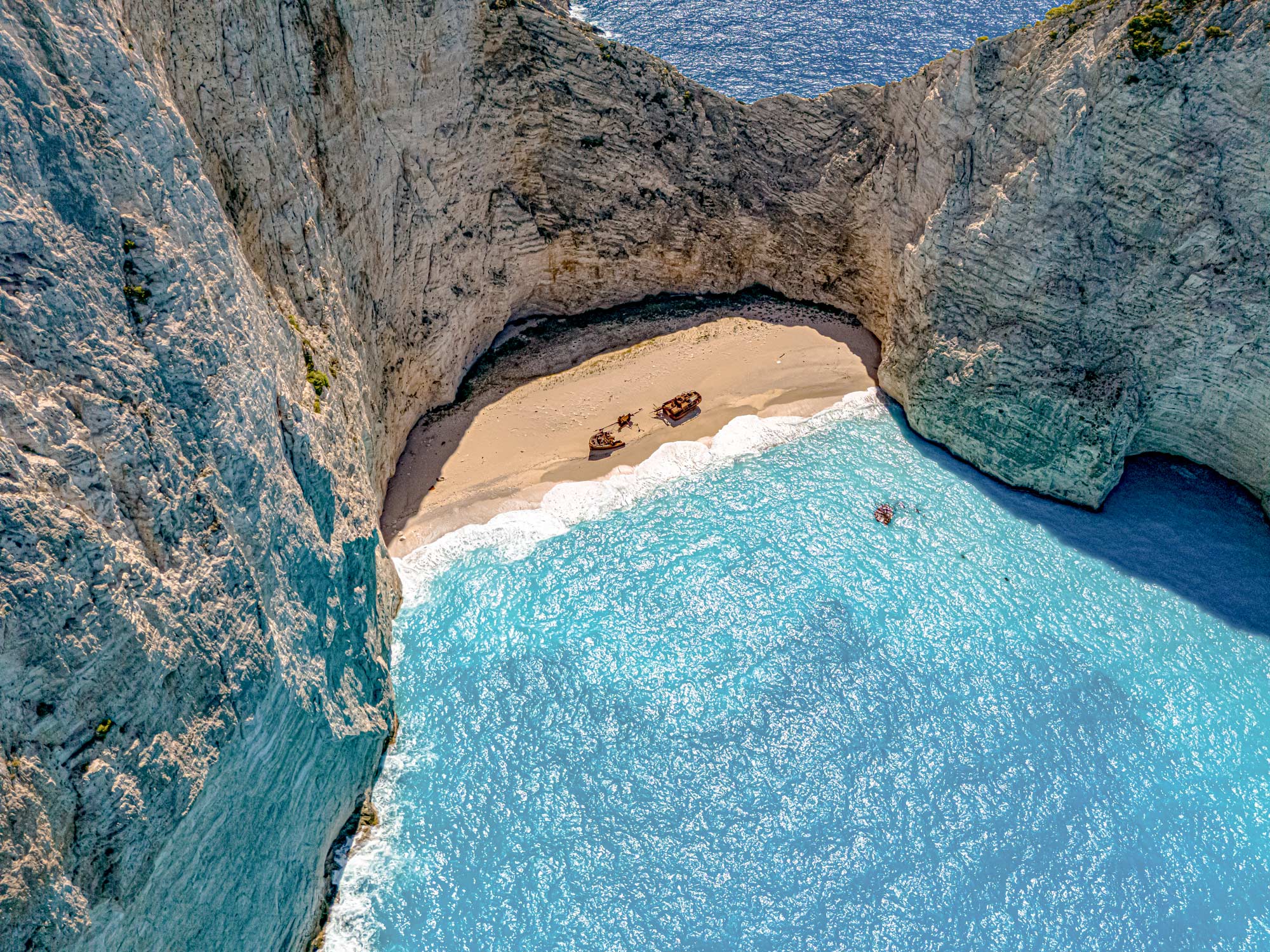
Few Greek islands carry as many reputations at once as Zakynthos. To one set of travellers it is the photograph everyone has seen, a rusting freighter on a white-sand cove framed by sheer limestone cliffs, the postcard known the world over as Navagio. To another,  it is something quite different: an island of cypress-shaded hills, ancient olive groves, hidden western inlets where the sea turns electric blue, and a long southern bay where loggerhead turtles still come ashore to nest as they have for millennia. 

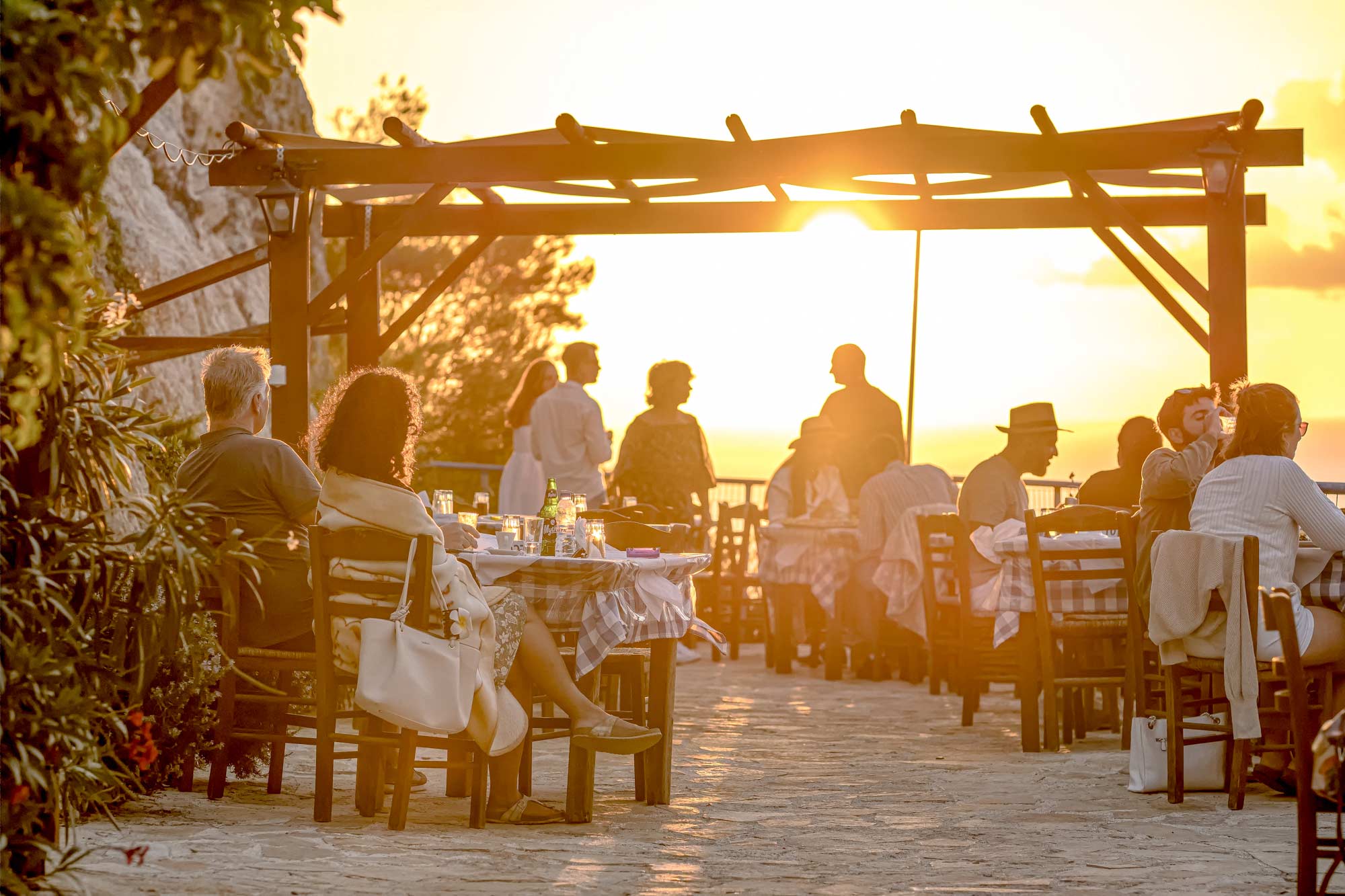
The Zakythos we love sits in its quiet corners. Mornings unfold over coffee on a terrace above Vasilikos; afternoons disappear into a fjord-like cove on the western coast; evenings settle into a long, late dinner in a hill village, the lights of Zakynthos Town glittering on the water far below. Once you find that rhythm, the island becomes one of the most rewarding in the Ionian. 
KNOW WHERE TO GO

It helps, on arrival, to think of Zakynthos as two islands stitched together. The east and south, Zakynthos Town, Argassi, Tsilivi, Laganas, is the busier, more developed face: a strip of resort beaches, family hotels and lively nightlife built up over decades of mass tourism. The rest of the island is another world entirely. Inland, the landscape rises through olive groves and vineyards to wooded ridges crowned by tiny mountain villages. The north-west coast, from Volimes down to Keri, is a long sequence of sea-cliffs, hidden caves and stone-bottomed coves accessible mostly by boat or down narrow switchback roads. The southern Vasilikos peninsula is a gentler proposition: sandy bays, dirt tracks through olive country, sleepy tavernas above the water. This is what most of our guests come to Zakynthos for, and it is the part of the island that opens up most generously to those who take the time. 

VASILIKOS AND THE SOUTH

The Vasilikos peninsula, curving south from Zakynthos Town towards Cape Gerakas, is the island’s most quietly desirable corner. Countryside meets the sea: a low, wooded ridge of olive and cypress dropping away to a coastline of small sandy bays. At the peninsula’s south-eastern edge, Gerakas Beach is one of the most beautiful, and most carefully protected, stretches of sand in the Ionian: a long, gently curving sweep of pale gold backed by ochre cliffs, set within the boundary of the National Marine Park. Because it is one of the most important loggerhead nesting beaches in the Mediterranean, it operates under strict rules between May and October, closed from dusk to dawn, no umbrellas or sunbeds on the protected eastern stretch, no water sports, and the result is a beach that feels strikingly untouched in a way few Greek beaches now do. 

Further round the peninsula, Banana Beach is the long, sociable counterpoint: a 2.5-kilometre arc of fine golden sand with sunbeds, water sports, beach bars and a relaxed all-day rhythm, the island’s most popular swimming beach for good reason. Smaller coves nearby, Porto Zoro, Porto Roma, Dafni, reward a little exploration; each has a single taverna at the water’s edge and not much else, which is precisely the point. 

VOLIMES AND THE DRAMATIC NORTH-WEST

The north-west of Zakynthos is the cinematic half of the island: a long, sheer coastline of white limestone cliffs falling sometimes a hundred metres into impossibly blue sea. The villages here, Volimes, Anafonitria, Maries, Agios Leon, are slow andweatheredin the best sense, set among honey-producing slopes and olive terraces, with embroidery sellers laying out lace and rugs along the road into Volimes much as they have for decades. 

From the cape at Skinari, in the island’s far north, boats run out to the Blue Caves, a sequence of sea-carved arches and chambers where the morning light, refracting through clear water, throws shifting electric-blue patterns onto the cave walls. Going early, by small boat, before the day-trip vessels arrive, is one of the genuine wonders of the island. 

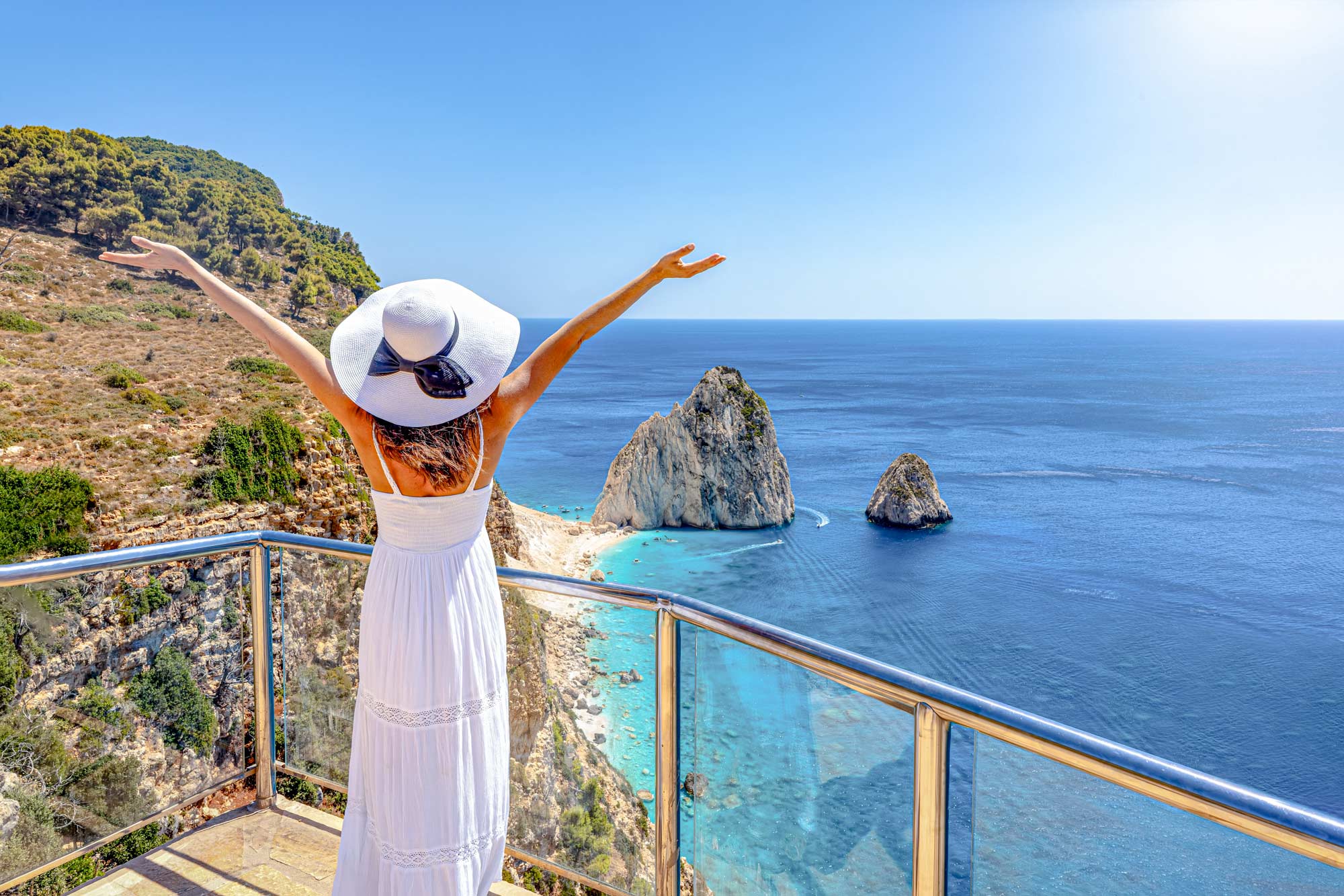
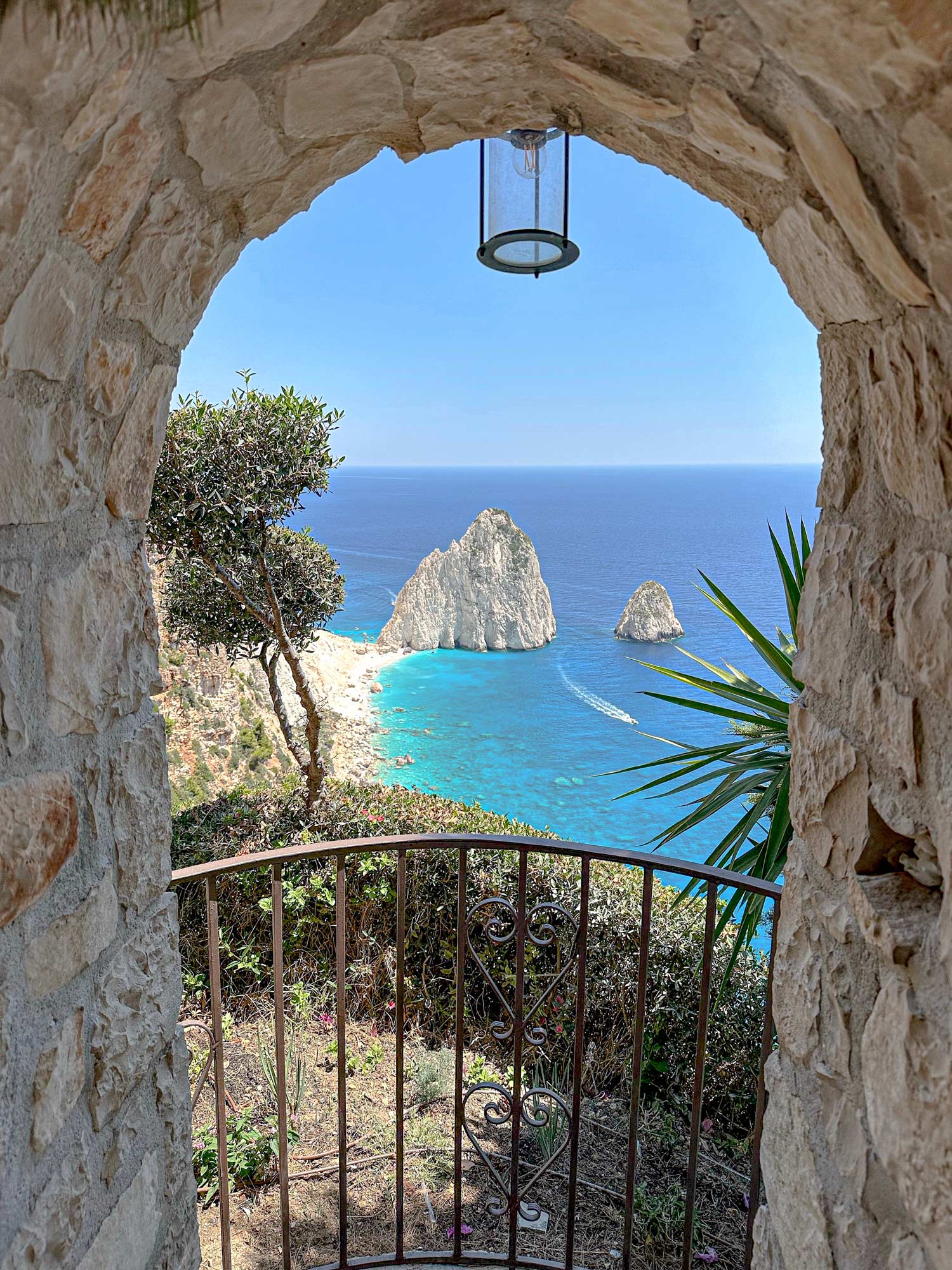
A short way down the western coast, Navagio (Shipwreck) Beach is the most photographed place in Greece, a tiny crescent of pale shingle hemmed in by 200-metre cliffs, the rusted hulk of the freighter MV Panagiotis beached on its sand since 1980. Following landslides and a serious safety incident, the cove itself has been closed to landings while a major stabilisation and restoration project is carried out; access restrictions are in place at least until late 2026, with twice-yearly reviews thereafter. Boats may still approach within a short distance of the shore, and the famous viewing platform above the bay remains open, and is, in many ways, the more atmospheric vantage point. 

For swimming, the western coast’s great prize is Porto Limnionas, reached by a slow drive down from Agios Leon: a narrow, fjord-like inlet cut deep into the cliffs, with water so clear the seabed is visible ten metres down. There is no beach, you slip in from the rocks, and a single taverna on the terrace above. A long, slow swim here, followed by lunch in the shade, is one of the defining afternoons of any stay. 

THE LOGGERHEAD TURTLES OF LAGANAS BAY

Zakynthos is one of the world’s most important nesting grounds for the loggerhead sea turtle, Caretta caretta. The shallow waters and pale sandy beaches of the great southern bay of Laganas have been used for nesting for millennia, and in any given summer the bay accounts for an extraordinary share, often around eighty per cent, of all loggerhead nests in the Mediterranean. 

Since 1999, the bay has been protected as the National Marine Park of Zakynthos, the first national park in the Mediterranean established specifically to protect sea turtles. Its six nesting beaches (Gerakas, Daphni, Sekania, Kalamaki, East Laganas and the islet of Marathonisi) are managed with varying levels of access; some are fully closed, others allow daylight visitors under strict rules. As a result, they record between 900 and 2,000 nests each year. 

The honest, ethical way to see the turtles is the slow way. Skip the speedboat trips that race out into the bay; instead, take a small, licensed vessel from Keri or Limni Keriou. The family operators here run quietly, keep their distance, and know where the females come up to breathe. Marathonisi (the so-called Turtle Island, named for its resemblance to a turtle’s back) is the centrepiece, a tiny uninhabited isle of white cliffs and a single pale beach where nesting still happens through the summer. Visit in the morning, stay out of the marked zones, and treat the encounter as the privilege it is. 

THE WINES: VERDEA, ROBOLA AND THE ISLAND’S GROWERS

Zakynthos has been making wine since antiquity, and the modern Ionian wine scene, long overshadowed by Santorini and the Peloponnese, is quietly reviving. The island’s signature is Verdea, a traditional white wine of Protected Geographical Indication status, blended from a handful of local grape varieties (Skiadopoulo, Goustolidi, Pavlos, Robola and others) and traditionally aged for years in old oak, producing a complex, slightly oxidative wine whose aromas have been compared, not unfairly, to a dry sherry. 

Alongside Verdea, the island grows Robola, the elegant, mineral white that has built Kefalonia’s reputation, and a small clutch of native reds and whites that rarely leave the Ionian. A short itinerary around the island’s working wineries makes one of the most rewarding day-trips you can build: Solomos Estate, a family producer working with Augustiatis, Goustolidi, Robola and Skiadopoulo whose Verdea has been recognised at the Thessaloniki International Wine Competition; Goumas Estate near Maries, set among olive groves and citrus, where Giannis Giatras-Goumas continues a long Heptanesian winemaking tradition with wines from Vostilidi and other natives; and a handful of smaller growers, Grampsas, Callinico, Troussas, quietly producing some of the most distinctive bottles on the island. Our team will arrange the visits. 

DIONYSIOS SOLOMOS AND THE IONIAN THREAD

It is easy to forget, walking through the rebuilt streets of Zakynthos Town, how deep the island’s cultural inheritance runs. The town was reduced almost entirely to rubble by the 1953 Ionian earthquake; what stands today is a careful, low-rise reconstruction that nods to both  Venetian and neoclassical influences.. The heart of it is Solomos Square, a wide marble plaza opening onto the harbour, named for the island’s most famous son. 

Dionysios Solomos was born in Zakynthos in 1798, when the island was still under Venetian rule, and is regarded as Greece’s national poet. Educated in Italy, he returned to a Zakynthos that was then one of the most literary corners of the Greek world, and made the consequential decision to write his poetry not in Italian but in the spoken Greek of the island. His Hymn to Liberty, written in 1823 during the Greek War of Independence, became, in its first two verses, the national anthem of both Greece and Cyprus. Solomos is the central figure of the so-called Heptanese School of Ionian poets, and his presence still shapes the island’s cultural register: in the square that bears his name, in the small museum that holds his remains, and in the long view of the Ionian as Greece’s European, literary frontier. 

Above the town, the old village of Bochali climbs to the ruins of a Venetian castle on Strani Hill, a fine, sheltered late-afternoon walk that ends at one of the small cafés on the terrace, with the town lights coming on along the harbour below. 

WHEN TO VISIT

Zakynthos has a long season. The island is at its finest all the way through from late April through to mid-October, with sea temperatures warm enough for swimming from late May. June and September are arguably the most rewarding months for villa travel, warm, settled weather, restaurants and wineries open, and a notable absence of the high-summer crowds along the southern coast. 

July and August are hotter and busier, but the Vasilikos coast absorbs the pressure with more grace. Loggerhead nesting peaks in late June and July, with hatchlings emerging in August and September, a quiet privilege for anyone staying on the southern side of the island. May and October are gentler still: walking weather, working wineries, a softer light. Outside those months, many tavernas close, though Zakynthos Town stays open year-round. 

GETTING HERE

Zakynthos has its own airport, Zakynthos International Airport “Dionysios Solomos” (ZTH), a short drive south of Zakynthos Town, with direct seasonal flights from across the UK and northern Europe through the summer, and year-round connections via Athens.  

For those arriving overland, the year-round ferry from Kyllini on the western Peloponnese to Zakynthos Town crosses in about an hour and a quarter, run by Levante Ferries, with multiple sailings a day in summer. A seasonal connection (May through October) links the island’s northern port of Agios Nikolaos to Kefalonia at Pessada, making it straightforward to combine the two, and from there to extend onwards to Ithaca or Lefkada for a longer Ionian island-hopping itinerary. 

ZAKYNTHOS WITH VILLA COLLECTIVE

There is a quieter, more rewarding Zakynthos beyond the busy resorts, and our houses are set within Zakynthos’s quieter spots: high on the Vasilikos peninsula with a path down to a private cove, or in the olive country above the west coast, an easy drive from Porto Limnionas. Each comes with a Villa Collective team who know the island intimately. They can arrange an ethical small-boat morning to see the loggerheads, plan a day around the Solomos and Goumas estates with a local wine guide, book the right table in hillside Bochali, or point you to the cove you will want to come back to. To begin, explore our villas on Zakynthos or the wider islands of Greece.

EXPLORE THE JOURNAL

DISCOVER MORE

A villa for every occasion Finding the perfect villa that suits a large group is the first step in making sure your celebration sings. We can match you with the ideal property for your party, plan all the big and little details ensuring your occasion rises far beyond expectations. Read our recommendations for big gatherings.
5 Reasons to Book Your 2027 Villa Holiday Now 2027 bookings with rates guaranteed at 2026 levels. Five reasons to plan your villa holiday early — from peak-date availability to the finest homes across the Mediterranean and beyond.