Walking
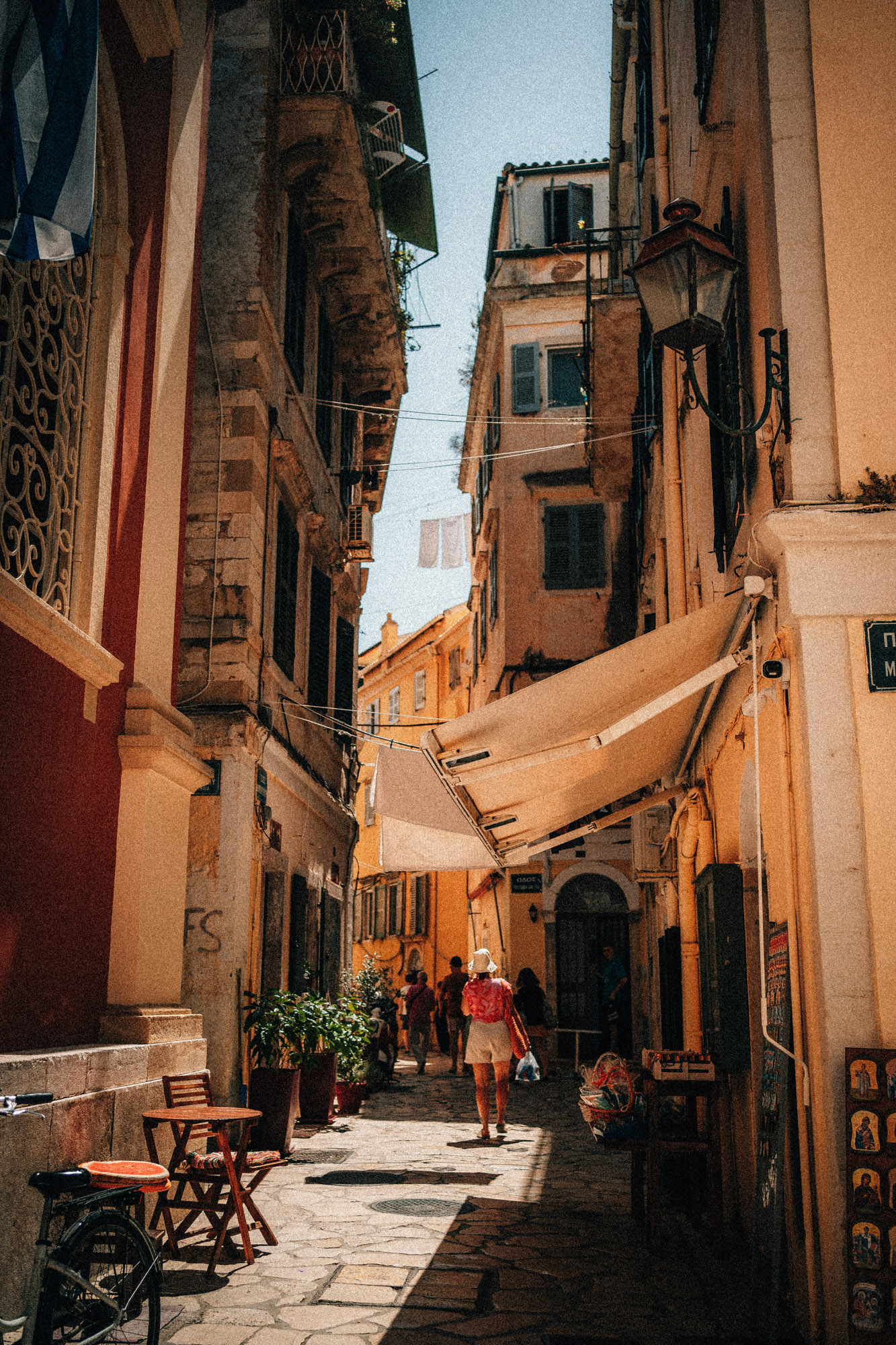
In Corfu Town, walking is the default: shops, markets, restaurants and landmarks sit within a compact radius. Along resort stretches such as Gouvia–Kontokali or parts of Dassia, walking between marinas and tavernas is possible, though pavements can be intermittent. In rural villages and hillside areas, distances add up quickly, and roads are often narrow and unlit — after dark, a taxi is the sensible option.
Rental cars
For most villas beyond the Town, a hire car offers the greatest flexibility. We recommend a compact model for narrow lanes and easier parking, and an automatic if you’d rather avoid hill starts. Download offline maps, pin your villa and nearest essentials, and look for full-to-full fuel policies. Parking at popular beaches is limited in peak weeks, so arrive early or allow time for a short walk.
Corfu public transport
Corfu’s Green Buses (KTEL) run reliable intercity routes, alongside an urban network around Corfu Town. Key lines — such as Town to Paleokastritsa or Town to Kassiopi — run frequently in summer. Always check the last return service before setting off; on some routes, it’s earlier than expected.
Taxis
Taxis are plentiful at the airport and in Corfu Town. Elsewhere, booking ahead is wise for peak dinner hours, particularly along the north-east coast. Card payment is increasingly common, but smaller villages may still prefer cash.
Boat Taxis
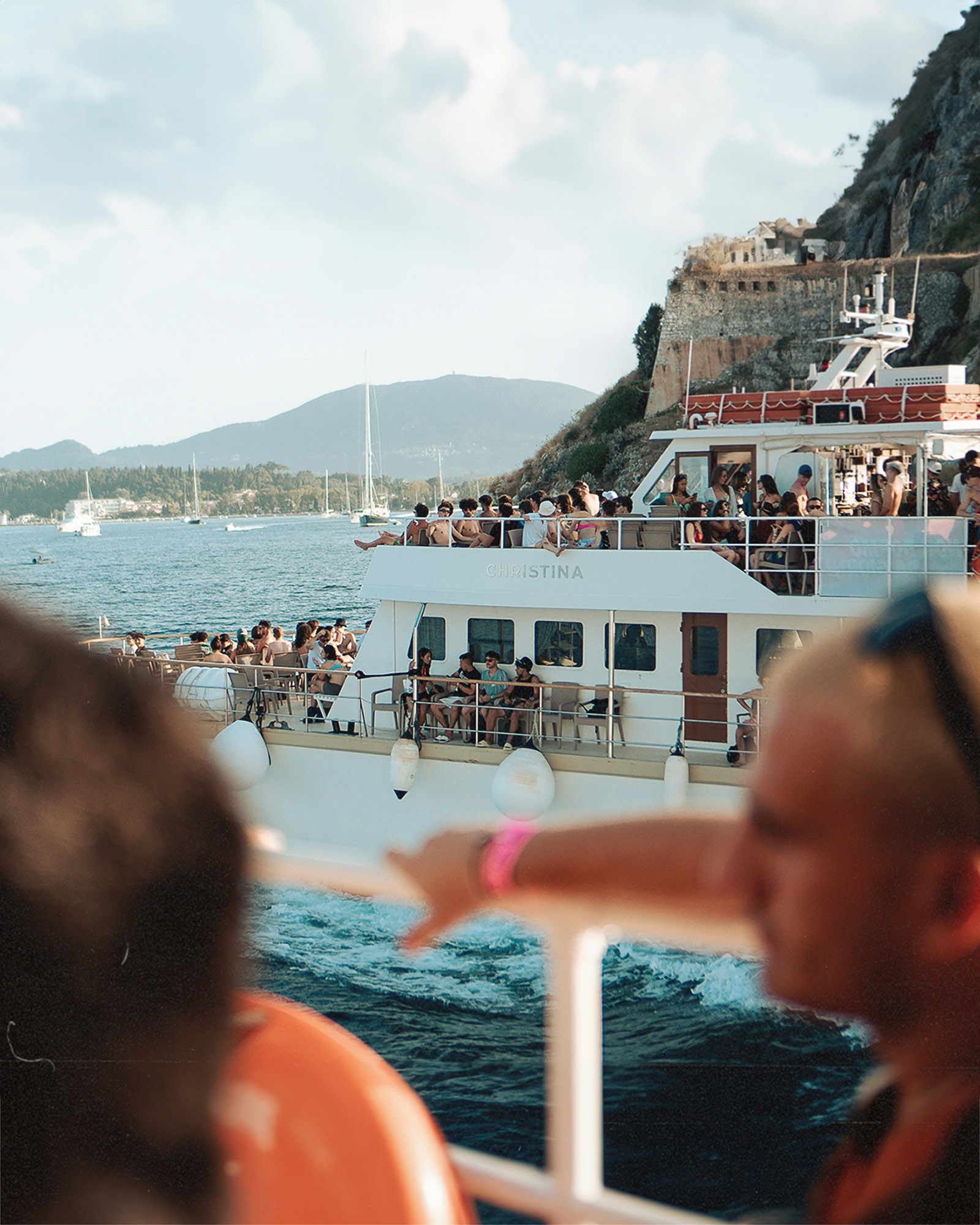
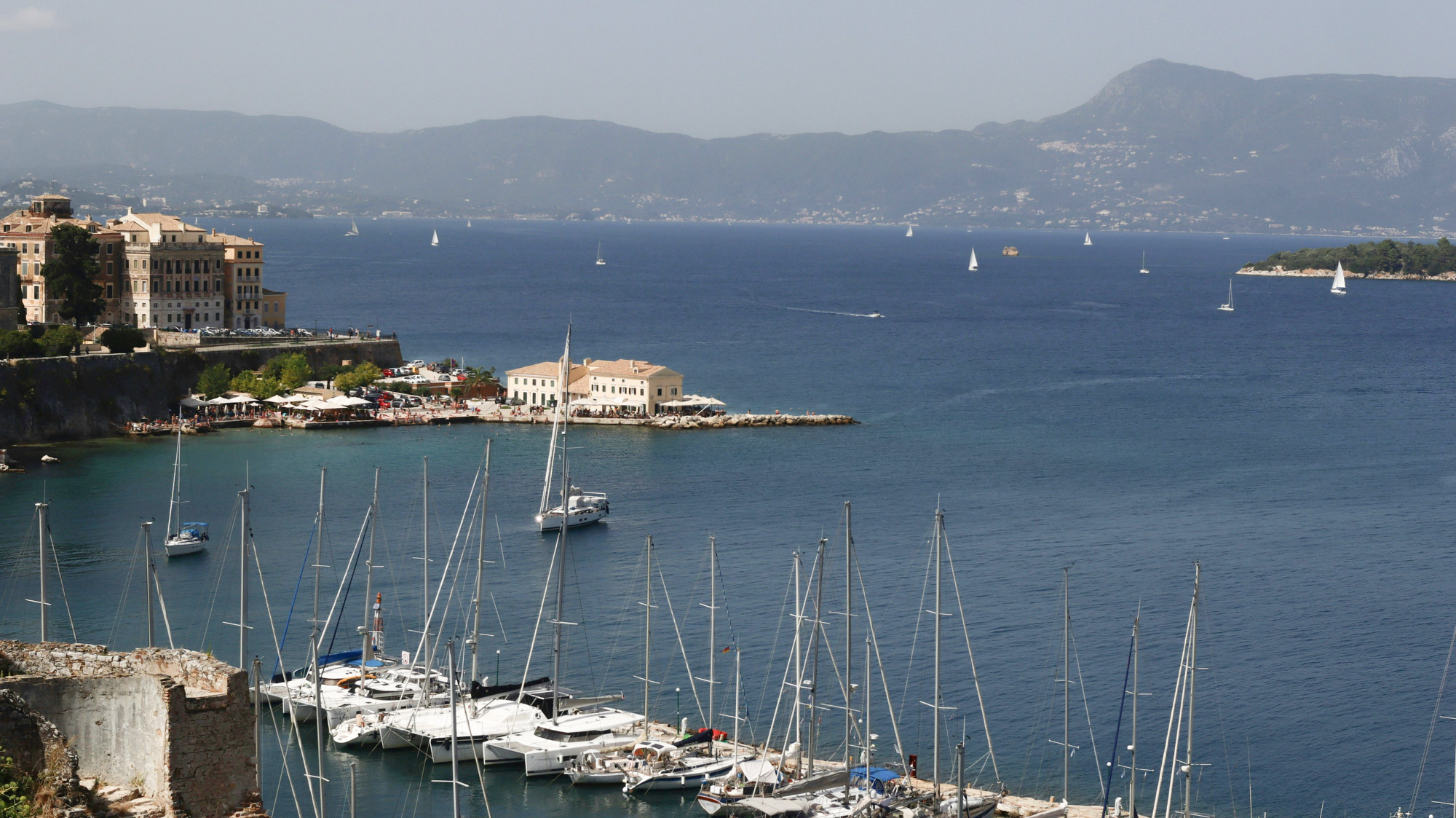
In many harbour villages and along organised stretches of coast, boat taxis offer an easy and quietly romantic way to get around. They’re ideal for short hops between harbours or for returning to your villa after a waterfront lunch without tackling coastal roads. In places like the north-east, they’re often arranged informally — a quick word with the restaurant or house manager is usually enough. Availability varies by area and season, so it’s wise to agree on timings in advance, particularly in July and August.